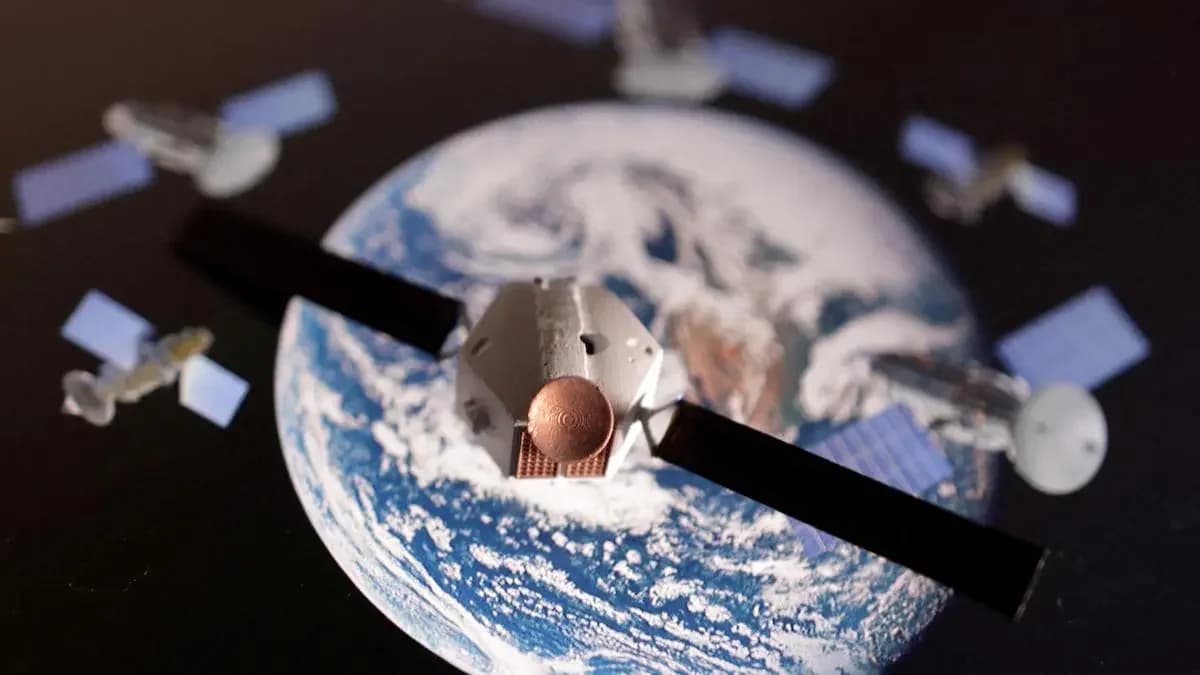
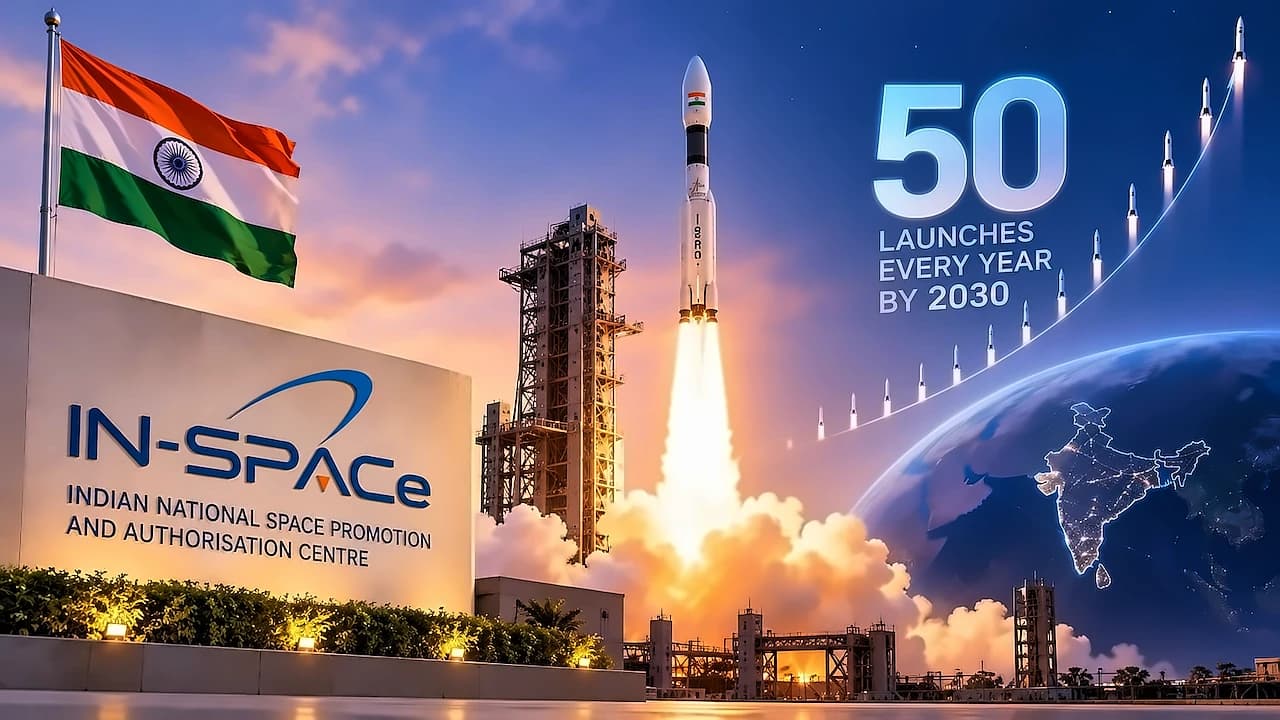
India has set an ambitious target of conducting 50 space launches annually by 2030, according to IN-SPACe Chairman Pawan Goenka. As reported by NDTV Profit, this significant increase in launch activity will require substantial collaboration between government and private sector entities to build the necessary infrastructure and operational capabilities. The target represents a substantial scaling up from current launch frequencies and reflects India's broader ambition to establish a full-fledged commercial space ecosystem. Goenka emphasized that "a goal of this scale cannot be achieved by one organisation alone" and stressed that "government and private industry have to build this future together." His comments come days after nine ISRO employee associations wrote to Chairman V Narayanan on September 4, seeking official clarification on the proposed transfer of manufacturing and operational functions to private entities.
India is positioning itself to become a major player in the global space economy with ambitious growth targets. According to M Ganesh Pillai, Scientific Secretary at ISRO, speaking at Bengaluru Space Expo (BSX) 2026, India aims to increase its share of the global space economy from around 2 per cent now to 8 per cent by 2035, 11 per cent by 2047 and 15 per cent by 2062. ISRO is currently pursuing around 2,000 research and development projects focused on advancing technologies critical to India's future space ambitions, including reusable launch vehicles, in-orbit refuelling, intravehicular flight suits and in-situ resource utilisation. The Indian space ecosystem has expanded significantly, with more than 450 space industries and over 440 startups now engaged in the sector, as reported by Business Standard.
The Indian space sector has experienced remarkable growth since the government opened it to private players five years ago. According to IN-SPACe Chairman Pawan Goenka's statement on X, the decision to open India's space sector was guided by two key objectives — enabling the Indian Space Research Organisation (ISRO) to venture into new frontiers and creating opportunities for private industry to scale up its capabilities. The growing startup ecosystem spans launch services, satellites, space applications and other emerging areas, with private companies moving beyond prototypes to demonstrate actual orbital launch capabilities. As Goenka noted, "From just a handful of space startups five years ago, India now has more than 450 space startups," with an Indian private company having successfully demonstrated the ability to launch a rocket into orbit, marking a significant milestone for private space capabilities. Speaking at Business Today's India@100 event, Goenka revealed that the PSLV and LVM3 rockets would be privatised, with the private sector taking over their production, stating "The PSLV rocket and LBM3 rocket will be privatised. Here we are not allowing PSU to participate. So it'll have to be the private sector."
While private companies scale up their capabilities, the Indian Space Research Organisation (ISRO) continues to expand its own technological frontiers. As reported by NDTV Profit, Goenka described EOS-05 as a major achievement and emphasized that it represents only the beginning of India's space ambitions. The success of EOS-05 demonstrates ISRO's ability to focus on new frontiers while the private sector develops its own launch capabilities, fulfilling the original dual objectives of the sector's liberalization. Goenka noted that "today, we are seeing both take shape" and stressed that "EOS-05 is a major achievement by ISRO, and this is just the beginning." Speaking at Business Today's India@100 event, he outlined the future vision where ISRO will eventually not manufacture any launch vehicles, that'll be all done by the private sector or PSU as in the case of SSLV, with ISRO focusing on special purpose satellites and scientific research.
Reaching the target of 50 launches annually will require significant infrastructure development and operational scaling. According to IN-SPACe Chairman Pawan Goenka's statement, the next major challenge for the sector would be to scale up operations and establish the infrastructure and capabilities needed to support a much higher launch frequency. Under the proposed model, ISRO's role would continue to be centred on research and pushing the boundaries of technology, while private companies would focus on translating those advances into large-scale manufacturing. As Goenka explained, "ISRO's research will continue to push the frontiers of what is possible. Private industry must translate that momentum into manufacturing at scale: more rockets, more satellites, more launch capacity, and new technologies." He emphasized the "opportunity before us is immense: build in India, launch from India and serve the world from India."
The ambitious launch target comes amid growing concerns among ISRO workforce over the expanding role of private companies in India's space programme. The nine ISRO employee associations' letter to Chairman V Narayanan on September 4 raised significant questions about the proposed transfer of manufacturing and operational functions to private entities. The associations stated that "Private participation in defined commercial activities can coexist with a strong, publicly owned ISRO. What cannot be accepted without debate is a policy that reduces ISRO to a residual R&D boutique while the realisation of the nation's launch vehicles and the operation of its launch infrastructure pass out of public hands." The letter also questioned ISRO's future role and the implications for serving employees and future recruitment, with sections of the workforce expressing concerns about where the line would be drawn between enabling private participation and reducing ISRO's own capability to design, build, integrate and launch major space systems.