ASML has officially started operations in India and plans to hire 20-30 young engineering graduates initially to meet its requirements, as confirmed by ASML Executive Vice President Lin Kiat Yap speaking at Semicon India 2026. The company's scaling-up plan depends on the success of Tata Electronics' chip unit in India and the country's broader ambition to grow in the semiconductor space. ASML Chief Strategic Sourcing and Procurement Officer Allan Wayne emphasized that "if we're going to be scaling this up, we need to be able to build many fabs here." The company's monopoly in advanced lithography technology means no advanced chip in the world can be made without its equipment, positioning it as a critical enabler for India's semiconductor ecosystem.
Tata Electronics semiconductor plant is scheduled to begin operations in 2028 and represents the first 300-mm fab in India with production capacity of 50,000 wafers per month. As reported by PTI, Tata Electronics is the first customer in India to have a 300-millimetre semiconductor fab, with the company estimating to have around 450 vendors to support at the Dholera plant. The facility is building 363 vendor parks to house these suppliers, demonstrating the scale of India's semiconductor ambitions. Wayne emphasized that "time to market and our ability to deliver on time, I think that's something that people are looking for." He noted that "you're going to start to see, I think, many more of our customers coming to India."
The semiconductor industry is witnessing significant consolidation with ASML Executive Vice President Lin Kiat Yap confirming that the company's scaling-up plan depends on the success of Tata Electronics' chip unit in India and the country's broader ambition to grow in the semiconductor space. This development comes as India steps up efforts to establish a larger presence in the global semiconductor value chain, with the government seeking to move beyond chip assembly and testing to build capabilities spanning design, fabrication, equipment and materials. The first time major industry bodies including Semi, IESA, Indian Electronics and Cellular Association, MAIT and Elcina came together at Semicon India 2026 to explore mechanisms for collaborative work.
The government has announced the Semicon 2.0 scheme with an incentive of around ₹1.27 lakh crore or USD 13.5 billion to build the semiconductor ecosystem. According to Union Minister Ashwini Vaishnaw, investment proposals worth USD 12 billion are likely to come under the new scheme for chip production. Wayne highlighted that India's projection and India's ambition is to have between 15 per cent and 25 per cent of the wafer fab of India's local semiconductor demand by 2032. The government's ambition to meet 35-50 per cent of India's semiconductor demand by 2035 locally implies that the country will need about a dozen chip manufacturing plants with huge capacity. Wayne noted that "then at some point, we may very well be looking at manufacturing."
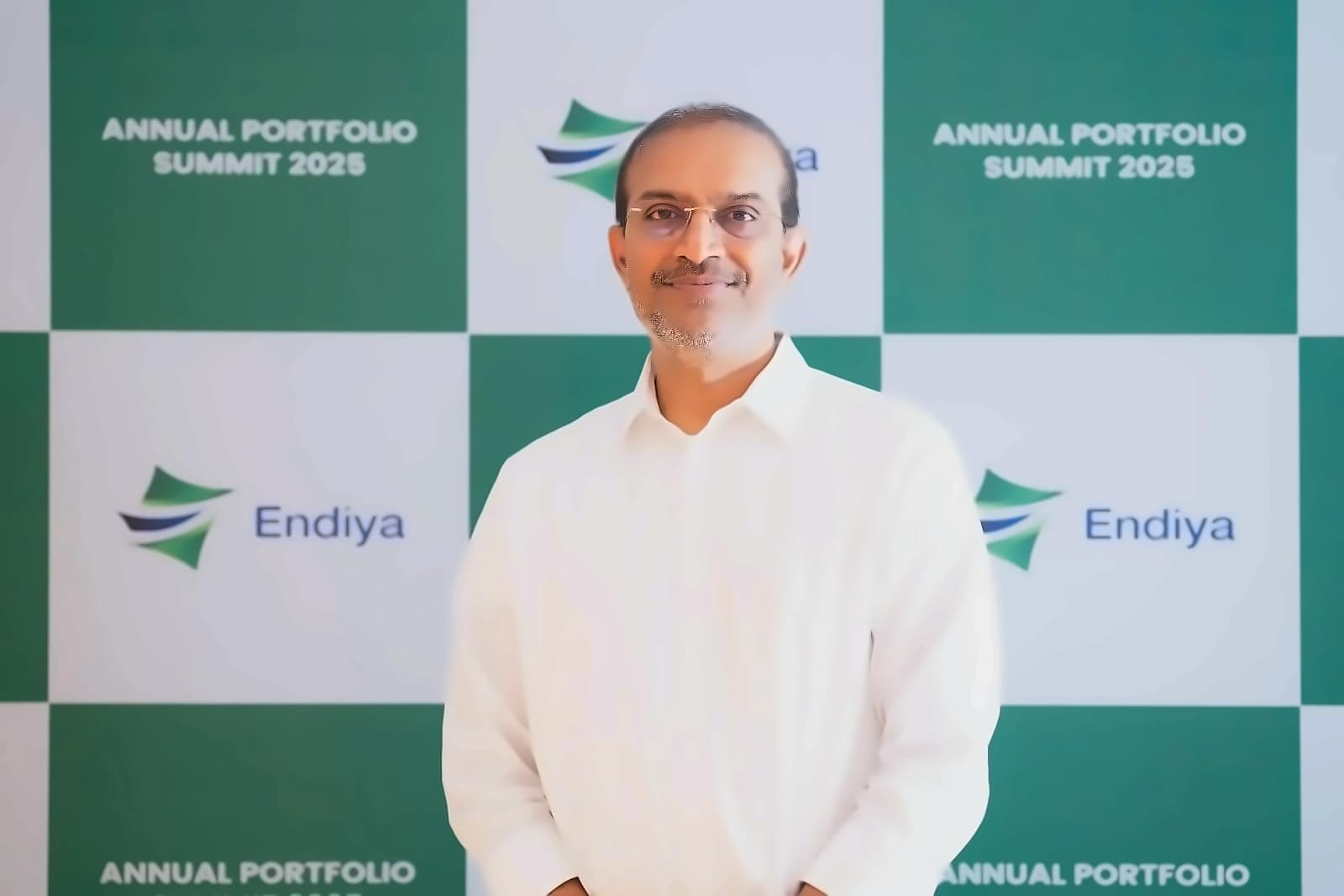
According to reports from Business Standard, Endiya Partners is actively investing from its third fund of $100 million and has made 15 investments with plans to invest in 5-6 more startups. The fund guarantees ₹7-8 million per company and provides ₹10-25 million to performing startups from its India portfolio. The firm has invested in approximately 50 companies, with 20-25% headquartered overseas, maintaining a strong India-centric focus, particularly in healthcare sectors.
As reported by Business Standard, Endiya Partners has achieved significant exits in the semiconductor space, with Steradian Semiconductors being acquired by Renesas Electronics Corporation. This acquisition marked one of India's first semiconductor acquisitions and delivered an internal rate of return (IRR) of more than 50%. The fund returned 4x plus to investors from its first fund, demonstrating strong performance in the deep-tech and semiconductor startup ecosystem.
According to Endiya Partners managing director Sateesh Andra, as reported by Business Standard, India must leverage its growing design capabilities to build globally competitive products and strengthen its position in innovation. Wayne emphasized that "this (innovation) is something that I'm not concerned at all about for India, especially after what I have seen in the last few days and in the last few months starting to come to India." He noted that "a lot of ASML customers are scaling up facilities in their own country." Andra emphasized that creating momentum based on these strengths is essential for excelling in the semiconductor space, with engineers based in India having taped out chips that have shipped in billions for companies such as Qualcomm, Infineon, NXP, Texas Instruments and Renesas. Wayne stressed that talent and innovation will be critical for the growth of chip manufacturing in the country.
Despite India's strong engineering capabilities, Andra identified a fundamental gap in marketing and operations skills required to sell products worldwide. As reported by Business Standard, the challenge lies in writing product specifications, positioning, marketing, selling, and working with distributors to reach customers abroad. Wayne confirmed that "missing were the skills to write a product's specifications, position and market it, and work with distributors to reach customers abroad." The opportunity lies in building large, fabless companies comparable to Nvidia and Broadcom, leveraging India's significant share in global design resources and talent. Wayne noted that "we want to make Tata successful because I think when people see Tata being a success, I think people will start to spend a little bit more time, be a little bit more focused in India and see the potential opportunities."