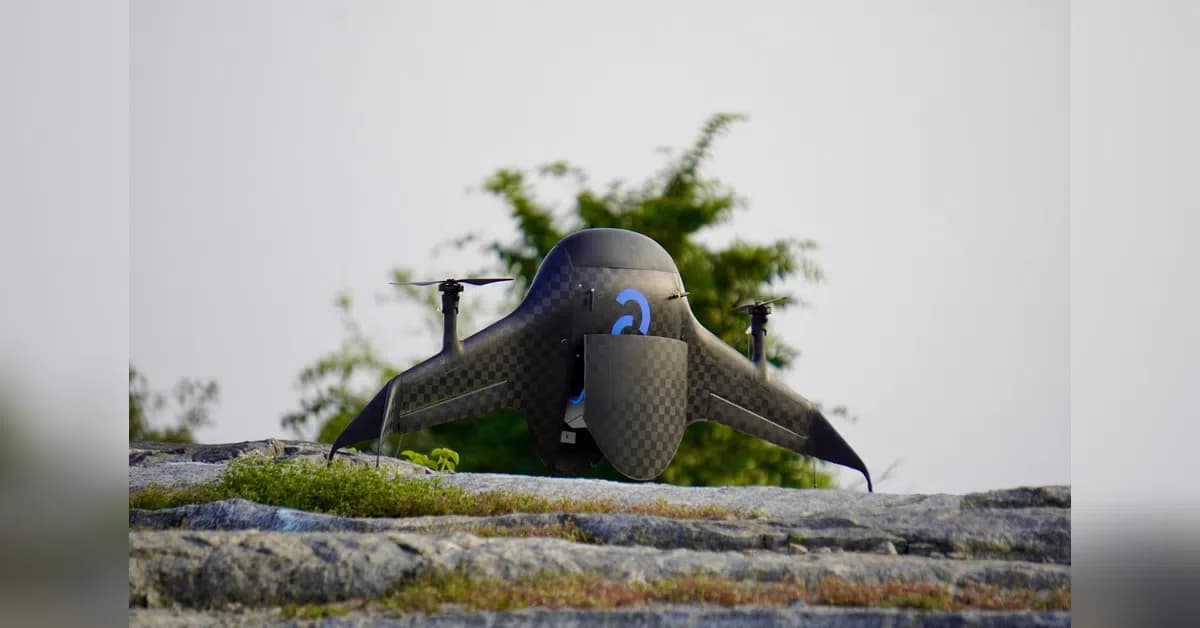
Bengaluru startup Alteon has achieved a significant milestone in aviation technology by developing an aircraft designed to remain airborne for months using dynamic soaring principles. The company successfully completed an August offshore flight test where the aircraft autonomously flew repeated loops less than a metre above the open ocean. This technical breakthrough helped secure $2.5 million in pre-seed funding, led by investor Lachy Groom, co-founder of AI robotics company Physical Intelligence and early Stripe employee. The funding round also included participation from Together Fund, with early backing from Emergent Ventures and 1517. As per Business Standard, the company incorporated in 2025 and has grown to a team of 20 based in Bengaluru.
The aircraft design mimics the albatross, which can travel 800 to 1,000 kilometres a day without flapping its wings using dynamic soaring techniques. As reported by Business Standard, Alteon has spent more than a year developing an aircraft engineered to remain airborne for months by harvesting energy from wind gradients above the ocean instead of fuel. The company's next phase of testing will focus on harvesting wind energy until the aircraft can sustain flight without propulsion, much like an albatross. The August test demonstrated the low-altitude loops that underpin Alteon's approach under real-world offshore conditions, with the company's next technical objective being to perform those manoeuvres autonomously without propulsion.
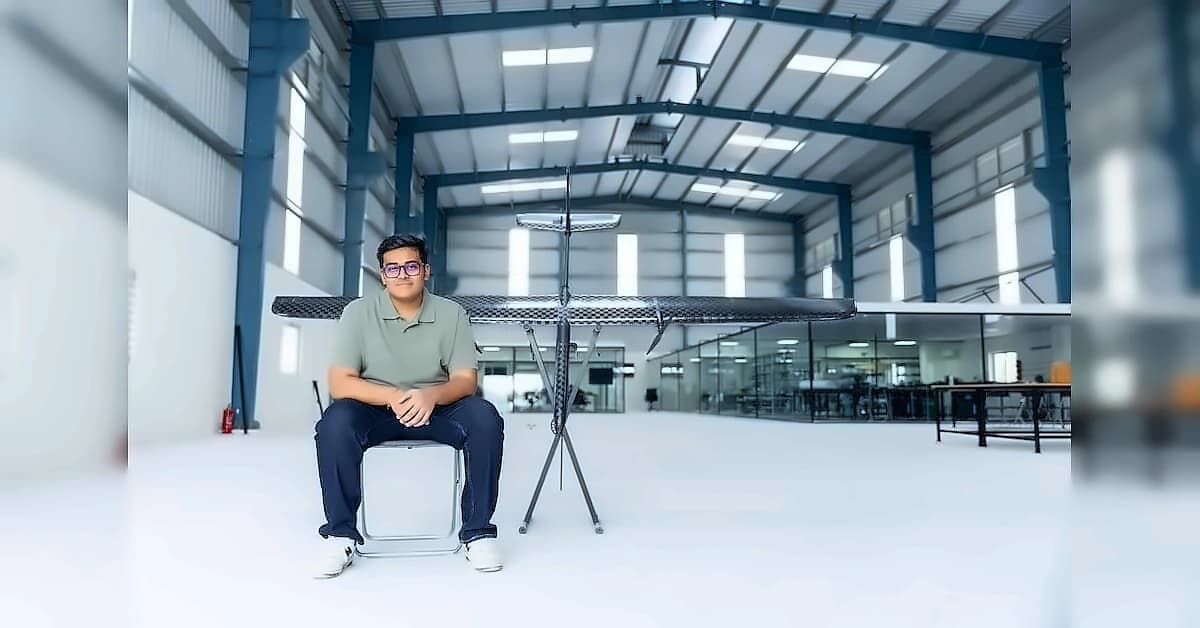
Founder Samay Sanghvi, 20, began experimenting with ventures at 14 during Covid lockdowns, trading futures and launching two startups in edtech and freelance marketplaces, both of which failed. According to Business Standard, he spent months learning and building with a small grant, focusing on aircraft development by 2023. The company incorporated in 2025 and has grown to a team of 20 based in Bengaluru. Without a formal engineering degree, Sanghvi developed his technical knowledge by building and crashing radio-controlled aircraft. He said creating an aircraft capable of flying for more than a year depends on solving interconnected problems across autonomy, aerodynamics and structural engineering rather than finding a single technical breakthrough.
The technology addresses critical maritime surveillance needs, offering real-time ocean coverage at a fraction of the cost of ships, satellites, or offshore installations. As reported by Business Standard, these fleets can carry payloads for applications including mapping ocean conditions, monitoring infrastructure, and coordinating defence and search-and-rescue systems. The company plans to develop aircraft capable of carrying different payloads for weather monitoring, ocean mapping, ship tracking and critical infrastructure surveillance. The technology could also coordinate autonomous systems for defence and industrial applications, with potential uses including identifying illegal fishing and drug trafficking, as well as monitoring national security threats. The aircraft are designed to close observation gaps between conventional platforms, with fleets able to revisit areas every few minutes to once an hour depending on mission requirements.
The technology addresses significant security gaps in maritime surveillance, particularly in areas where ships broadcast positions via automatic identification systems that are easy to falsify. According to Business Standard, conventional aircraft are constrained by revisit cycles and operating windows, leaving long gaps between observations over open ocean. A fleet of aircraft can be tasked to revisit areas continuously rather than the limits of traditional platforms, helping authorities detect and deter illegal fishing, drug trafficking, and security threats. The funding arrives amid growing investor interest in India's autonomous aviation sector, with Airbound recently raising $37 million to develop lightweight autonomous aircraft for delivery services.