Design-focused consumer hardware startup Aina has successfully raised $5.5 million (about ₹53 crore) in seed funding to develop a general-purpose interface for the artificial intelligence era. According to reports from Business Standard, the funding round was led by Redstart Labs (Info Edge, India) and 360 One Asset, with participation from MIXI Global Investments, Antler, Blume Founders Fund and angel investors including Kunal Shah (Cred), Tikhon Bernstam (Scribd), Harshil Mathur and Shashank Kumar (Razorpay). The startup has emerged from stealth mode with this funding round, positioning itself among early Indian startups betting on AI-first hardware as the next computing platform beyond smartphones and PCs.
The company launched Dune, a programmable three-key context-aware keypad for Mac that automatically adapts its functions based on the application being used, earlier this year while continuing to build its flagship interface in stealth mode. As reported by Business Standard, Aina aims to reshape how people interact with devices ranging from smartphones to personal computers. The funding will be used to bring the company's flagship AI-native interface to market and expand the engineering and product teams across its Bengaluru and San Francisco offices. The startup currently employs about 35 people across both locations and operates from a manufacturing facility in Bengaluru, with the company also opening the waitlist for an early pilot of its flagship product.
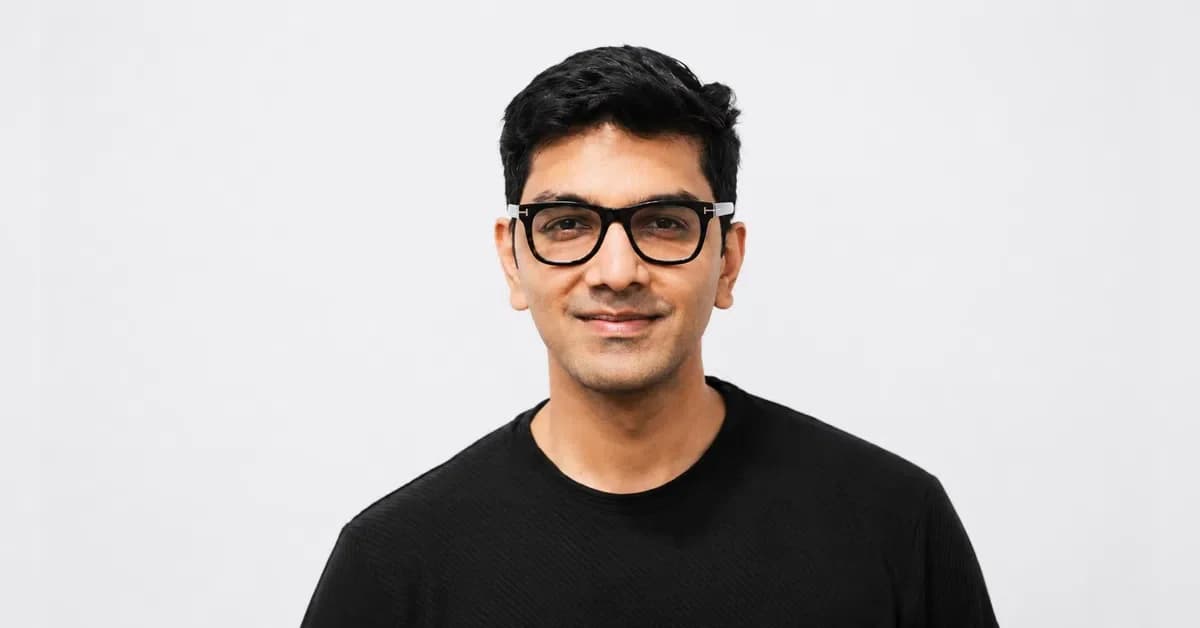
Founded by Apoorv Shankar, former vice-president (hardware) at health-tech company Ultrahuman, Aina was incorporated in May 2025 and has been operating as a human-computer interaction lab under the name 'Project Mirage'. According to Business Standard, Shankar emphasized that current devices are still primarily designed for browsing, creating unnecessary cognitive load when completing hundreds of daily tasks. The company believes AI agents will execute tasks on behalf of users, leaving only the choice of whether to approve or decline. Shankar noted that as intelligence becomes ubiquitous, AI assistants will get better at understanding context and agents will execute on behalf of users, but the missing piece for AI is a context-aware layer that is paired with an easier way to capture that choice.
Vibhore Sharma of Redstart Labs noted that AI is dissolving the traditional computer-user relationship, requiring new interface categories. Nag of 360 One Asset highlighted that each computing leap demands new hardware interfaces, comparing the current need to previous transitions from punch cards to GUI and smartphones. As reported by Business Standard, the company showcased three experimental AI interfaces at CES 2026, targeting common applications including online meetings, booking cabs and ordering food. The fundraise comes amid emerging investor interest in AI hardware, as advances in GenAI spur a fresh wave of experimentation in consumer devices.
The company announced Dune in April, a context-aware keypad for Mac that automatically adapts its three keys to whichever application is in the foreground. According to Business Standard, the team has shipped hundreds of Dune keypads to early adopters for validation and feedback, using the learnings from these early deployments to train its flagship AI-native hardware interface. Aina believes the next computing interface will require the least effort from users, allowing them to focus on tasks that actually require human intelligence and effort in the age of AI. The startup is entering the nascent AI hardware segment, where companies such as OpenAI, Meta, Rabbit and Humane are racing to develop the next generation of computing interfaces beyond smartphones and traditional PCs.