Vodafone Idea shares hit a 25-month high at ₹15.65 on Monday's trading session, rallying 4% on heavy volumes as the stock extended its recent upward momentum. According to Business Standard, the stock traded 3.2% higher at ₹15.49 at 11:00 AM, significantly outperforming the BSE Sensex which declined 0.50%. In the past four trading days, the stock has soared 11% after the company unveiled a new dynamic identity signalling optimistic future and roped in Shah Rukh Khan to tease what's next for the brand. A combined 395.3 million equity shares changed hands on the NSE and BSE, demonstrating strong investor interest in the telecom operator's brand revival strategy.
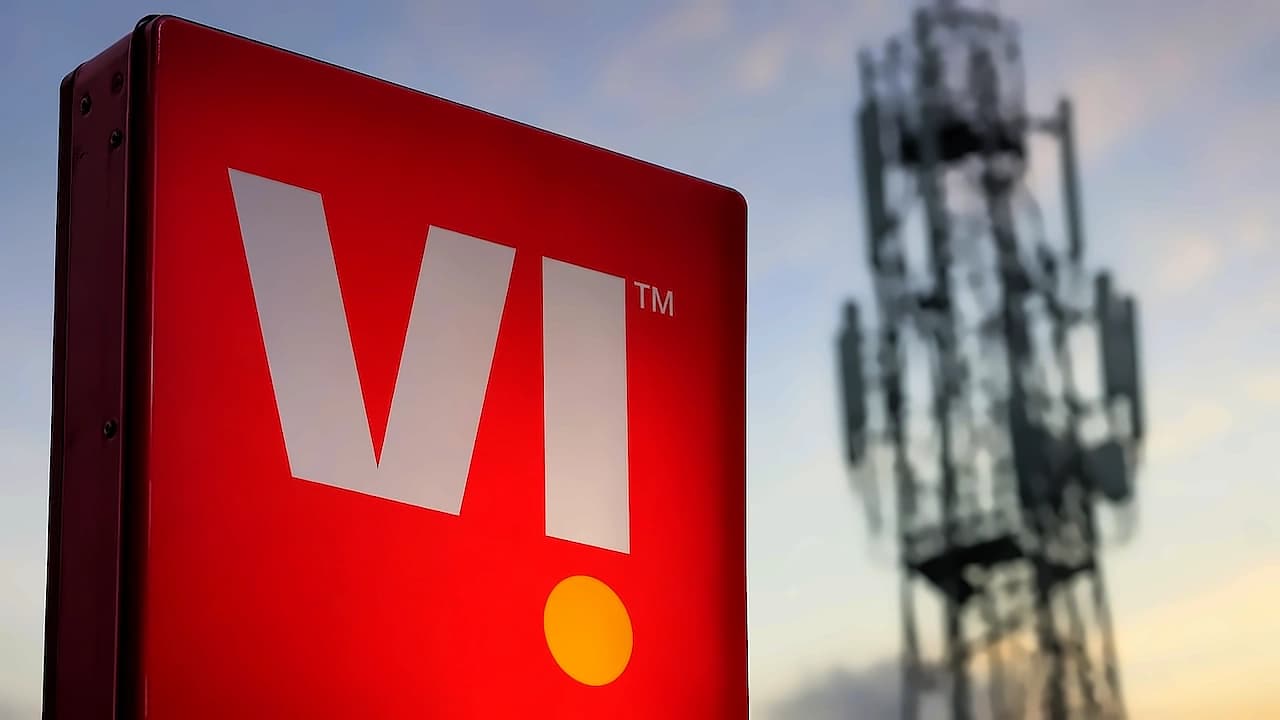
Vodafone Idea has recorded its first quarterly subscriber addition since the 2018 merger in the June quarter, marking a significant milestone in the company's recovery efforts. As reported by Business Standard, this development has emboldened the company to bring back its creative swagger, with the telecom operator now looking to restore the memorable campaigns that once made Vodafone's pug and Idea Cellular's "What an Idea!" among India's most memorable telecom campaigns. The company unveiled a new brand identity on September 1 with a slight tweak to the position of the yellow dot on the 'i' in its logo, along with a campaign featuring Shah Rukh Khan saying "Vi badal raha hai... tayaar rahiye" - Vi is changing... Be ready. Vi today is resurging as a future-ready brand, driven by rapid network expansion, innovation-led offerings, and an "Employee First, Customer Always, Experience is Everything" approach.
Khan's selection as Vi's brand ambassador is strategically significant given his market position as India's most valuable celebrity brand. According to the Kroll India Celebrity Brand Valuation 2026 report, Khan retained his position with a brand value of $177.9 million, representing a 22% increase in 2025 and putting him at the top of Kroll's 2026 celebrity brand valuation rankings, ahead of cricketers Virat Kohli and Sachin Tendulkar and actors Amitabh Bachchan and Ranveer Singh. This growth occurred while the combined value of India's top 25 celebrity brands declined 3.7% during the same period, highlighting Khan's exceptional market resilience. As per Business Standard, Khan has fronted all three of India's major telecom rivals - Airtel in 2001, Jio at its 2015 launch, and now Vi, with no other Indian star trusted by three direct competitors in the same sector.
Vi's latest financial results show revenue increased 3% year-on-year in the April to June 2026 quarter, despite a 3% decline in active subscribers, aided by a 6% increase in average revenue per user (ARPU). According to Business Standard, revenue market share declined to 13%, with the majority of losses concentrated in Mumbai and Gujarat. However, subscriber losses continued to moderate, and revenue growth remained steady. The company gained market share in B-Circles (+40bps) and C-Circles (+20bps) versus FY26, with gains led by Uttar Pradesh (E). While Vi lost share in 13 of 22 circles and posted revenue declines in 5 of 22 circles, the bulk of market-share decline was concentrated in Mumbai and Gujarat, suggesting competitive pressures are becoming less broad-based.
The telecom sector is entering a new growth phase with focus shifting from network investment to 5G monetisation, as reported by Business Standard. Premium plans, rising data usage, subscriber upgrades, fixed wireless access (FWA) and enterprise connectivity should support ARPU growth, while moderating 5G capex should improve free cash flows and balance sheets. Vi's FY26 marked a turning point after several years of financial uncertainty, with the conclusion of the Adjusted Gross Revenue (AGR) matter, continued promoter support, stronger credit ratings and return to positive subscriber additions providing a firmer platform for growth. The company holds a large spectrum portfolio including mid-band 5G spectrum in 17 circles and mmWave spectrum in 16 circles, providing a strong foundation for its future expansion across 2G, 4G and 5G platforms.