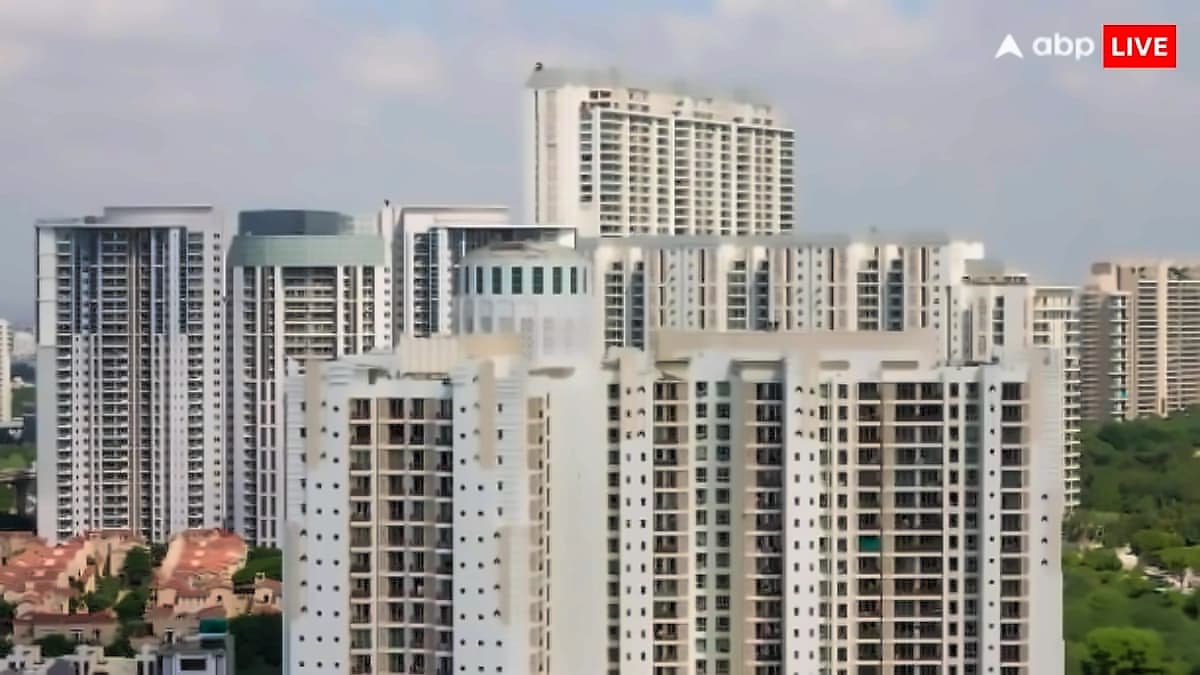
India's residential real estate market is experiencing a significant segmentation crisis, with contrasting trends emerging across different regions despite uniform interest rate cuts. According to a market outlook report by real estate developer NBR Group, residential property prices across India's major cities have increased by as much as 19% year-on-year, yet affordability remains a major challenge in key markets. The Reserve Bank of India's cumulative 125 basis points of repo rate cuts during the first half of 2026 have reduced borrowing costs and made home loans cheaper, providing support to housing demand across several cities. However, Mumbai and the National Capital Region continue to remain beyond the reach of the average household on affordability measures, even as lower interest rates filter through to buyer sentiment in most other cities.
The housing market is witnessing different trends across cities rather than moving in one direction, with Delhi-NCR recording a 39% jump in new residential launches despite affordability concerns. As reported by NBR Group, new residential launches in Delhi-NCR jumped 39%, indicating that infrastructure-led development corridors are encouraging developers to launch more projects even though affordability remains under pressure. Meanwhile, Bengaluru has recorded more than 25,000 residential launches during the first half of 2026, the highest ever for a six-month period, with most launches concentrated in the city's southern and eastern growth corridors. This supply response suggests developers are attempting to match growing demand in these markets, while housing sales across the top 15 Tier-2 cities reached ₹40,443 crore in Q1 2025, up 6% year-on-year.

Real estate expert Vishal Bhargava has identified a significant trend reversal in India's residential market, where buyers are increasingly prioritizing larger homes over expansive amenity packages. According to Bhargava's analysis, the relationship between apartment size and lifestyle facilities has fundamentally changed over the past decade. As reported by Essential Business Intelligence, Bhargava noted that apartment sizes are becoming smaller while amenities are becoming bigger, representing a dramatic shift from earlier developments where the apartment itself was the primary product with amenities as additions. In a recent video shared on social media, Bhargava asked the question, 'Does the apartment matter or do the amenities?' and pointed out that 'soon thereafter, amenities took centre stage. The apartment became the sideshow'. This shift from the previous decade where amenities took center stage, with the apartment being 'just the topping on the pizza', marks a fundamental change in how residential projects are designed and marketed.
Recent market research supports Bhargava's assessment, with an unnamed poll revealing 43% of respondents preferred large apartments with fewer amenities, while another 30% favoured medium-sized apartments accompanied by moderate amenity levels. According to the poll results cited by Essential Business Intelligence, Bhargava concluded that the verdict appears clear: make homes bigger and amenities smaller. The expert expects this trend to continue over the coming decade as buyers reassess the value of additional floor space against the cost and utility of common facilities. Social media commentary has reinforced this preference, with users like James Sheth arguing that 'a bigger home would be his first choice' and noting that large amenity packages could result in higher society maintenance charges despite being regularly used by only a section of residents.
The trend toward prioritizing space over amenities reflects changing buyer preferences for practical living solutions combined with quality expectations. The consensus among respondents appears to favor giving residents more space inside their homes, keeping shared amenities practical, and ensuring facilities are those people will actually use. As reported by Essential Business Intelligence, this shift represents a fundamental change from the previous decade where amenities took center stage, with buyers now seeking homes that offer both adequate living space and practical utility without excessive maintenance costs. Sikka Group's analysis confirms that the focus has clearly moved towards homes that enhance everyday living while retaining strong investment potential. The momentum in Gurugram reflects a broader national trend, with CBRE's India Market Monitor Q4 2025 - Residential noting that residential sales and launches both crossed 270,000 units in 2025, while high-end housing overtook the mid-end segment to account for the largest share of residential sales. The preference appears straightforward: give residents more space inside their homes, keep shared amenities practical, and ensure that the facilities provided are those people will actually use.