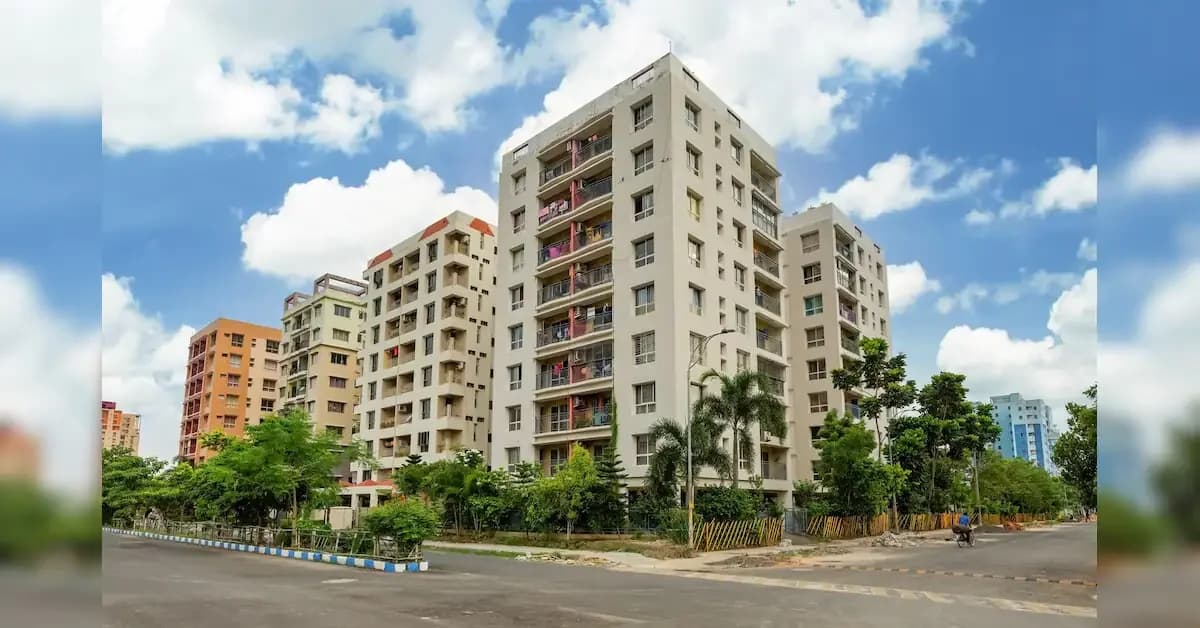
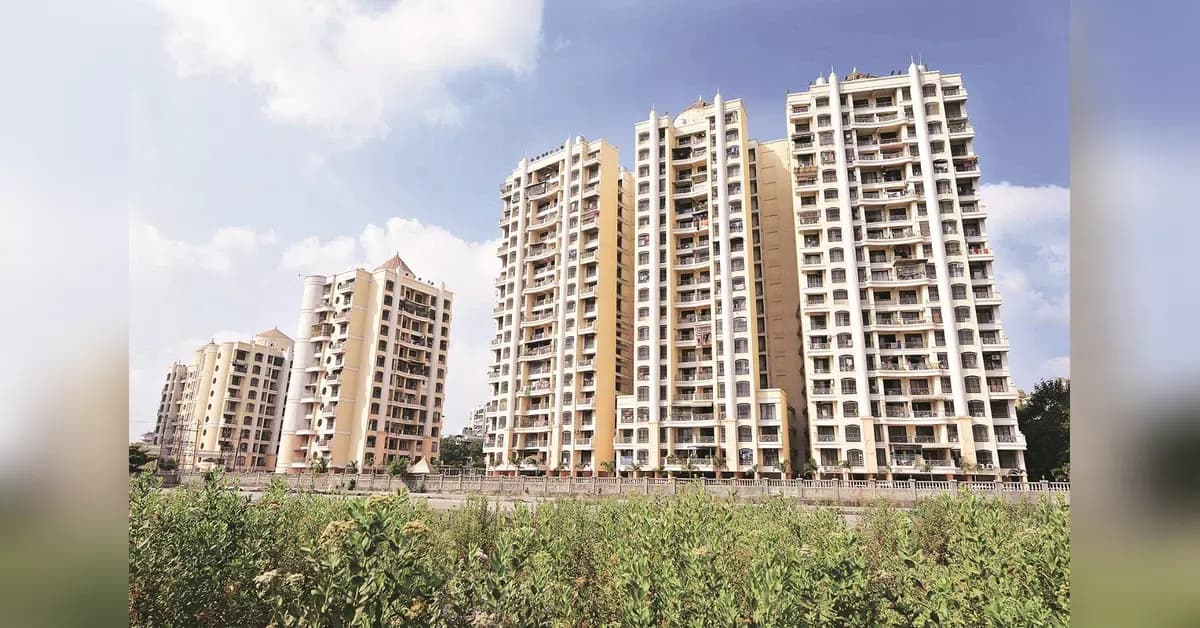
India's property market is experiencing significant expansion beyond traditional metropolitan centers, with 11 emerging real estate markets recording a 63% rise in residential prices over the past five years, according to a report by the Confederation of Indian Industry (CII) and Knight Frank India. This compares with a 4% CAGR across India's top eight cities — Mumbai, Bengaluru, Delhi-NCR, Hyderabad, Chennai, Pune, Ahmedabad and Kolkata. The divergence has become more pronounced in recent years, with prices across the 11 emerging markets increasing 63% between 2021 and 2026, compared with 42% across the top eight cities during the same period. As per the latest CII and Knight Frank report, these cities are recording faster residential price growth than India's top eight cities, indicating a rise in momentum as their economic fundamentals continue to strengthen, backed by growth in infrastructure, connectivity and consumption.
According to Knight Frank Research, prices vary significantly across the 11 emerging markets, with Goa leading at ₹11,500-13,500 per sq ft, followed by Chandigarh Tricity at ₹7,500-10,500 per sq ft. Jaipur and Kochi are positioned in the ₹7,000-9,000 per sq ft range, while Bhubaneswar's residential prices are quoted at ₹6,550-8,550 per sq ft. At the lower end, Nagpur and Visakhapatnam are both at ₹4,500-6,550 per sq ft, with Bhopal at ₹5,000-7,000 per sq ft and Indore at ₹5,500-7,500 per sq ft. The average prices in these 11 cities range from ₹4,500 per sq ft to ₹13,500 per sq ft, with the report identifying these markets as having potential of leading the next phase of real estate growth in India. For context, at ₹6,000 per sq ft, a 1,000-sq-ft home would have a base property value of about ₹60 lakh, while at ₹12,000 per sq ft, the same property would cost approximately ₹1.2 crore.
Infrastructure investment has emerged as a major factor in the property boom, with the share of infrastructure expenditure in total government capital expenditure increasing from 39% in FY2015 to 55% in FY2026, according to the report. The government has established a three-year public-private partnership pipeline comprising 852 projects with a combined project cost of ₹17 lakh crore. Shishir Baijal, International Partner, Chairman & Managing Director of Knight Frank India, noted that "India's real estate growth is increasingly broadening beyond the traditional metropolitan centres. The investable opportunity across Tier-2 and Tier-3 cities, satellite markets and emerging corridors will be shaped not simply by infrastructure creation, but also by their ability to convert connectivity into sustained economic activity." He emphasized that cities that bring together employment, enterprise, population growth, consumption and urban capacity will be better placed to build deeper and more diversified real estate markets.
The residential boom is accompanied by significant expansion in logistics and retail sectors. Key Tier-2 markets recorded 11.2 million sq ft of warehousing lease transactions in 2025, broadly unchanged from 11.4 million sq ft in 2024. Six of the emerging markets — Lucknow, Jaipur, Nagpur, Indore, Coimbatore and Bhubaneswar — together accounted for 5.3 million sq ft, or nearly half of transactions across key Tier-2 cities. In retail, India had 134 million sq ft of organised shopping-centre stock across 32 cities and 365 shopping centres in 2025, with Tier-2 cities accounting for 36 million sq ft. Ten of the 11 emerging markets accounted for approximately 60% of total Tier-2 shopping-centre stock, excluding Goa from this calculation.
The report projects significant growth potential for Tier-2 and Tier-3 cities, with India's real estate sector output projected to reach $5.8 trillion by 2047, with Tier-2 and Tier-3 cities estimated to contribute 25-30%, representing $1.4-1.7 trillion in output. The demographic outlook also favors smaller cities, with cities beyond India's eight largest metros projected to record 28.2% population growth, compared with 8.7% for the top eight cities. According to the report, cities currently contribute approximately 60% of India's GDP while accounting for around 40% of the population, with India's urban population projected to reach around 740 million by 2050. The report emphasizes that while the 63% price increase represents historical growth, future development depends on employment creation, enterprise formation, and sustained economic activity in these markets.