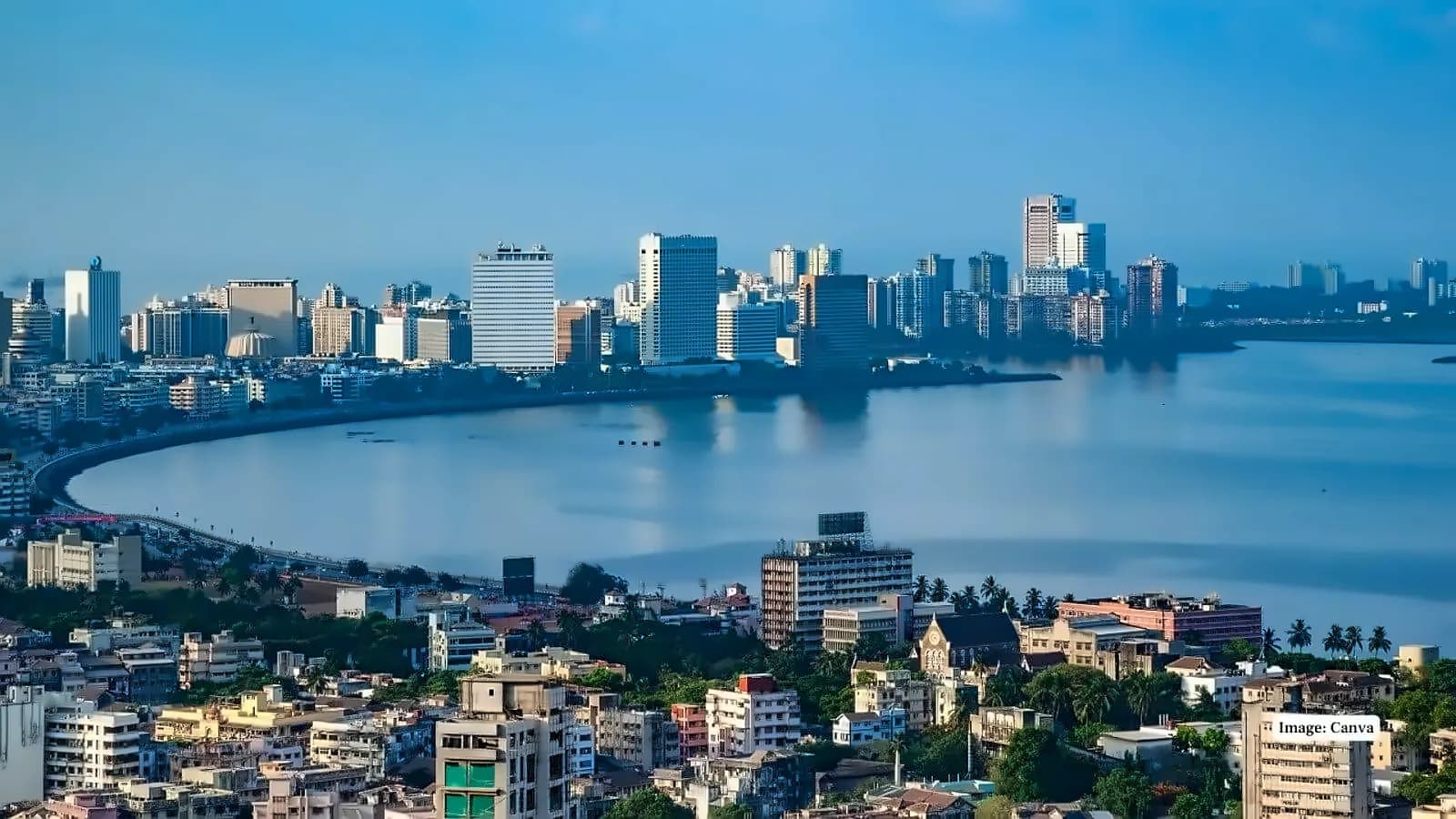
According to CBRE's latest report, Mumbai's office space demand is projected to grow at a compounded annual growth rate (CAGR) of 12-15% over the next four years (2027-2030). The real estate consultant noted that the average annual office demand in Mumbai stood at 11.8 million sq ft between 2022 and 2026. CBRE's analysis, released at a CII event, indicates that this growth will be primarily driven by global capability centres (GCCs), which are being established by foreign firms across seven major cities of India, including Mumbai. The office demand is estimated to grow at a CAGR of 12-15% during the 2027-2030 period, driven primarily by the BFSI, technology, and flexible space players.
As reported by CBRE, Mumbai accounted for about 16% of India's office inventory as of June 2026, with the country's total office stock having crossed 1 billion sq ft. CBRE Chairman & CEO Anshuman Magazine highlighted that by 2030, Mumbai has the opportunity to emerge as one of the world's major economic engines. The transformation will be driven by mobility including metro, rail, roads and airport connectivity, alongside redevelopment, new business districts, housing and transit-oriented growth. Magazine emphasized that Mumbai has all the ingredients to become a truly global gateway city with strengths in finance, technology, services, manufacturing and data centres. The next five years could be transformative for the city's real estate landscape.
According to CBRE's projections, the total office stock is projected to grow 1.3 times by 2030. CBRE's ambition is for Mumbai to stand alongside cities such as Tokyo and Singapore as a leading global economic hub, with the next five years being transformative for the city's real estate landscape. The transformation will be driven by mobility including metro, rail, roads and airport connectivity, alongside redevelopment, new business districts, housing and transit-oriented growth.
Onkar Shetye of Mumbai-based realty firm Aurum Ventures Group commented on the changing GCC landscape, stating that GCCs are no longer looking at India purely through the lens of workforce and cost. According to Shetye, who is also Executive Director of listed firm Aurum PropTech, these organizations are increasingly asking what environment will attract, engage and retain the next generation of global talent. He noted that for this workforce, the office is no longer merely a workplace but an ecosystem for collaboration, professional development, wellbeing and social connection, making LEED certification, ESG, health and wellness, recreation and high-quality everyday experiences integral to the GCC real estate proposition. The next generation of GCCs will compete for office space as well as talent, with these organizations increasingly seeking office spaces that offer an ecosystem for collaboration, well-being, and talent retention.