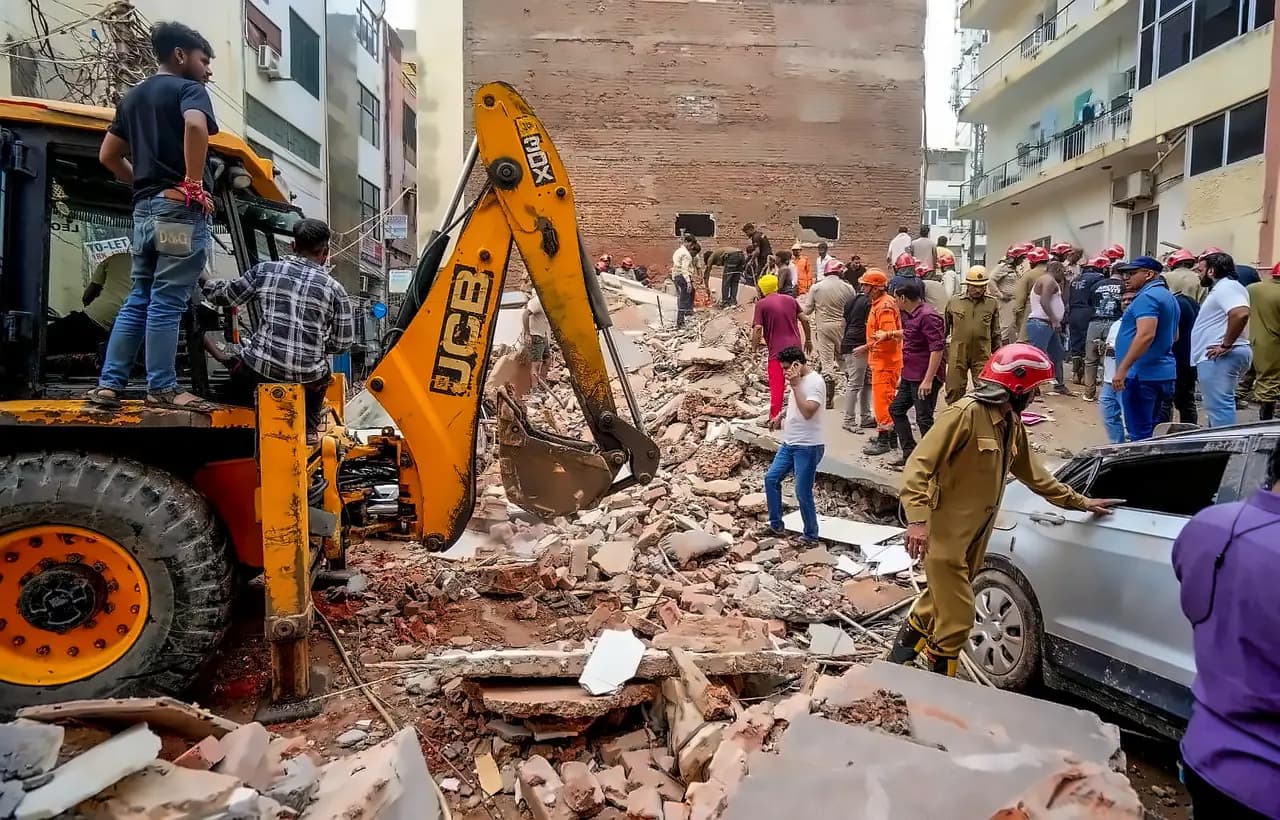
The recent collapse of a paying-guest housing facility in South Delhi's Satya Niketan, which claimed seven lives, has once again brought attention to haphazard and virtually unregulated construction in metros. According to reports from Business Standard, building authorisations across Indian cities operate within a maze of rules, laws, and notifications that have little relation to the status of the colonies they are supposed to regulate. The incident occurred in an area home to hundreds of college-going students who lack official hostel accommodation, highlighting the critical housing shortage in educational hubs.
Despite the National Building Code (NBC) being designed by the Bureau of Indian Standards and first published in 1970, most state public works departments have failed to adopt it. As reported by Business Standard, municipal bodies like the Municipal Corporation of India do not even refer to it, while on paper, the NBC is supposed to apply to all kinds of buildings, including designated areas like Lal Dora enclaves in Delhi. The last amendment to the Code was made in 2015, but implementation remains patchy across states.
Delhi faces a severe housing shortage with Delhi University's north and south campuses having a combined student population of over 250,000, but housing facilities for only 9,000 students. According to Business Standard, Lal Dora areas around these campuses have undergone decades of building spree, offering cheap but unsafe living arrangements for tens of thousands of students without hostel accommodation. The Delhi Development Authority maintains a list of unauthorised colonies inhabited by affluent sections of society, showing how regulatory enforcement varies significantly across different areas.
Despite regulatory frameworks, enforcement remains weak across Indian cities. As reported by Business Standard, only 31 or 1.2% of commercial buildings have a No Objection Certificate from the Delhi Fire Service, while of the 726 buildings used for paying guest accommodation, a mere eight buildings have a structural stability certificate. The Municipal Corporation of Delhi has implemented measures to expedite construction permits through online systems, but these clearances continue to differ across cities and regions.
Building regulations in India operate under a fragmented system where rules differ significantly across states and cities. According to Vishal Gupta, executive director at Deloitte India, building approvals are primarily governed by state governments, with municipal corporations serving as primary approval authorities for most urban projects. As reported by Business Standard, even within metropolitan regions, different areas may fall under different regulatory authorities, creating a complex approval pathway that varies significantly within the same urban region.