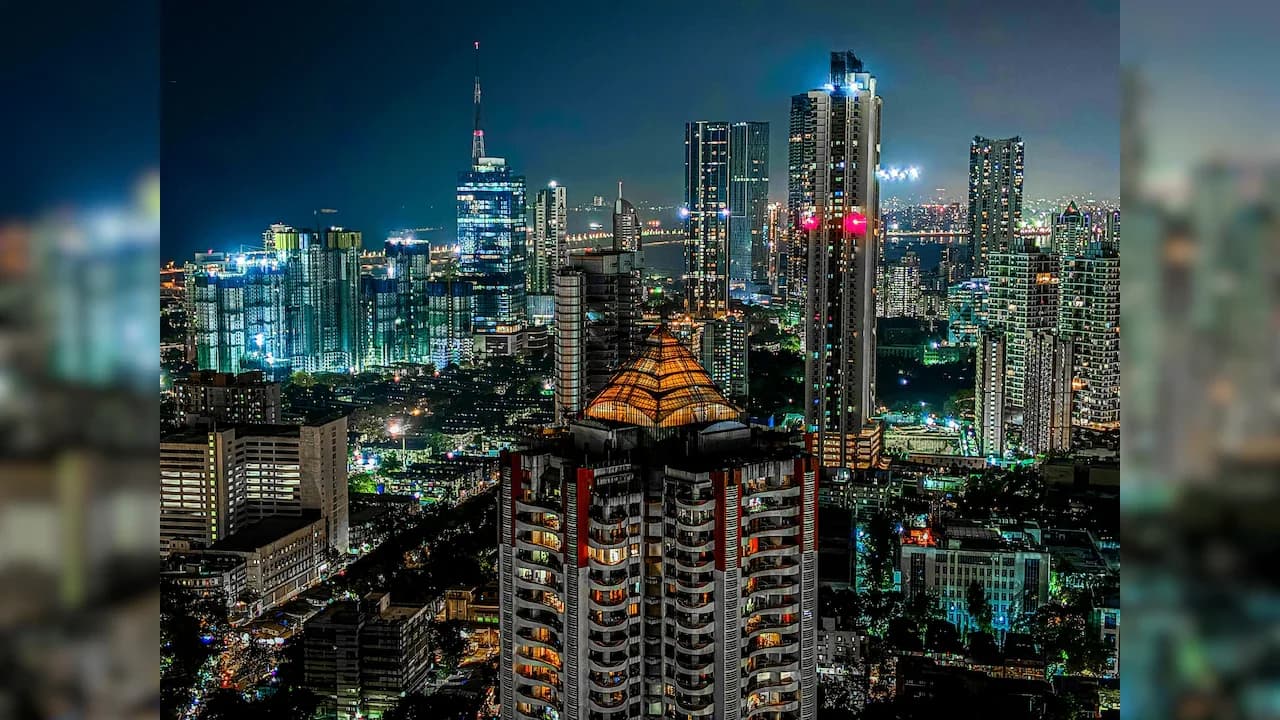
Housing sales across India's seven major cities rose 3% annually to over 100,220 units during July-September 2026, according to Anarock's latest data. Total sales value increased 2% to ₹1.55 trillion from ₹1.52 trillion in the corresponding period of the preceding year. MMR and Bengaluru accounted for 48% of total sales across the top seven cities in Q3 2026, highlighting their dominant market position. Sales volumes reached 100,220 units during July-September 2026, up from 97,080 units in the year-ago period, with the average residential property price across the top seven cities collectively witnessing annual growth of 7%. The top seven cities saw approximately 1,14,320 units launched in Q3 2026, against 96,690 units in Q3 2025 — an 18% annual increase.
Bengaluru recorded the strongest growth among large markets with sales increasing 12% to 16,670 units from 14,835 units year-on-year, according to Anarock's latest data. The city's housing sales value rose 15% to ₹12,970 units from ₹11,305 units, demonstrating continued momentum in the premium market. The composition of sales is particularly interesting for wealthier homebuyers, as the ₹2-5 crore segment accounted for 41% of Bengaluru's housing sales value in H1 2026, compared with 32% a year earlier, while the share of homes priced below ₹1 crore fell into single digits. Bengaluru also saw nearly 47,700 new units launched, up around 22%, demonstrating continued developer confidence in the city's premium market. Sterling Developers Director-Marketing Anjana Sastri noted that Bengaluru city has seen rapid growth in the number of HNIs and successful entrepreneurs working in tech and startup ecosystems who seek premium living spaces.
Mumbai Metropolitan Region (MMR) saw sales rise 5% to 31,750 units from 30,260 units year-on-year, maintaining its strong performance trajectory. MMR recorded approximately 37,500 new house launches in Q3 2026, the highest among the seven major cities tracked by ANAROCK, with the figure being 27% higher than 29,565 units launched in Q3 2025 and 9% above the 34,555 units launched in Q2 2026. Hyderabad also demonstrated robust growth with sales increasing 15% to 12,970 units from 11,305 units, while Pune experienced a 6% decline to 15,690 units from 16,620 units. Delhi-NCR saw a marginal 1% dip to 13,765 units from 13,920 units, and Chennai witnessed a 10% fall in sales to 5,395 units from 6,010 units. Kolkata also decreased 4% to 3,980 units from 4,130 units during the July-September quarter. Among the top cities, MMR recorded the highest sales of around 31,750 units, followed by Bengaluru with approximately 16,670 units.
Mumbai city recorded ₹58,362 crore in primary housing sales in H1 2026, up 4% from a year earlier, but sales volumes were broadly flat at around 24,500 units, while the average ticket size increased 4% to a record ₹2.38 crore. Homes priced at ₹5 crore and above accounted for 40% of Mumbai's sales value, compared with 38% a year earlier. Hyderabad also illustrates the premiumisation trend with housing sales value broadly flat at ₹56,966 crore, but volumes fell 11% to around 28,200 units, while the average ticket size increased 13% to a record ₹2.02 crore. The premium end is gaining importance with homes priced at ₹5 crore and above accounting for 27% of Hyderabad's sales value, while the share of sub-₹1 crore homes fell to just 8%. More than 30% of MMR's new supply during the quarter was in homes priced above ₹1.5 crore, while in Pune, more than 51% of new supply was concentrated in the ₹80 lakh - ₹1.5 crore segment. Bhavesh Kothari, Founder & CEO, Property First Realty, noted that in Bengaluru, the strength of the employment ecosystem, continued infrastructure development and sustained demand from professionals and HNIs are supporting residential activity.
Anarock Chairman Anuj Puri stated that the upcoming festive season is expected to boost residential demand, building on the momentum seen in the September quarter. Puri noted that "While buyers will likely stay selective due to higher prices and increasing affordability concerns, the combination of festive sentiment, stable borrowing costs and a healthy new launch pipeline should support sales. Demand is resilient, but we expect more measured growth - well-priced, well-located projects that align with the current demand profile will outperform others this festive season." Sanjeevini Group Chairman Umesh Gowda H A noted that the housing sector is moving towards a more mature and demand-driven phase, where buyers are increasingly prioritising quality, location, amenities and the credibility of the developer. Ramji Subramaniam, Managing Director of Sowparnika Projects, noted that the end-user demand in Bengaluru remains high, leading to growth in sales. Sterling Developers Director-Marketing Anjana Sastri added that there is increasing interest among homebuyers to continue to invest in residential real estate for long-term returns and the desire for stability amid global volatility. In the first nine months of 2026 (9M 2026), sales increased by about 2% YoY to 2,92,610 units, with quarter-on-quarter growth of 10%. The trend indicates consolidation of premiumisation rather than another acceleration in the trend, with the market showing resilience despite some regional variations in performance.