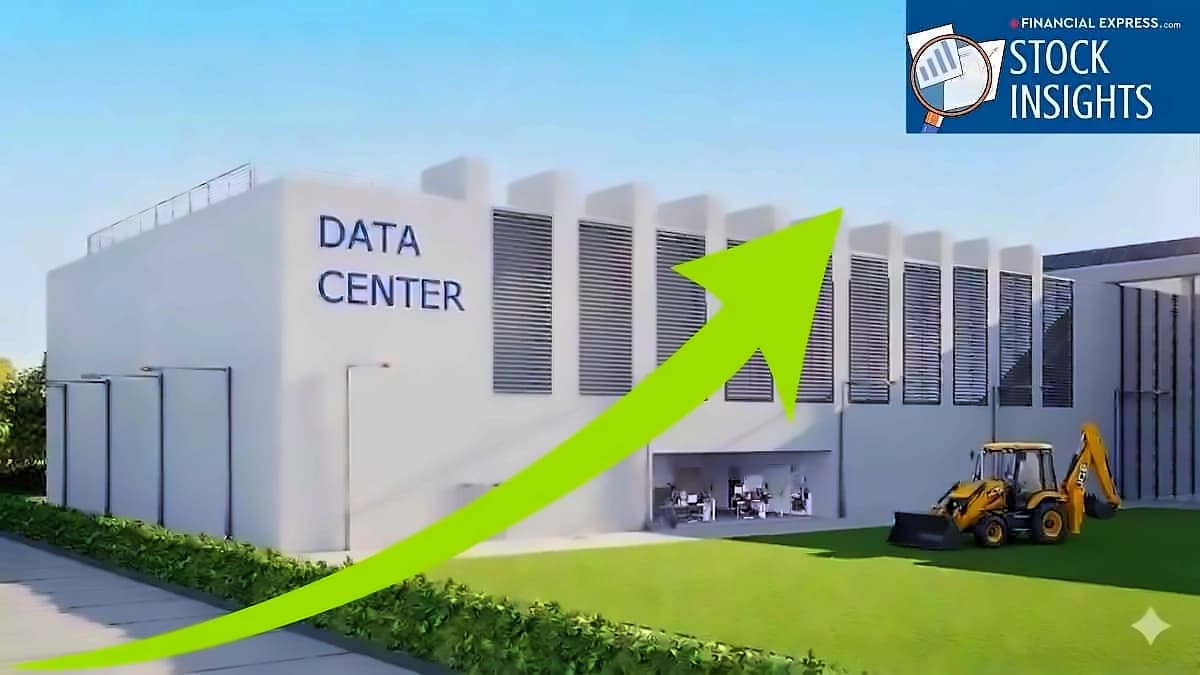
India's data centre market is experiencing rapid expansion with installed capacity tripling to 1.5 GW in 2025 from approximately 375 MW in 2020, according to the Government of India. Despite generating nearly 20% of global data, India accounts for only about 3% of global data centre capacity as of September 2024, highlighting significant growth potential. The market is projected to double to US$22 billion (around ₹2 lakh crore) by 2030, up from US$10 billion in 2025, with capacity expected to reach 6.5 GW by 2030, according to S&P Global. Hyperscalers including Amazon Web Services ($35 billion), Microsoft ($17.5 billion), and Google ($15 billion) have pledged approximately US$67.5 billion in investment in India. Most of this data centre infrastructure remains concentrated in key metros, led by Mumbai, due to strong connectivity and infrastructure. Chennai acts as a global data gateway with multiple submarine cables, while Hyderabad, Bengaluru, and Pune are emerging as secondary hubs.
Macrotech Developers (Lodha) is expanding into the data centre sector through its 400-acre Palava project, which is fully ready for construction. The site offers ultra-reliable power supply of 3 GW from both state and national grids, with five optical fiber routes and plans for expansion. Lodha is utilizing a hybrid model, selling 300 acres directly to operators at projected land values of ₹70 crore per acre, while retaining 100 acres for its own portfolio. The company has signed two MOUs with the government to facilitate investments totaling ₹130,000 crore in the park. The capital expenditure for a turnkey shell in Palava is significantly lower, at around US$60 lakh per MW, compared with the global average of US$80–120 lakh per MW. Specifically, management noted that constructing a power shell in Palava costs only about 30% of what it would cost in the US or Europe. The park has already gained traction, securing industry giants Amazon Web Services and STT, backed by Singapore's Temasek, as anchor operators. Lodha expects to announce its first set of advanced build-to-suit (BTS) box agreements within FY27 and rental income from these data centres to begin flowing by FY29.
The Palava data centre park offers significant cost efficiencies with capital expenditure at around US$60 lakh per MW compared to the global average of US$80–120 lakh per MW. The facility uses 90% green power, reducing operational costs by over 30% and bringing power costs down to US$0.06 per kWh. The park has secured Amazon Web Services and STT, backed by Singapore's Temasek, as anchor operators, with Lodha expecting to announce its first build-to-suit agreements within FY27 and rental income beginning by FY29. This strategy supports Lodha's goal to grow annuity income by 10x over the next six years.
Anant Raj has outlined an aggressive expansion plan to scale data centre capacity to 357 MW by FY32, with 117 MW expected by FY28. The company currently operates 28 MW capacity across Manesar (21 MW) and Panchkula (7 MW), generating ₹176 crore revenue from data centres and infrastructure in FY26. In FY27 alone, 35 MW capacity at Manesar and Rai locations is scheduled to go live, with 25% of the 357 MW capacity dedicated to cloud services. The planned 357 MW capacity is distributed across four key locations. In Manesar, the existing building is ready to handle up to 100 MW of IT load, with a 50 MW greenfield expansion on adjacent vacant land requiring ₹4,500 crore investment in two phases. A 200 MW IT load data centre is planned at Rai, while work has commenced on 20 MW at Panchkula, with total planned IT load capacity at Panchkula standing at 57 MW. The company also signed an MoU with the Andhra Pradesh government to set up a new 50 MW data centre and IT park, expanding its footprint into South India.
Lodha delivered strong FY26 performance with revenue growing 21% year-on-year to ₹16,676 crore and net profit rising 24% to ₹3,431 crore. The company achieved record pre-sales of ₹20,530 crore with collections improving 5% to ₹15,160 crore, while its net debt-to-equity ratio fell to 0.2x, well below the 0.5x threshold. Anant Raj reported 22% revenue growth to ₹2,512 crore in FY26 with EBITDA rising 36% to ₹723 crore and margins expanding 271 bps to 28%. The company has significantly deleveraged its balance sheet with net debt falling to ₹50 crore from ₹1,626 crore in FY21. Both companies trade at premium valuations relative to industry and 5-year historical medians, with Lodha showing stronger return ratios than Anant Raj. Lodha's ROCE stands at 25.8% compared to Anant Raj's 24.8%, while Lodha's ROE is 15.8% versus Anant Raj's 11.2%. The companies' annuity businesses are diversified across three primary asset classes, with Lodha's annuity income in FY26 at approximately ₹290 crore, constituting a small fraction of total revenue.