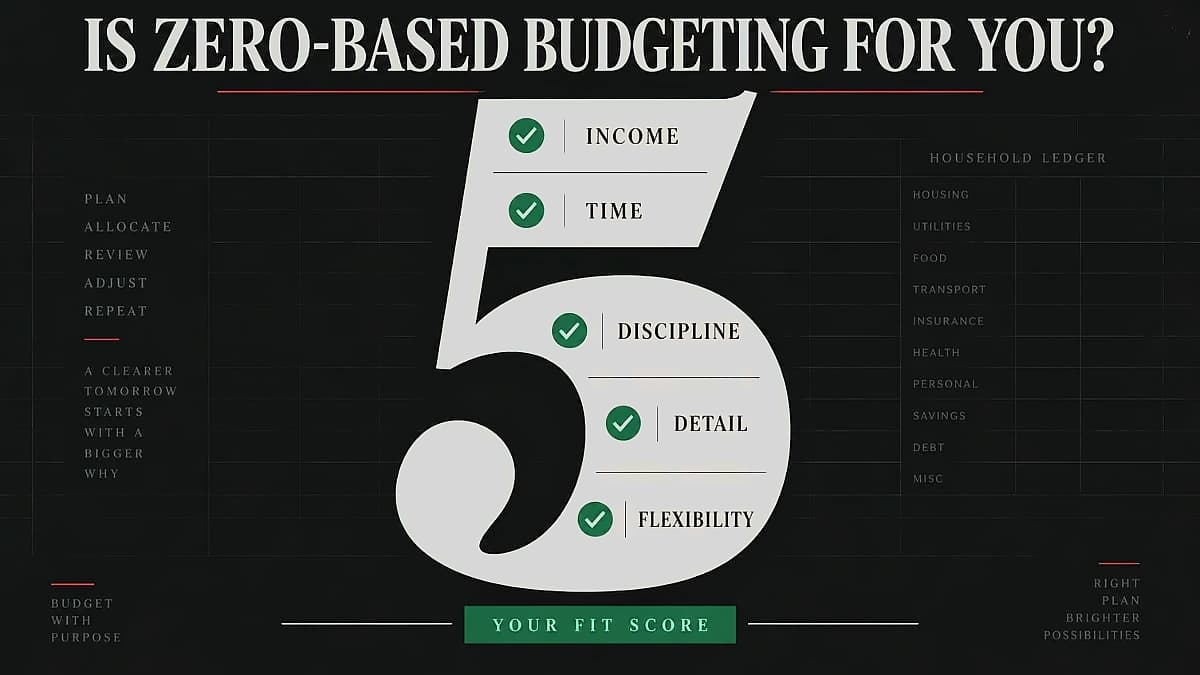



Zero-Based Budgeting (ZBB) represents a comprehensive approach to financial planning that starts from scratch each month. According to reports from [source], this method requires organizations to justify every expense from zero, rather than building on previous budget allocations. The approach catches spending leaks that percentage-based rules may miss, but its effectiveness depends on specific organizational conditions.
As reported by [source], ZBB is most effective when implemented under specific conditions. The method requires stable income levels and monthly rebuilding processes to function properly. Organizations must be willing to justify every expense from zero each month, rather than relying on historical budget allocations. This approach allows for more precise expense tracking and eliminates wasteful spending patterns.
According to [source], organizations should evaluate five key criteria before committing to ZBB implementation. The criteria include income stability, monthly rebuilding capability, organizational commitment, expense tracking systems, and budget justification processes. These factors determine whether ZBB will be an effective tool for managing organizational finances and eliminating unnecessary spending.
A global souvenir imaging leader headquartered in Dubai has successfully implemented ZBB methodology to improve profitability and strengthen its digital platform roadmap. The company, which operates across hundreds of theme parks, water parks, resorts and attractions globally, used proprietary smart imaging and facial recognition technology to automate guest photography. The implementation resulted in EBITDA improvement from approximately 5% to 11%, demonstrating the practical effectiveness of zero-based budgeting in real-world business scenarios.
A recent household budget case study demonstrates the practical application of ZBB principles. According to latest reports, a Rs 1.1 lakh household budget was successfully worked out line by line, including Rs 17,000 in hidden annual bills. This example shows how ZBB can be applied to personal finances, where every rupee is assigned before the month runs out, ensuring comprehensive expense tracking and elimination of hidden costs that can drain household budgets.