The fundamental difference between value and growth investing lies in their approach to identifying investment opportunities. Value investors seek bargains by finding stocks trading below their intrinsic value, while growth investors look for tomorrow's winners - companies positioned for substantial revenue or earnings growth. Value investors use detailed analysis to identify undervalued securities, examining balance sheets, financial statements, and cash flow statements to understand a company's assets, liabilities, revenues, and expenses. They rely heavily on financial ratios, such as book value per share, which is calculated by subtracting liabilities from assets and dividing by outstanding shares to compare with industry peers or market averages.
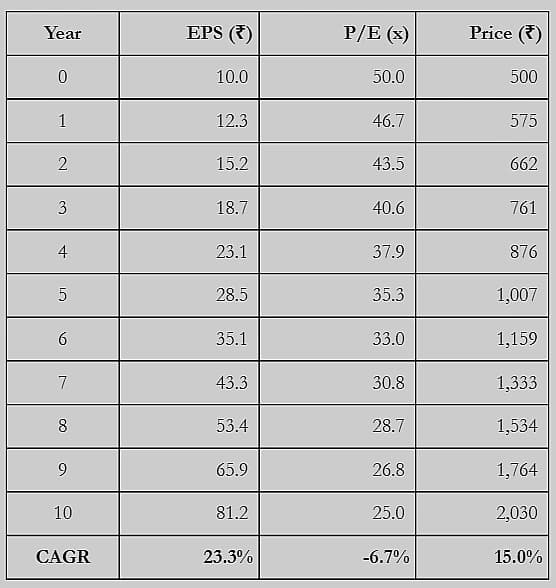
According to Safal Niveshak, successful value investing requires answering three fundamental questions before making investment decisions. The first question focuses on business quality - whether the company earns returns on capital above its cost of capital and demonstrates strong cash flow generation. The second question addresses price discipline - determining whether current valuations are reasonable given the business fundamentals. The third question evaluates timing - assessing the company's position in its business cycle and whether current market conditions align with investment objectives. These three questions are not equal in weight, with business quality being the most important for exceptional businesses with long runways, while timing becomes critical for mediocre or cyclical businesses.
Growth investors employ a forward-looking approach, focusing on companies with sustainable competitive advantages and expected rapid revenue growth. They prioritize companies that are effective at containing costs and have experienced management teams in place. Unlike value investors who analyze historical financials, growth investors use criteria to identify promising stocks, often purchasing shares even after rapid price appreciation in hopes of continued growth. This strategy requires identifying companies positioned to generate revenues or earnings greater than market expectations, with the belief that strong fundamentals will attract more investors and drive continued price appreciation.
Recent performance data shows that over the past decade, value stocks have not performed as well as growth stocks. However, looking at cumulative data reaching back to 1926, this pattern has not always been consistent. This historical context suggests that while growth stocks may currently outperform, value investing has historically delivered strong returns over extended periods. The performance gap highlights the opposing nature of these strategies, where a stock prized by value investors might be considered worthless by growth investors, and vice versa. The debate between value and growth investing remains unresolved, with investors advised to consider their personal circumstances when determining which strategy aligns best with their investment objectives.
According to the analysis, these opposing strategies require different approaches to investment decision-making. Value investors must conduct thorough fundamental analysis without emotional attachment to stock prices, while growth investors need to identify companies with strong growth potential and effective management teams. The key lies in understanding that great businesses at fair prices beat fair businesses at wonderful prices because quality eventually makes high entry prices look reasonable in hindsight. Investors who wait for perfect combinations of all three factors often buy little, as markets rarely align all elements simultaneously. The choice between value and growth investing should be based on personal circumstances, risk tolerance, and investment timeline rather than attempting to predict which strategy will outperform in the short term.