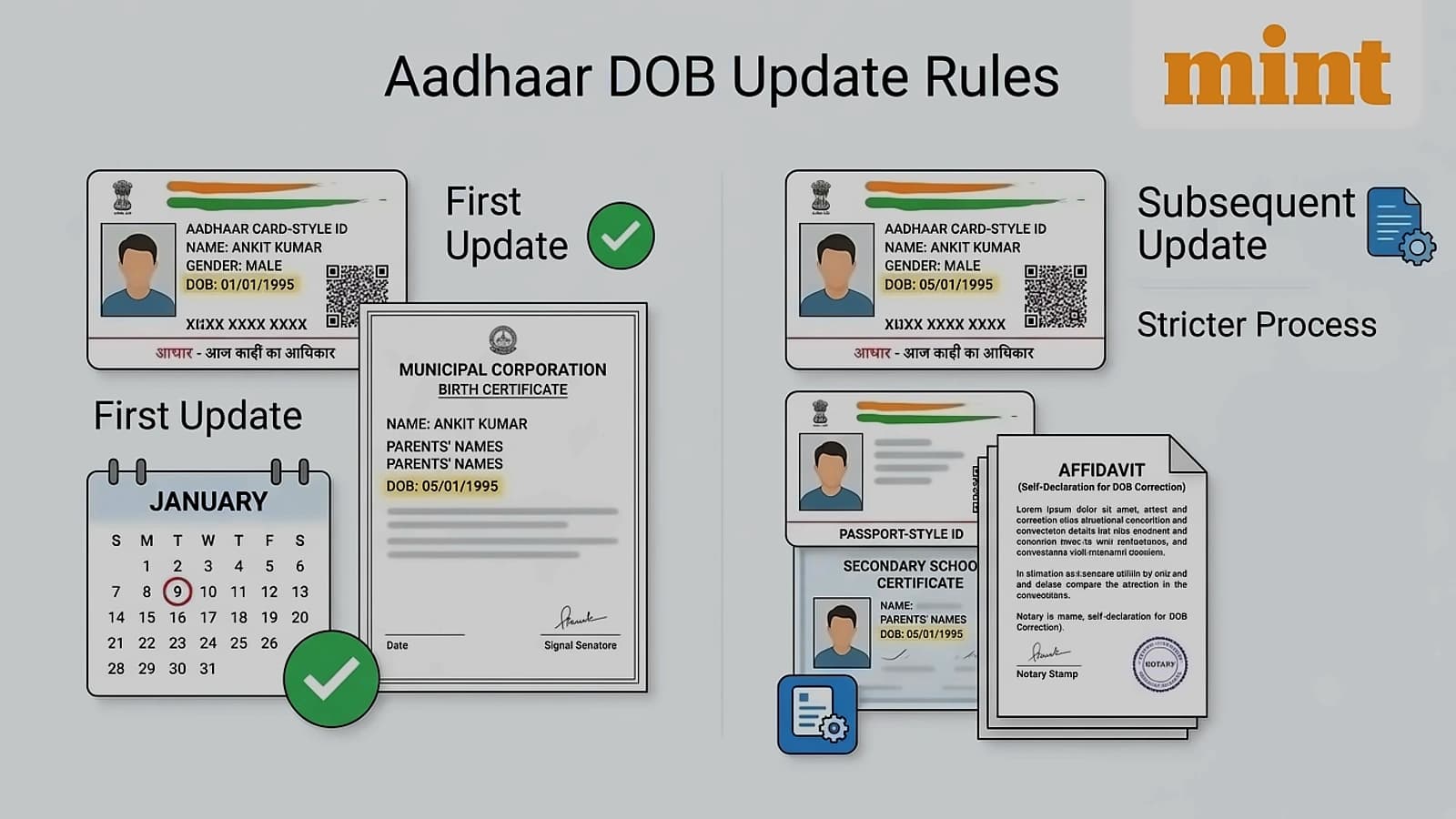
The Unique Identification Authority of India (UIDAI) has established a comprehensive framework for accepting various documents across different categories to facilitate Aadhaar updates. According to reports from Mint, the authority accepts different documents for changes to name, address, date of birth, and relationship details, with each category having specific requirements based on the information being updated. UIDAI sorts everything into three buckets and the bucket decides where you have to go - standard demographic updates include name, date of birth, gender, address, mobile number and email address, while biometric details like photographs, fingerprints and iris scans can only be captured at an Aadhaar centre.
Proof of identity documents must contain the applicant's name and photograph and are used to verify identity or name changes. As reported by Mint, accepted identity proofs include Indian passport, ration card or Public Distribution System (PDS) photo card, voter ID card or e-Voter ID, driving licence, photo identity cards from Central or state government, PSU, or regulatory bodies, pensioner or freedom fighter photo identity cards, Kisan photo passbook, CGHS, ECHS, ESIC or medical claim cards, disability-related certificates, MGNREGA job cards, state-issued domicile certificates, marriage certificates, divorce decrees, caste certificates, transgender identity cards, Gazette notifications for name changes, and educational marksheets or certificates. UIDAI accepts only the proofs on its List of Supporting Documents - passports, driving licences and voter ID cards sit on that list, with proofs of identity must carry your name and photograph.
Proof of address documents must contain the applicant's name and address in India and are used to update the address in Aadhaar. According to Mint, accepted address proofs include Indian passport, ration card, PDS photo card, Kisan photo passbook, voter ID, service photo identity cards, pensioner identity cards, MGNREGA job cards, state-issued domicile certificates, disability-related certificates, marriage certificates, SC/ST/OBC certificates, bank or post office savings passbooks (not older than three months), bank account or credit card statements, electricity, water, gas, landline, post-paid mobile or broadband bills (generally not older than three months), property tax receipts (not older than one year), registered sale agreements, gift deeds, rent agreements, government accommodation allotment letters (not older than one year), life or medical insurance policies valid up to one year from issue date, and UIDAI-prescribed address certificates from authorized public representatives. For an online address request, UIDAI says four things decide acceptance - the document must be on the valid list, it must be in your name, the address you type must match the address on it, and the upload must be a clear coloured scan of the original.
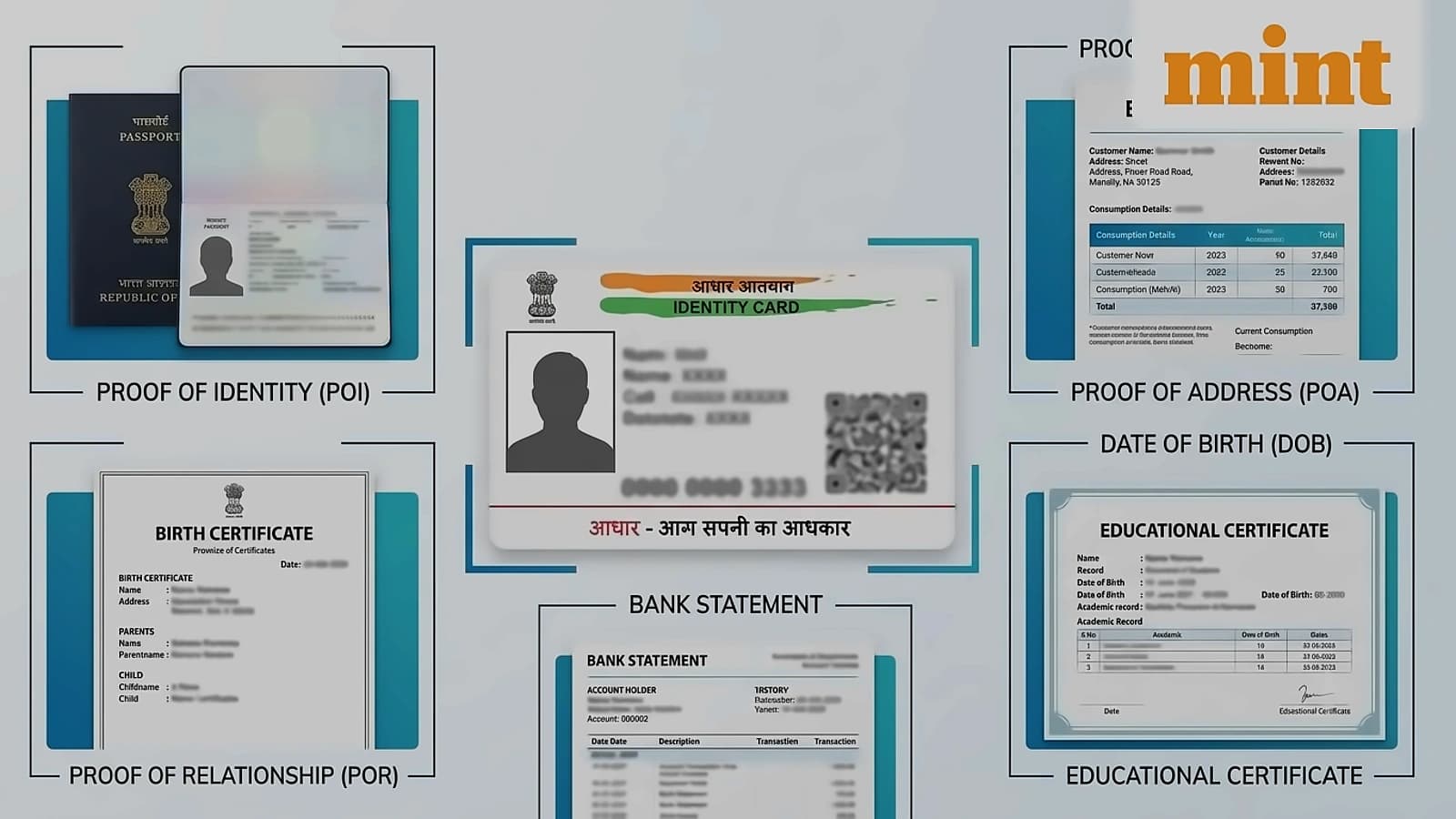
Proof of relationship documents establish the child's name and Head of Family name and are used when updating Aadhaar details through family members. As reported by Mint, accepted relationship proofs include Indian passport, ration card, pensioner photo identity cards, MGNREGA job cards, domicile certificates, marriage certificates, SC/ST/OBC certificates, educational marksheets, birth certificates, self-declarations by immediate family members living at the same address, legal guardianship documents from competent government authorities or courts, and UIDAI-prescribed certificates from District Child Protection Officers with required child-care institution placement orders. Proof of date of birth documents include Indian passport, service photo identity cards from authorized government bodies or PSUs, pensioner photo identity cards, freedom fighter photo identity cards, pension payment orders, educational marksheets, transgender identity cards, and birth certificates issued under the Registration of Births and Deaths Act, 1969. Name changes are normally limited to two during a person's lifetime, while date of birth and gender can each be changed once.
UIDAI has introduced a new fee structure for Aadhaar updates, with a standalone demographic update costing ₹75, a biometric update costing ₹125, and the demographic part being free when bundled with a biometric update. The authority has extended the fee waiver for online document update by another year, so it now covers 15 June 2026 to 14 June 2027. Mobile number changes are the easiest case, as UIDAI does not ask for any document or for your old number at a centre. For online address requests, small additions like a house number or a corrected pin code are allowed, but anything that changes the base address needs a different proof. The service is free but cannot fix wrong spelling or outdated addresses - if details are wrong, go for an address or demographic update and pay the fee.