According to an analysis by WhiteOak Capital Asset Management comparing normal SIP, fixed top-up SIP, and variable top-up SIP strategies in the BSE Sensex TRI, investors who increase their SIP contributions periodically stand a much better chance of building a larger corpus than those who continue investing the same amount. The analysis shows that while a regular ₹10,000 monthly SIP generated substantial wealth over the past 25 years, investors who increased their contributions annually accumulated significantly larger corpuses. The latest data reveals that SIPs with longer horizons consistently outperform shorter-term investments, with 3-year SIPs showing negative returns nearly 12% of the time, while 15-year SIPs delivered positive returns above 10% in 98% of rolling periods.
As reported by Mint, the analysis defines three distinct SIP approaches: Normal SIP involves investing a fixed amount every month throughout the investment period, with no increases. Fixed top-up SIP increases the monthly SIP amount by a fixed amount each year, starting at ₹10,000 and increasing by ₹1,000 annually. Variable top-up SIP increases the SIP amount by a fixed percentage every year, with the study showing a 10% annual increase, starting at ₹10,000 and reaching ₹13,310 per month by the fourth year. The latest report also confirms that the frequency of investment (daily, weekly, or monthly) makes minimal difference in final returns, with the data showing that time in the market is more important than the specific date of starting SIP investments.
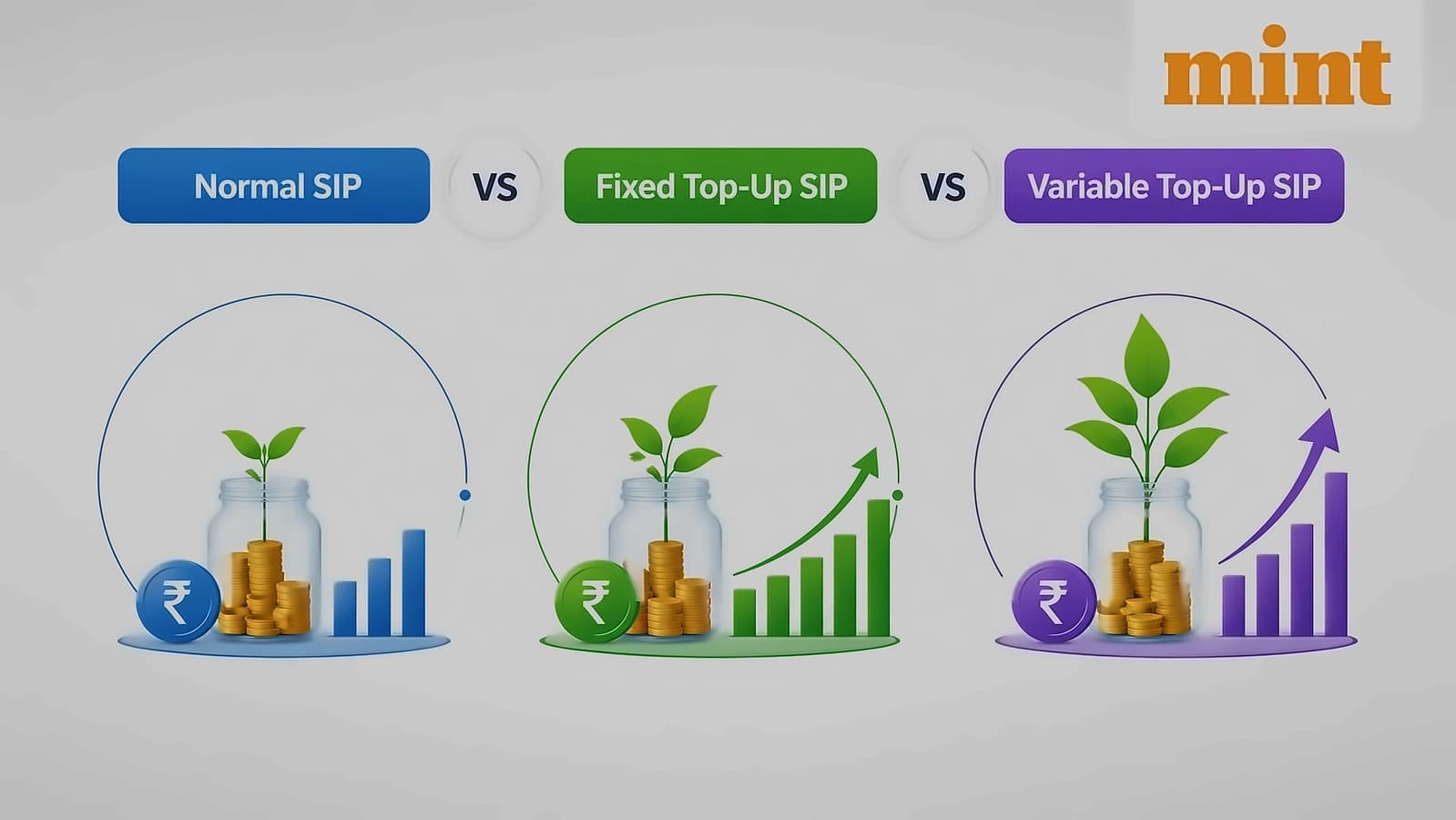
According to the analysis, over the last five years, a normal SIP investor contributing ₹10,000 every month would have invested ₹6 lakh and accumulated ₹6.95 lakh as of May 2026. A fixed top-up SIP investor, who increased the monthly SIP by ₹1,000 every year, would have invested ₹7.20 lakh and accumulated ₹8.18 lakh. Meanwhile, a variable top-up SIP investor, who increased the SIP amount by 10% annually, would have invested ₹7.33 lakh and accumulated ₹8.30 lakh. The difference was not substantial due to limited time for higher contributions to compound. The latest data also reveals that SIPs that delivered 8% or less in their first 5 years went on to earn an average 18.30% over 10 years, while SIPs that started strong (above 8% in the first 5 years) averaged 14.70% over 10 years, indicating that laggard SIPs often catch up as time passes.
The analysis reveals significant differences emerge over longer periods. A regular SIP investor contributed ₹12 lakh and accumulated ₹21.26 lakh by May 2026, while the fixed top-up SIP generated ₹28.52 lakh from investments of ₹17.4 lakh. The variable top-up SIP recorded ₹30.49 lakh with investments of ₹19.12 lakh, highlighting how increasing contributions can accelerate wealth creation. The latest data also shows that the cost of delay far outweighs the marginal return advantage of lower entry prices, with investors who started SIPs at market peaks actually accumulating more wealth than those who waited for market bottoms. For example, during the Jan 2008 peak vs Mar 2009 bottom period, top-entry investors accumulated ₹71.63 lakh by May 2026 vs ₹61.48 lakh for bottom-entry investors, despite lower XIRRs.
The most striking difference appears over a 25-year period. A regular ₹10,000 monthly SIP required total investments of ₹30 lakh and grew to ₹227.28 lakh, delivering an XIRR of 13.73%. In comparison, a fixed top-up SIP involved ₹66 lakh in total investments and accumulated ₹344.28 lakh with an XIRR of 13.25%. The variable top-up SIP generated the largest corpus of ₹445.86 lakh from total investments of ₹118.02 lakh, despite a slightly lower XIRR of 12.94%. The biggest winner was the 10% variable top-up strategy, which accumulated nearly ₹4.46 crore and almost doubled the wealth generated by a regular SIP. The latest data also confirms that the disciplined investor who invests consistently on the 15th of every month earns 13.40% returns, while choosing the lowest NAV day makes minimal difference in long-term performance.