As the May 31 deadline for filing the Statement of Financial Transactions (SFT) approaches, tax experts are urging taxpayers to review their financial records carefully. The Statement of Financial Transactions (SFT) is a reporting mechanism under Section 285BA of the Income-tax Act, through which specified entities report certain financial transactions to the Income Tax Department. Banks, non-banking financial companies (NBFCs), post offices, mutual fund trustees, forex dealers, registrars, and companies issuing dividends or buying back shares are among the entities required to submit SFT reports. Reporting entities must file SFTs annually by May 31 following the end of the financial year, with the data reported through SFT feeds into taxpayers' Annual Information Statement (AIS). According to the Income Tax Department, "Filing complete and accurate information helps reduce reporting errors and facilitates smoother compliance for taxpayers."
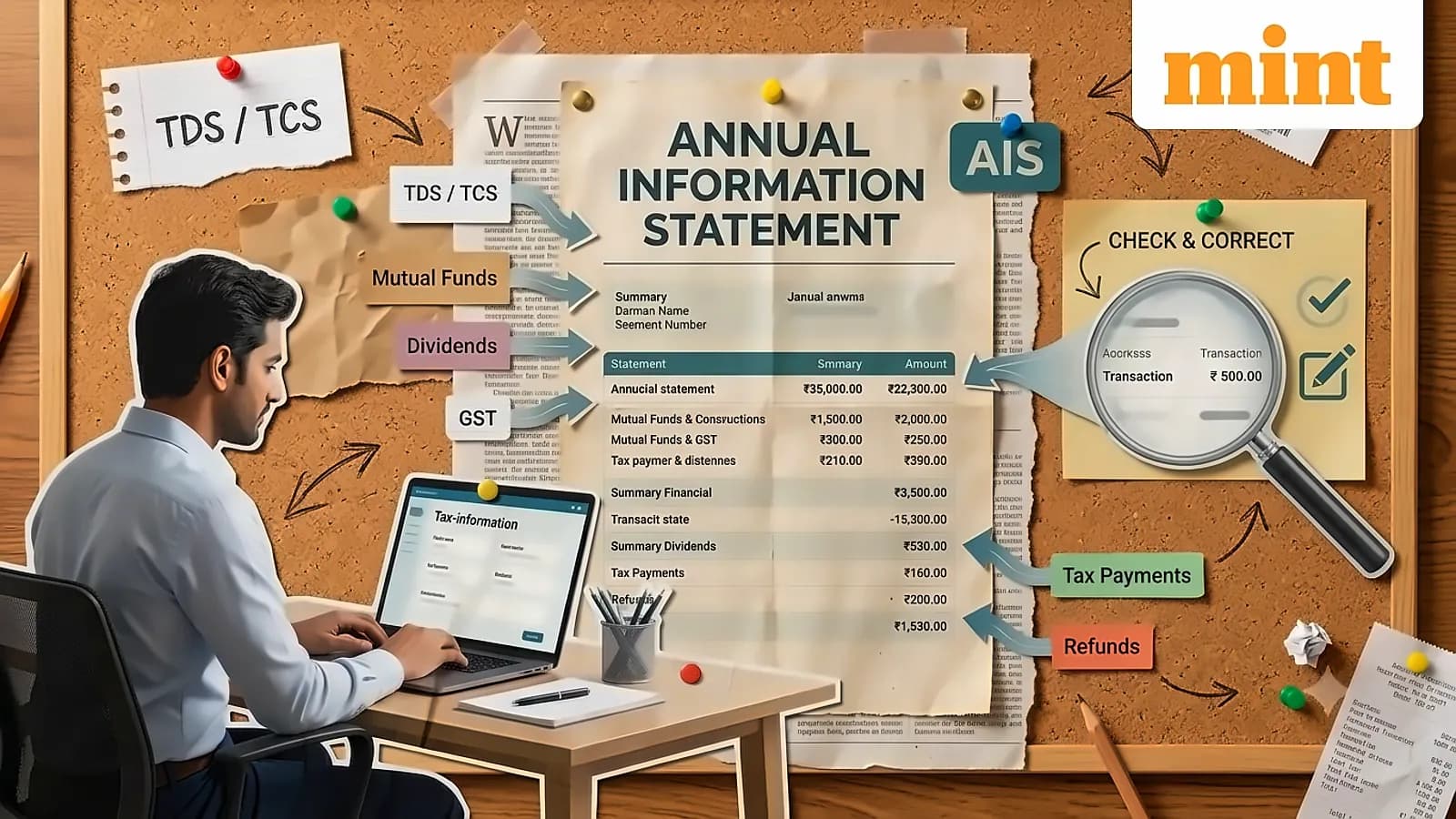
The Annual Information Statement (AIS) is a comprehensive financial document available on the income-tax portal that captures a taxpayer's income, taxes paid, investments and high-value financial transactions carried out during a financial year. According to Vishwas Panjiar, managing partner at SVAS Business Advisors, AIS is populated using data reported by banks, mutual funds, stockbrokers, companies, employers and other reporting entities through SFT filings for transactions crossing prescribed thresholds. However, as reported by Business Standard, taxpayers should not treat AIS as a final or error-free tax statement, as it may contain duplication, incorrect classification, timing differences or wrong PAN tagging. Analysis of SFT filings has identified several recurring issues, including duplicate reporting of transactions, incorrect transaction values, and missing or wrong PAN details that can result in inaccurate information appearing in taxpayers' AIS. The Income Tax Department's analysis of SFT filings by banks and mutual funds has identified duplicate transaction reporting, incorrect transaction values, and missing or wrong PAN details as common recurring issues.
According to the Income Tax Department's analysis, errors are more likely in cases involving joint accounts or jointly held investments, where values may sometimes get reported in an incorrect manner. Lack of reconciliation before filing, weak internal checks, and delays in SFT submission are also among the common errors identified by income tax officials. The information reported through SFT filing is used by the tax department for cross-checking taxpayer disclosures during ITR processing. Any mismatch between a taxpayer's ITR and the information available to the department may trigger scrutiny, notices, or delays in tax refunds. Taxpayers can review these reported transactions through the Annual Information Statement (AIS) or Taxpayer Information Summary (TIS) available on the Income Tax India e-filing portal. The SFT covers high-value transactions, payment of dividend, payment of interest, and transactions in listed securities and units of mutual funds.
Tax experts emphasize the importance of cross-checking AIS data with multiple sources before filing returns. As reported by Business Standard, taxpayers should reconcile AIS data with Form 26AS, Form 16/16A, bank statements and capital gains reports before filing returns. Neeraj Agarwala, senior partner at Nangia & Co LLP, notes that common mismatches include TDS-related errors where taxpayers report income net of TDS instead of the gross amount reflected in AIS and Form 16/16A. Taxpayers should especially verify dividend income, capital gains, foreign remittances, property transactions and TDS/TCS credits, as incorrect reporting may lead to notices or excess tax payment. With the Income Tax Department already enabling online filing of ITR-1, ITR-2, and ITR-4 forms for Assessment Year 2026-27, taxpayers have a limited window to reconcile records before the July 31 filing deadline. The department has provided a step-by-step guide for flagging errors through the AIS portal, requiring taxpayers to retain all supporting documents and keep the acknowledgement (Reference ID) for future reference.
According to Rupali Singhania, founder of Areete Consultants LLP, mismatches between AIS and actual records can lead to intimations, defective return notices, scrutiny assessments or reassessments. Failure to explain discrepancies may result in penalties, interest liabilities or refund delays. Taxpayers should ensure AIS is complete and updated before relying on it for ITR filing, particularly verifying whether transactions and income for the January–March quarter have been captured, as omissions in the final quarter have previously led to automated notices. Even if a taxpayer has filed returns correctly, incorrect SFT reporting can create mismatches between reported income and tax department records. This could lead to intimation notices, delayed refunds, additional verification requirements, or, in some cases, returns being flagged as defective. The Gujarat High Court's landmark validation of Section 16(2)(c) — combined with GSTN's automated reconciliation tools and the expanding RCM compliance framework — signals that ITC protection is no longer a passive entitlement, making it crucial for professionals to build systematic, monthly processes around GSTR-2B monitoring and supplier payment tracking.