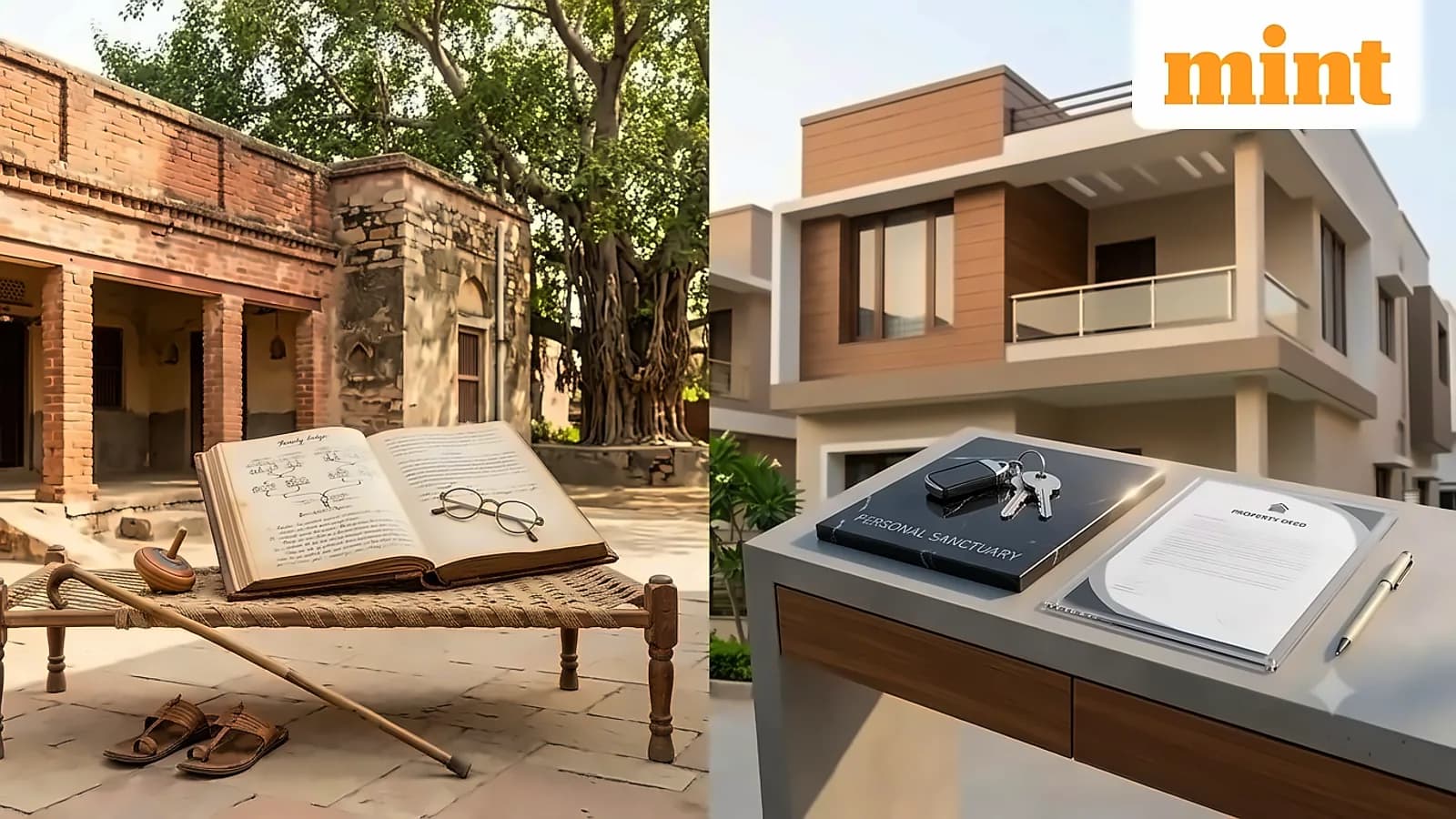
The Supreme Court has rejected a son's claim to exclusive ownership of his late father's properties, holding that his stepmother had acquired a legally recognised interest in the property and was subsequently entitled to transfer it to her daughter. According to reports from The Economic Times, the case concerned two houses in Terdal village in Karnataka's Bagalkot district, with the dispute arising after the stepmother, Kashibai, transferred the properties through a Will to her daughter, Shakuntala, who was the son's stepsister. The Supreme Court's September 22, 2026 judgment held that Kashibai's interest in the properties, which initially arose under the Hindu Women's Rights to Property Act, 1937, was converted into absolute ownership under Section 14(1) of the Hindu Succession Act, 1956. The court specifically noted that once the property became absolute property of Kashibai, she acquired the right to dispose of it as per her will and wish, executing a registered Will dated October 13, 1984 in favour of her daughter.
The dispute dates back to the death of Gangaram, the father of Ganapati, in 1949. As reported by The Economic Times, Gangaram's widow, Kashibai, survived him and died in 1986. Before her death, Kashibai executed a Will bequeathing the disputed properties to her daughter Shakuntala. After receiving the properties, Shakuntala approached the revenue authorities to have the mutation records changed in her name, which Ganapati learned about after the mutation was recorded and challenged in court. Ganapati claimed exclusive rights over two properties left by his father, arguing that as a Hindu male governed by Mitakshara law, he was entitled to the properties as his father's son. In the middle of the court case, Shakuntala sold one of the properties to Mr Baburao, which the Supreme Court upheld as legally intact and permissible.
The Supreme Court held that Kashibai, as Gangaram's widow, acquired an interest in her deceased husband's share under the Hindu Women's Rights to Property Act, 1937. According to the judgment reported by The Economic Times, at that stage, the widow's interest was limited in nature, subject to the restrictions of Section 3(2) of the Hindu Women's Rights to Property Act, 1937. However, the legal position changed after the Hindu Succession Act, 1956, came into force. The court held that Section 14(1) of the Hindu Succession Act enlarged Kashibai's limited interest into full ownership, meaning she was legally competent to dispose of the property, including through a Will in favour of her daughter Shakuntala. The court clarified that devolution of property is not confined to survivorship or inheritance; it can also take place through an Act of the Legislature, and Section 14(1) of the Hindu Succession Act takes away the effect of Section 3(2) of the Hindu Women's Rights to Property Act.
The Supreme Court determined that a formal partition was not an essential prerequisite for the conversion of Kashibai's limited interest into absolute ownership under Section 14(1). As reported by The Economic Times, the court reasoned that a Hindu widow who succeeded to her husband's interest under the 1937 law was capable of holding that interest in a manner that satisfied the requirements of Section 14(1) of the 1956 Act. Consequently, even if an alleged oral partition between Kashibai and Ganapati was not proved, it did not affect the legal consequence arising from the 1937 Act read with Section 14(1) of the Hindu Succession Act. The court specifically held that Kashibai held her husband's interest subject to the restrictions of Section 3(2) of the Hindu Women's Rights to Property Act, 1937, and Section 14(1) of the Hindu Succession Act, 1956 takes away the effect of Section 3(2).
The judgment highlights the importance of legal rights acquired by Hindu widows under the Hindu Women's Rights to Property Act, 1937, and the subsequent impact of Section 14(1) of the Hindu Succession Act, 1956. According to The Economic Times, it makes clear that a son's claim to exclusive ownership cannot automatically override a widow's statutory interest in her deceased husband's property. The consistent view is to recognise the right of a Hindu widow as blossoming into an absolute right, except in cases falling under Section 14(2) of the Hindu Succession Act. In this case, the Supreme Court's ruling was based on specific succession rights that Kashibai had acquired under the law applicable at the time of Gangaram's death and the subsequent enlargement of those rights under the 1956 Act, with the properties consisting of two houses situated at Terdal Village, Jamkhandi Taluka, Bagalkot District, Karnataka.