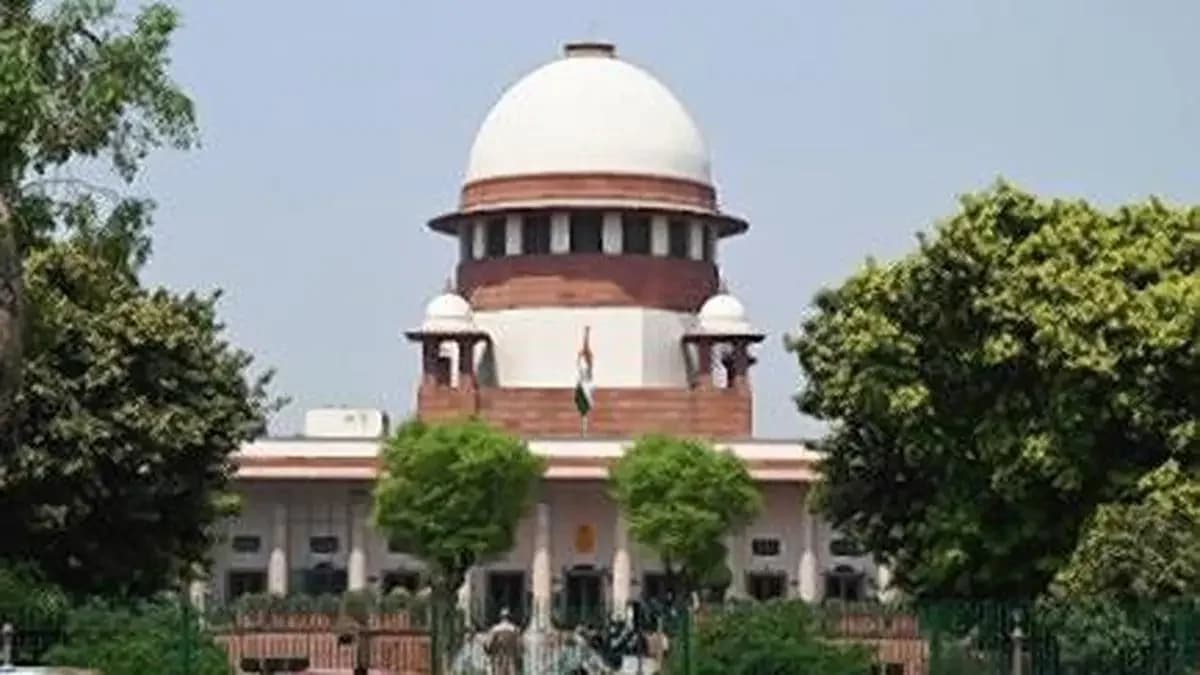
The Supreme Court of India has awarded ₹25 lakh compensation to a passenger who was paralysed after a tree branch fell on an autorickshaw in Bengaluru on June 23, 2007. According to reports from The Times of India, the apex court used its constitutional powers under Article 142 of the Constitution to provide justice to the victim, despite finding that the vehicle was not directly responsible for the accident. The Bench of Justice Sanjay Karol and Justice Nongmeikapam Kotiswar Singh delivered the judgment on June 11, 2026, in The Commissioner, Bruhat Bangalore Mahanagara Palike v. K.K. Umesh Kumar & Ors.
The case began with a claim petition filed before the Motor Accidents Claims Tribunal, Bengaluru, seeking ₹50 lakh compensation. As reported by The Times of India, the tribunal dismissed the claim on account of it being a 'natural calamity'. The High Court of Karnataka initially dismissed the claim on delay grounds but later allowed the appeal and awarded ₹17.10 lakh in the following ratio: 50% by the autorickshaw insurer, 25% by the municipal corporation, and 25% by the Horticulture Department. The BBMP challenged this apportionment before the Supreme Court, with both BBMP and the Horticulture Department arguing that the accident resulted from an unavoidable natural event beyond human control.
The Supreme Court analysed whether a falling tree branch qualifies as a motor vehicle accident under Section 166 of the Motor Vehicles Act. According to reports from The Times of India, the court held that in such cases, a claim seeking compensation under section 166 of the Motor Vehicles Act cannot be filed especially against the civic body. The court noted that the motor vehicle itself does not play an active role in the accident and is not part of the proximate cause of the accident. Justice Sanjay Karol examined the doctrine of 'Act of God' or vis major in detail, referring to several English, American, and Indian decisions explaining legal principles governing liability from natural events. The court reiterated that an Act of God involves a direct, sudden, violent, and irresistible act of nature that reasonable human care could neither foresee nor prevent.
Despite finding that a standard MVA claim was legally inappropriate, the Supreme Court used its constitutional powers to provide justice to the victim. As reported by The Times of India, the court noted that leaving a paralysed person 'in lurch, without any money to sustain himself, does not appeal to the conscience of justice'. The court increased the compensation to ₹25 lakh with interest from the date of filing of the claim petition, finding the High Court's assessment of compensation inadequate. The court observed that the claimant had suffered total paraplegia of both lower limbs along with bladder and bowel incontinence. The court left the existing apportionment of liability unchanged while directing BBMP, the insurance company, and the Horticulture Department to deposit their respective shares within four weeks and ordered that the compensation, along with interest, be deposited directly into the claimant's bank account.