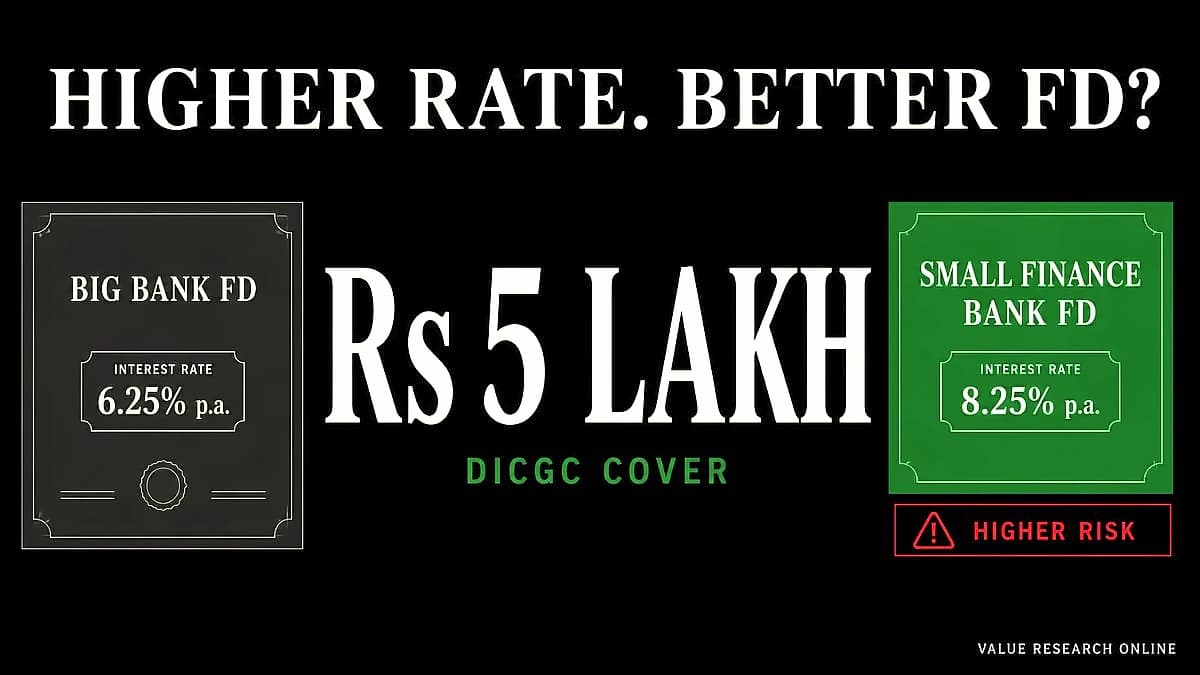
As of May 2026, fixed deposit rates offered by public and private lenders, NBFCs, and small finance banks range between 2.50% to 8.30% per annum for general depositors and up to 8.80% for senior citizens. According to reports from Mint, simple interest applies to deposits shorter than 6 months, while everything above that tenure compounds quarterly. The rate differential between regular and special FDs is significant, with special schemes typically offering higher returns to attract investors during limited-period offers.
Banks are increasingly rolling out special FD schemes with unique features and higher returns to attract savers. SBI Amrit Vrishti offers 6.45% for general citizens and 6.95% for senior citizens with a fixed tenure of 444 days, requiring a minimum investment of ₹1,000. As reported by Mint, Bank of Baroda's 444-day special FD provides 6.45% for regular customers, 6.95% for senior citizens, and 7.05% for super senior citizens (aged 80+). Punjab National Bank's 444-day special FD offers the highest rates at 6.60% for general citizens, 7.10% for senior citizens, and 7.40% for super senior citizens. SBI WeCare is exclusively designed for senior citizens aged 60+ with 7.05% interest for tenures of five years and above. From senior citizen-focused plans to Green FDs and special tenure deposits, investors now have more options beyond traditional fixed deposits.

Regular FDs provide greater flexibility with tenure options ranging from a few days to up to 10 years, depending on the bank or financial institution. According to Mint, interest rates vary across banks, small finance banks, and NBFCs, with NBFCs and smaller lenders often offering comparatively higher returns. Regular FDs offer additional features including premature withdrawal facilities, loan-against-deposit options, periodic interest payout options, and higher rates for senior citizens. These features make regular FDs attractive for investors seeking flexibility alongside assured returns.
The choice between special and regular FDs depends on individual financial goals and risk tolerance. As reported by Mint, special FDs are typically launched for limited periods with slightly higher rates to attract investors, while regular FDs follow standard interest rates across common tenures. Investors should consider factors such as tenure requirements, interest rate differences, and the need for flexibility when making their investment decisions. The current rate environment offers opportunities across both FD categories, with NBFCs and smaller lenders often providing competitive rates for deposits.