Despite negative returns, investors should consider continuing planned SIP step-ups if they can afford it, according to Wealthy.in Co-Founder Aditya Agarwal. As reported by Mint, Agarwal explained that corrections change only the price at which additional money gets invested, not the fundamental reason for the step-up. The expert noted that delays in salary-linked increases may result in additional income being absorbed into higher spending, while postponing inflation-adjusted increases simply widens the gap between targets and plans. Recent data shows that overall SIP contributions reached a record ₹31,781 crore in June 2026, despite continued market volatility, demonstrating sustained investor confidence in systematic investment approaches. Starting SIPs early and increasing contributions over time can significantly enhance long-term wealth creation, with small monthly amounts at age 25 creating substantially higher returns than larger sums at age 35 due to compounding effects.
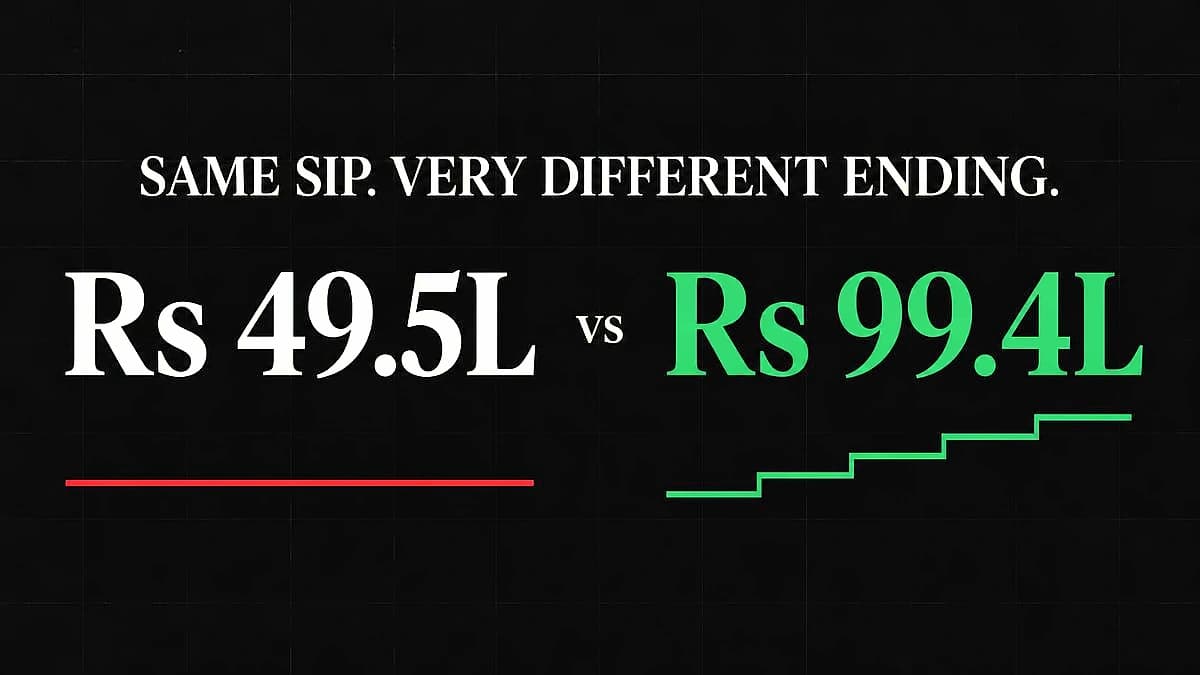
Recent analysis by WhiteOak Capital Mutual Fund comparing regular SIPs with step-up strategies in the BSE Sensex TRI reveals important insights about wealth creation versus return maximization. An investor starting a ₹10,000 monthly SIP 25 years ago would have invested ₹30 lakh and accumulated ₹209.90 lakh by September 2026, achieving an XIRR of 13.24%. With a fixed annual top-up of ₹1,000, total investment would have risen to ₹66 lakh, resulting in a current value of ₹318.22 lakh and an XIRR of 12.70%. Under the variable top-up strategy increasing monthly SIP by 10% annually, the investor would have invested ₹118.02 lakh and accumulated ₹413.56 lakh with an XIRR of 12.32%. Over the 20-year period, the regular SIP delivered an XIRR of 10.81%, compared with 10.72% for the fixed top-up SIP and 10.54% for the variable top-up SIP, with the regular SIP consistently delivering higher XIRR across all investment horizons.
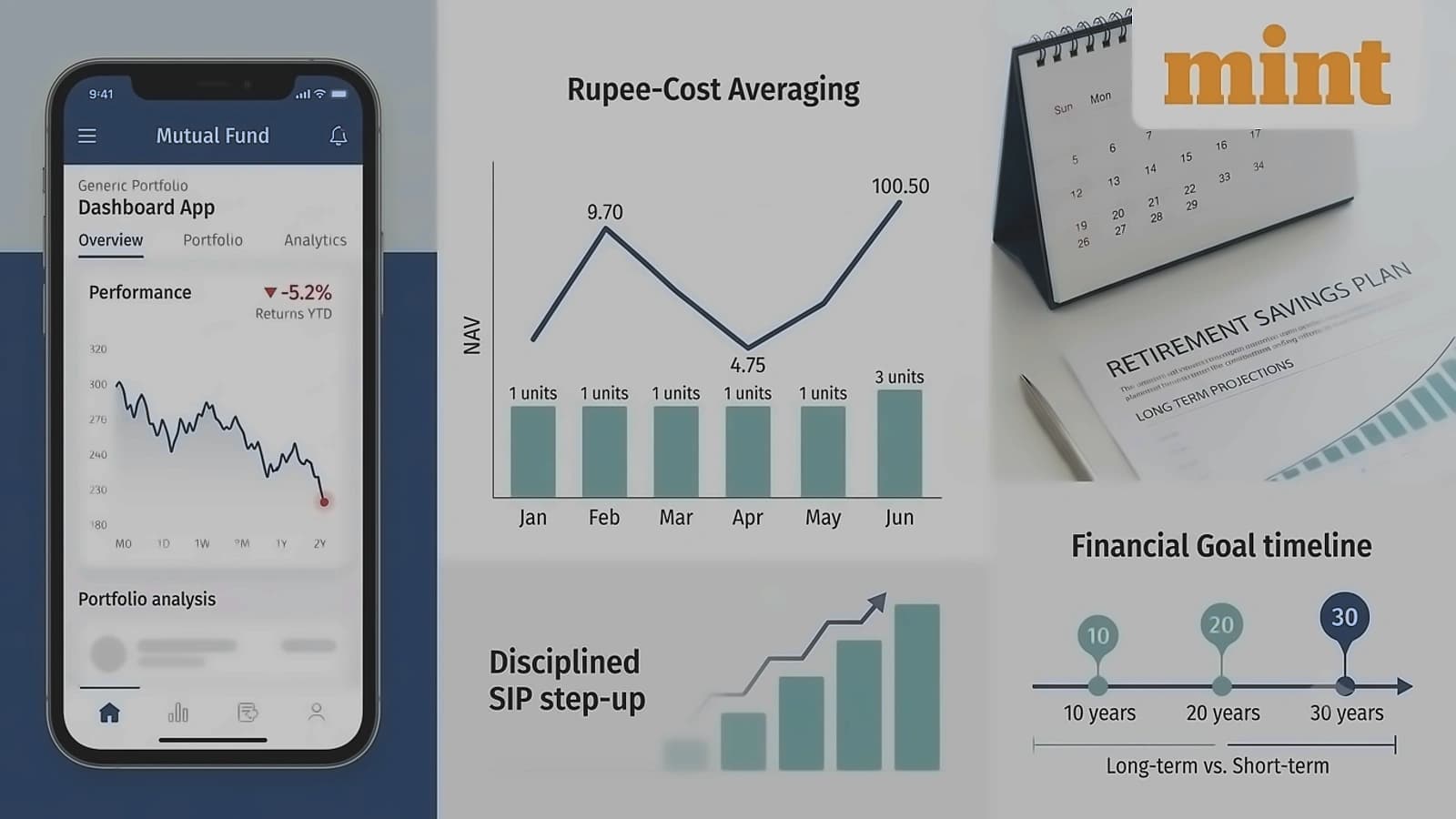
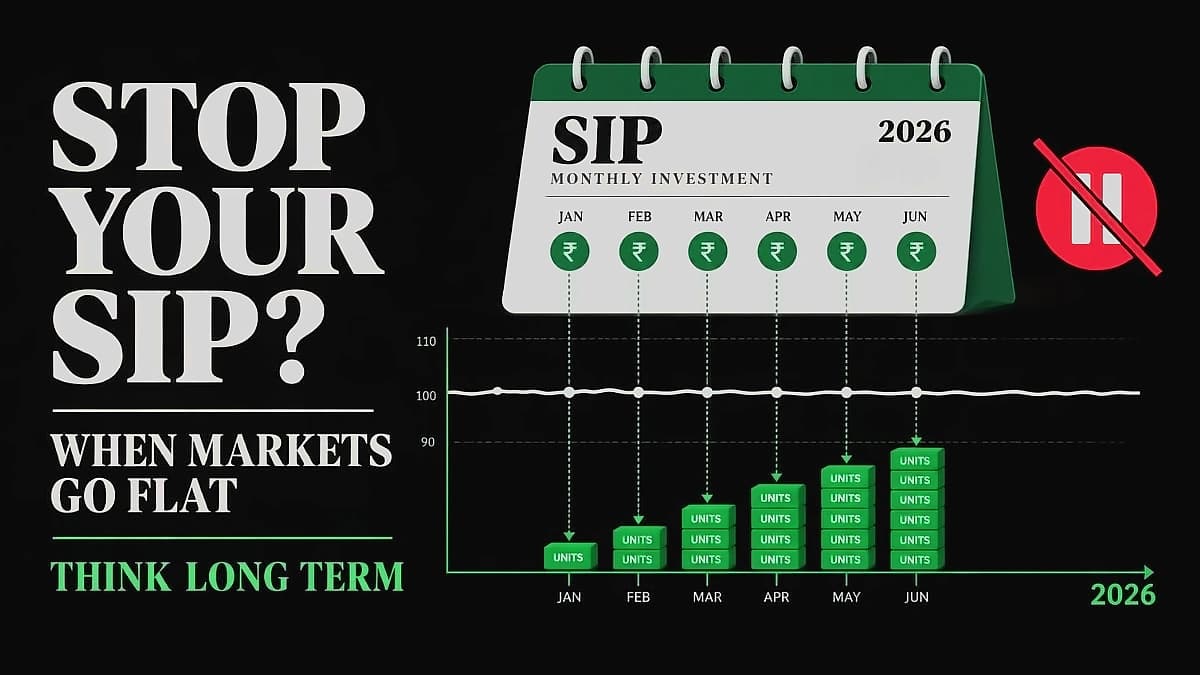
SIP step-ups can benefit significantly from rupee-cost averaging, where investing fixed amounts at regular intervals results in more units purchased when fund NAVs fall. According to Mint's analysis, an investor increasing monthly SIP from ₹10,000 to ₹12,000 when NAV drops from ₹50 to ₹40 would purchase 300 units compared to 200 units at higher NAVs. Agarwal emphasized that this feature should not encourage investing more than affordable amounts, with additional contributions coming from monthly income rather than existing investments or emergency reserves. Falling markets allow fixed SIP amounts to purchase more mutual fund units, significantly boosting portfolio returns during subsequent market recoveries. Recent market data shows that small-cap funds still drew ₹7,768 crore in net inflows in July 2026, up 39% from June, despite mid and small-cap indices falling around 12% to 14% in early 2026.
Market experts are now recommending that investors redirect fresh SIP contributions towards large-caps if their portfolios are heavily tilted towards smaller companies. According to The Economic Times, Pradeep Gupta, Chairman & MD, Anand Rathi Share and Stock Brokers Limited explains that large-caps offer greater valuation comfort, with the Nifty 50 trading at 19.4 times trailing earnings and 2.8 times book value at September-end, compared to 28.4 and 34.4 for Nifty Midcap 150 and Smallcap 250 respectively. The risk difference is measurable, with annualised daily-return volatility at approximately 13.5% for Nifty 50, 16.2% for Midcap 150 and 17.2% for Smallcap 250. Gupta notes that investors whose portfolios have become disproportionately exposed to smaller companies can redirect fresh SIP contributions towards large-cap or flexi-cap funds to restore balance without immediately selling existing holdings. Those with a seven-to-ten-year horizon, adequate liquidity and the capacity to withstand substantial drawdowns can continue measured mid- and small-cap allocations.
Investors should conduct thorough performance reviews if funds have consistently underperformed benchmark indices and category peers over 3-5 years. As reported by Mint, Agarwal warned that sustained underperformance warrants closer scrutiny rather than automatic increased investments to average costs. The expert recommended calculating available monthly income after essential expenses, loan repayments, and financial commitments before making any step-up decisions. Recent market data shows that small-cap funds can experience sharper declines during downturns, with the extent of decline varying across funds depending on market conditions, portfolio composition, and sector exposure. Many investors delay starting SIPs until they feel financially comfortable, but implementing step-up SIPs by increasing monthly contributions annually helps align investments with earnings growth, drastically multiplying final wealth corpus over time. The key takeaway for investors is to choose a top-up amount they can sustain as their income grows, rather than focusing solely on the final corpus, as both step-up SIP strategies generated higher final corpus but at the cost of lower XIRRs than regular SIPs.