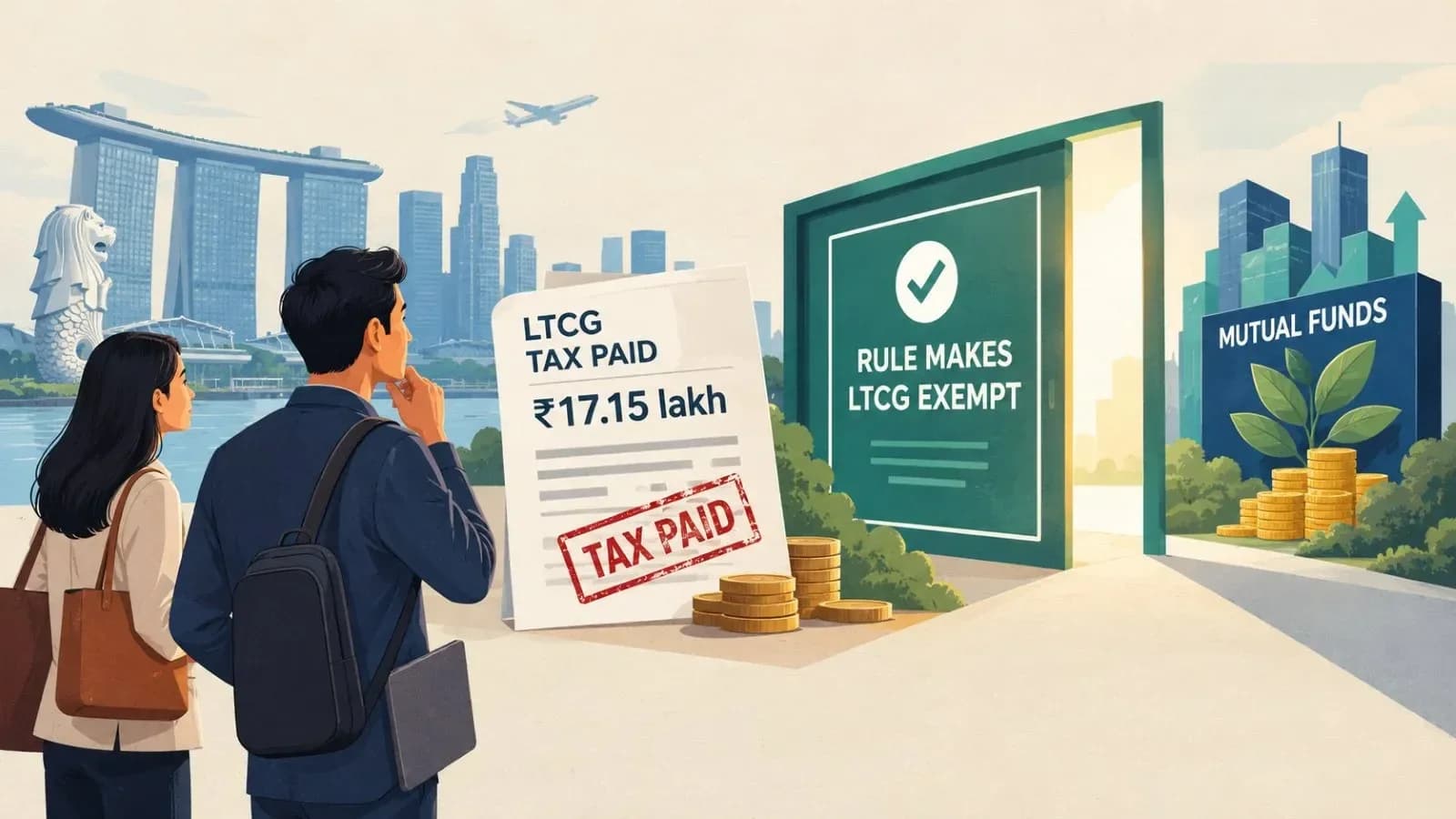
Many taxpayers who sold listed shares or equity mutual funds during FY26 and earned less than ₹1.25 lakh in long-term capital gains (LTCG) believe they can skip filing their income tax return (ITR) because no tax is payable on such gains. According to tax experts, this is one of the most common misconceptions around capital gains taxation. The confusion stems from the ₹1.25 lakh exemption available under Section 112A of the Income-tax Act, which exempts eligible equity LTCG up to ₹1.25 lakh from tax but does not determine whether a taxpayer is required to file an ITR. As per The Economic Times, even if your long-term capital gains from stocks are under ₹1.25 lakh, you must still file your Income Tax Return for AY 2026-27, as the Income Tax Department requires you to report these gains, and failure to disclose can lead to issues.
Long-term capital gains arising from the sale of listed equity shares and equity-oriented mutual funds are taxed under Section 112A. The first ₹1.25 lakh of such gains in a financial year is exempt from tax, while gains exceeding this amount are taxed at the prescribed rate. However, resident taxpayers can also benefit from the basic exemption limit if their total income is low. As explained by tax expert Balwant Jain, the basic exemption limit is available to resident individuals, and after reducing the ₹1.25 lakh exemption, the remaining income is compared with the applicable basic exemption limit.
Taxpayers often confuse tax liability with the requirement to file an income tax return. According to Jain, if total income is below the applicable basic exemption limit, filing an ITR may not be mandatory. However, if total income exceeds the basic exemption limit, taxpayers must file a return even if their long-term capital gains are below ₹1.25 lakh and no tax is payable on those gains. For instance, a salaried employee earning ₹11 lakh during FY26 who also books ₹1 lakh of long-term capital gains must still file an ITR because the salary income itself exceeds the applicable basic exemption limit. As reported by The Economic Times, ITR filing offers significant advantages beyond just tax payment, including claiming refunds, carrying forward losses to reduce future tax, and enhancing loan and visa application prospects, even if income is below taxable limits.
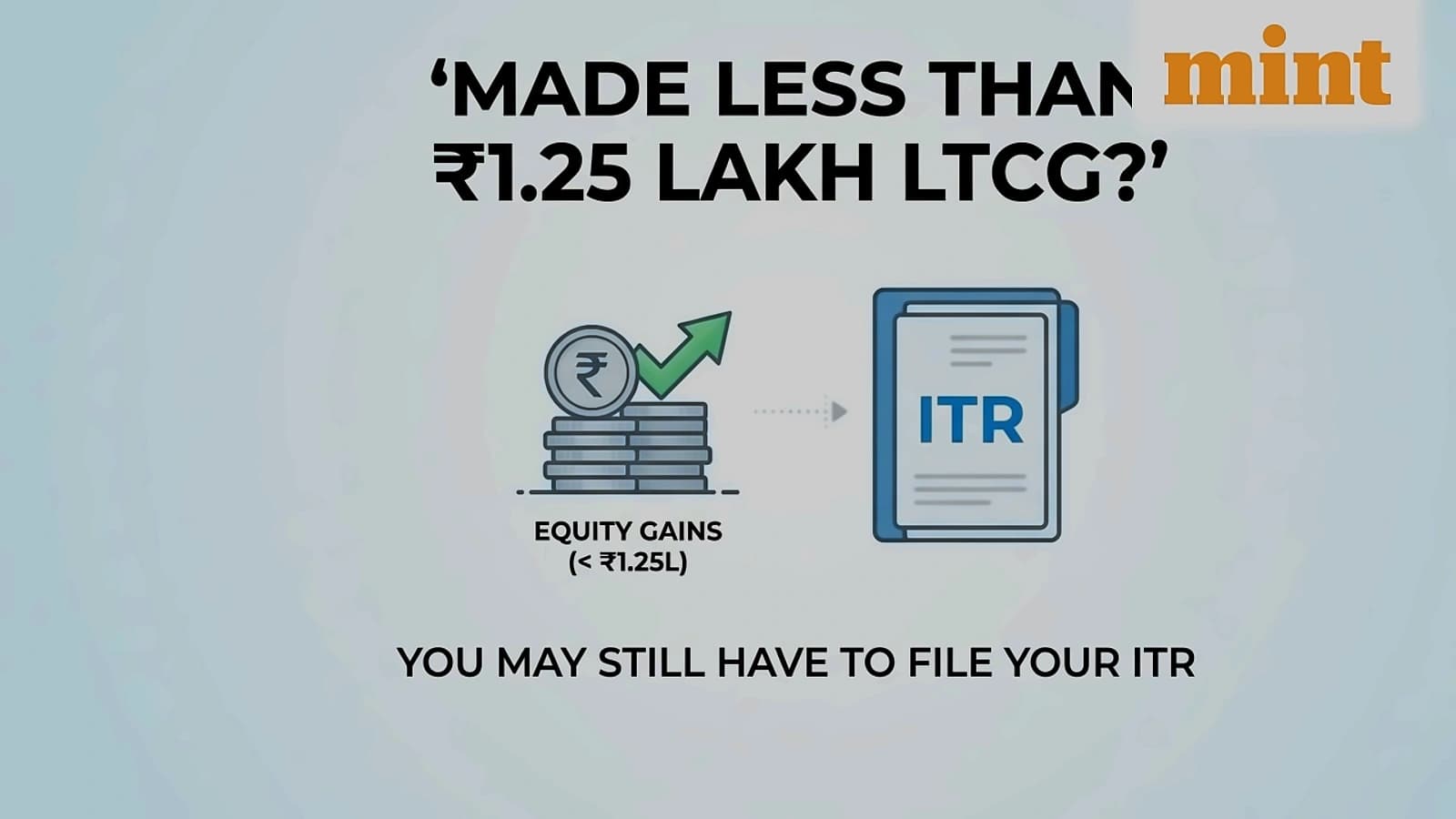
The ₹1.25 lakh exemption under Section 112A is only a tax exemption on eligible long-term capital gains from equities and should not be interpreted as an exemption from filing an income tax return. Whether an ITR has to be filed depends on a taxpayer's total income, the applicable basic exemption limit, and other mandatory filing conditions under the Income-tax Act. For investors, the distinction is important - no tax on LTCG does not automatically mean no ITR. Before deciding to skip return filing, taxpayers should assess their overall income rather than relying solely on the amount of long-term capital gains earned. The Supreme Court's new guidelines for motor accident compensation based on Income Tax Returns further emphasize the importance of maintaining accurate ITR records for various legal and financial purposes.