Small finance banks are offering significantly higher fixed deposit rates for senior citizens compared to traditional banks. According to reports from Business Standard, Shivalik Small Finance Bank leads with 8.3% interest for one year and 10 months, while Suryoday Small Finance Bank and Utkarsh Small Finance Bank both offer 8.25% for two years and six months respectively. Jana Small Finance Bank provides up to 8% for a three-year tenure, demonstrating the competitive advantage of smaller lenders in the senior citizen deposit segment. As equity markets experience volatility due to West Asia conflict contagion, these higher-yielding FD options are gaining renewed attention from conservative investors. The current inflation environment is making these higher rates even more valuable for retirement planning.
Major public and private sector banks are offering more modest rates for senior citizens. As reported by Business Standard, State Bank of India offers up to 7.05%, while Punjab National Bank and Bank of India provide up to 7.1%. Among private banks, Axis Bank, Bandhan Bank, and Yes Bank all offer 7.75% for three-year tenures, with IDFC First Bank providing 7.5% for three years. The data shows a clear gap between traditional banks and small finance banks in senior citizen deposit rates, with the Reserve Bank of India unlikely to cut rates in the near term, keeping FD rates steady across the board.

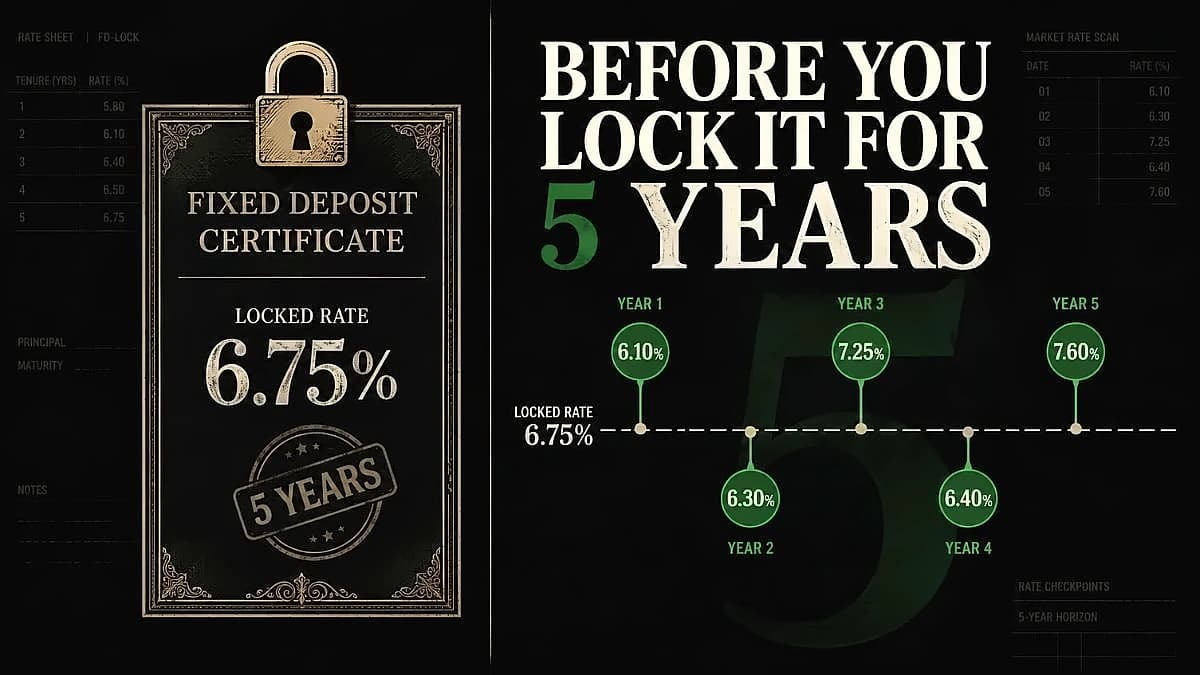
According to Saurabh Jain, cofounder and CEO of Stable Money, as reported by Business Standard, small finance banks continue to offer relatively higher interest rates in the 8.25%-8.3% range for senior citizens and around 8.1% for general investors. The current interest rate cycle has made depositors cautious about long-term commitments, leading banks to reward shorter and medium-duration deposits. Jain noted that the 1.5-year to 3-year bucket is increasingly becoming attractive as it balances returns and flexibility while allowing investors to lock in relatively higher rates without overcommitting in a potentially evolving rate cycle. With equity markets experiencing volatility due to geopolitical tensions, fixed deposits are being positioned as an appealing alternative for risk-averse investors seeking stability.
The current inflation environment is significantly impacting retirement savings planning, with inflation likely to remain higher for longer periods according to MarketWatch. This inflation reality means that retirement plans aren't built for the current environment, making higher FD rates even more valuable for long-term savings. Financial experts advise that while higher FD rates can improve returns, depositors should consider more than just the headline interest rate. Small finance banks are covered under Deposit Insurance and Credit Guarantee Corporation protection of up to ₹5 lakh per depositor, including principal and interest. However, investors with large deposits may still prefer diversification across banks rather than concentrating money in one institution. The current market trend shows that mid-term tenures continue to dominate with banks offering their best returns in the one-year to three-year maturity bucket, making FDs particularly attractive as equity market volatility persists.