A Recurring Deposit (RD) is a bank or post office savings product where investors deposit a fixed amount monthly for a chosen period. According to reports from TopNews, the interest rate is generally fixed when the account is opened, providing advance knowledge of how money will grow. This structure eliminates direct exposure to stock market movements, making RDs suitable for conservative savers. The monthly deposit system creates savings discipline while the fixed interest rate simplifies maturity amount estimation.
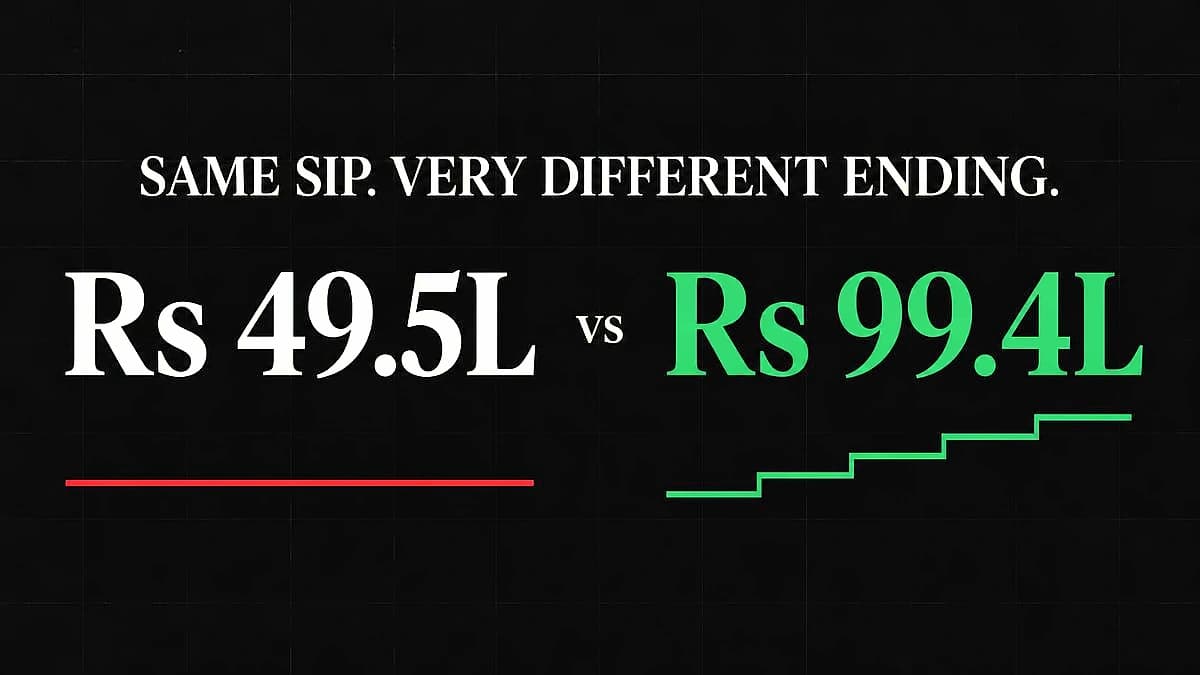
A Systematic Investment Plan (SIP) functions as a method of investing fixed amounts regularly in mutual funds rather than being an investment product itself. As reported by TopNews, if investors choose equity mutual fund SIPs, their money is primarily invested in shares. While a five-year period provides time for equity investments to navigate short-term market fluctuations, complete risk removal remains impossible even after this duration. Recent expert insights from CNBC TV18 reveal that SIP step-ups involve increasing monthly contributions periodically, usually every year, with an investor starting at ₹20,000 monthly SIP and a 10% annual step-up raising contributions to ₹22,000 in the following year.

RD returns may be lower than potential long-term equity investment returns, according to TopNews reports. Interest earned on RDs is taxable according to the investor's applicable income tax slab. For equity SIPs, while they offer the possibility of higher returns than traditional deposits over time, this comes with inherent market risk. Past mutual fund performance does not guarantee future returns, and final corpus values can vary significantly from expectations. Recent market correction analysis shows that while falling portfolio values may prompt caution, postponing SIP increases could affect the amount accumulated towards financial goals.
For individuals prioritizing protection of saved amounts, RDs may be the simpler option for five-year goals. As reported by TopNews, this approach eliminates the need to monitor stock market movements and provides stability when goals cannot be postponed. Conversely, equity SIPs may suit investors comfortable with market volatility who have flexibility around their financial objectives. The choice ultimately depends on whether safety or higher return potential matters more to the investor. Recent expert guidance suggests that for goals three to five years away, the priority shifts towards protecting the amount needed at a specific date, with experts recommending considering debt, arbitrage or conservative hybrid funds instead of increasing equity exposure.