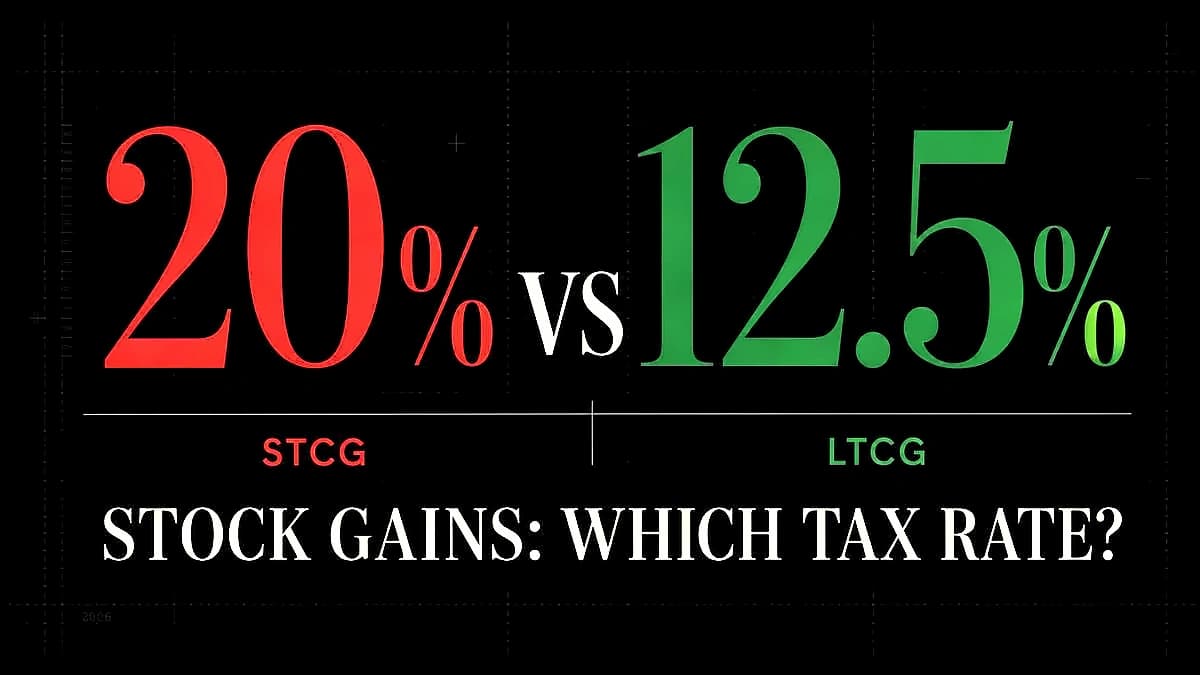
According to reports from Mint, when a house is sold after being held for more than 24 months, the profit is treated as long-term capital gain (LTCG). The taxable gain is calculated by deducting the cost of the house from its net sale price. In the Union Budget 2024, the government reduced the LTCG tax rate from 20% to 12.5% and removed the indexation benefit for property sales made on or after July 23, 2024. However, resident individuals and HUFs selling residential property acquired before July 23, 2024, can choose between paying tax at 12.5% without indexation or 20% with indexation, whichever results in lower tax liability. For AY 2026-27, most long-term capital gains are taxable at 12.5% without the benefit of indexation, while listed equity shares and equity-oriented mutual funds continue to enjoy a basic exemption of ₹1.25 lakh of gains in a financial year.

As reported by Mint, if the house is sold within 24 months, the profits are treated as short-term capital gains and are taxed at the applicable slab rate. For the old tax regime, taxable income including short-term gains must exceed ₹2.50 lakh. For senior citizens aged 60-80 years, the exemption limit is ₹3 lakh, while those over 80 years have no tax liability if aggregate total does not exceed ₹5 lakh in a financial year. Under the new tax regime, the basic exemption limit is ₹4 lakh, irrespective of age.
According to Mint, resident taxpayers can benefit from the basic exemption limit if their total income excluding long-term capital gains falls below the applicable exemption limit. The unutilised portion of that limit can be adjusted against the LTCG to reduce taxable capital gains amount. However, deductions under Chapter VIA, including those under Section 80C, 80D, and 80G, are not available against long-term capital gains.
As reported by Mint, under Section 54 of the income tax act, homeowners can claim exemption from long-term capital gains tax if they sell a house and purchase another house using the capital gains. Up to ₹10 crore can be claimed as exemption under this section, with only long-term capital gains on house property sale being exempt. This provision requires the new property to be purchased in the seller's name - in this case, your mother's name. The exemption is strictly allowed when the new property is purchased in the name of the seller, and cannot be claimed if the property is directly registered in your name. The new property must be purchased within 1 year before or 2 years after the sale of the original property, and must be a residential property in India. For AY 2026-27, taxpayers with capital gains not exceeding ₹2 crore may exercise a one-time option to invest in two residential properties instead of one, subject to prescribed conditions.
According to tax experts, if your mother purchases the property in her name to claim the Section 54 exemption, she can subsequently transfer the property to you through a gift deed. A gift from mother to child is tax-free under the Income Tax Act, though you may incur stamp duty charges on the gift deed depending on your state's rules. The Income Tax Department recognizes the exemption because the initial purchase was in your mother's name, and the gift deed is treated separately and doesn't affect her eligibility for the exemption. This alternative ensures tax savings and a smooth transfer of ownership while maintaining the original exemption eligibility.