The 31 August deadline for filing ITR-4 for AY 2026-27 is approaching. According to reports from Mint, taxpayers with income from eligible businesses, professions, or goods-carriage operations can opt for the presumptive taxation scheme under Sections 44AD, 44ADA, and 44AE. The scheme simplifies tax compliance by allowing eligible taxpayers to declare income at a prescribed rate, reducing the need to maintain detailed books of account and undergo tax audits. However, filing ITR-4 last year does not guarantee eligibility this year - taxpayers must reassess their eligibility based on current income, business activity, investments, capital gains, and other financial circumstances. Tax experts warn that common mistakes include choosing the wrong ITR form, failing to reconcile receipts with books, bank statements, GST records, tax deducted at source (TDS), Form 26AS and AIS, and missing the deadline when carrying forward business or professional losses.

Section 44AD is available to resident individuals, resident HUF or resident partnership firms other than an LLP carrying on eligible businesses. As reported by Mint, the turnover limit is ₹2 crore in a financial year, or ₹3 crore where cash receipts do not exceed 5% of total turnover or gross receipts. Income is generally presumed at 8% of turnover or gross receipts, with a 6% presumptive rate for receipts received through specified digital or banking modes. However, the section cannot be used by non-residents, LLPs or companies, persons carrying on agency business, or those earning commission or brokerage income. An eligible taxpayer can also voluntarily declare a higher income. The biggest misconception around presumptive taxation is that Section 44AD and Section 44ADA are interchangeable, but they are not - Section 44AD generally applies a presumptive rate of 8% of turnover, or 6% for specified digital receipts, while Section 44ADA applies to specified professionals and generally deems 50% of gross receipts as taxable income.
Section 44ADA applies to resident individuals or resident partnership firms other than an LLP engaged in specified professions including legal and medical professions, engineering or architecture, accountancy, technical consultancy, and interior decoration. According to Mint, the gross-receipts limit is ₹50 lakh in a financial year, increasing to ₹75 lakh where cash receipts do not exceed 5% of total gross receipts. Under the scheme, 50% of gross receipts is presumed to be taxable professional income, with taxpayers able to declare higher amounts but unable to claim additional expenses after opting for the scheme. Eligible professionals who opt for presumptive taxation under Section 44ADA cannot claim separate deductions for business or professional expenses - the 50% of gross professional receipts deemed taxable income accounts for such expenses. Under the regular method of taxation, taxpayers can claim actual expenses incurred wholly and exclusively for their profession, maintaining invoices, bills, bank statements, payment records, client contracts and records of business assets purchased.
Section 44AE covers any taxpayer engaged in plying, hiring or leasing goods carriages, with the restriction that the taxpayer must not own more than 10 goods vehicles at any time during the year. As reported by Mint, income is presumed at ₹7,500 per month or part of a month for each goods vehicle (excluding heavy goods vehicles), or ₹1,000 per tonne of gross vehicle weight per month for heavy goods vehicles (defined as vehicles exceeding 12,000 kg gross vehicle weight). The presumptive income is treated as final business income, so regular business expenses cannot be separately deducted, though partnership firms can claim eligible deductions for partner remuneration and interest. Taxpayers should carefully evaluate presumptive versus regular taxation and choose the tax regime based on both current and future income and deductions, as these errors can lead to mismatches, notices and loss of tax benefits.
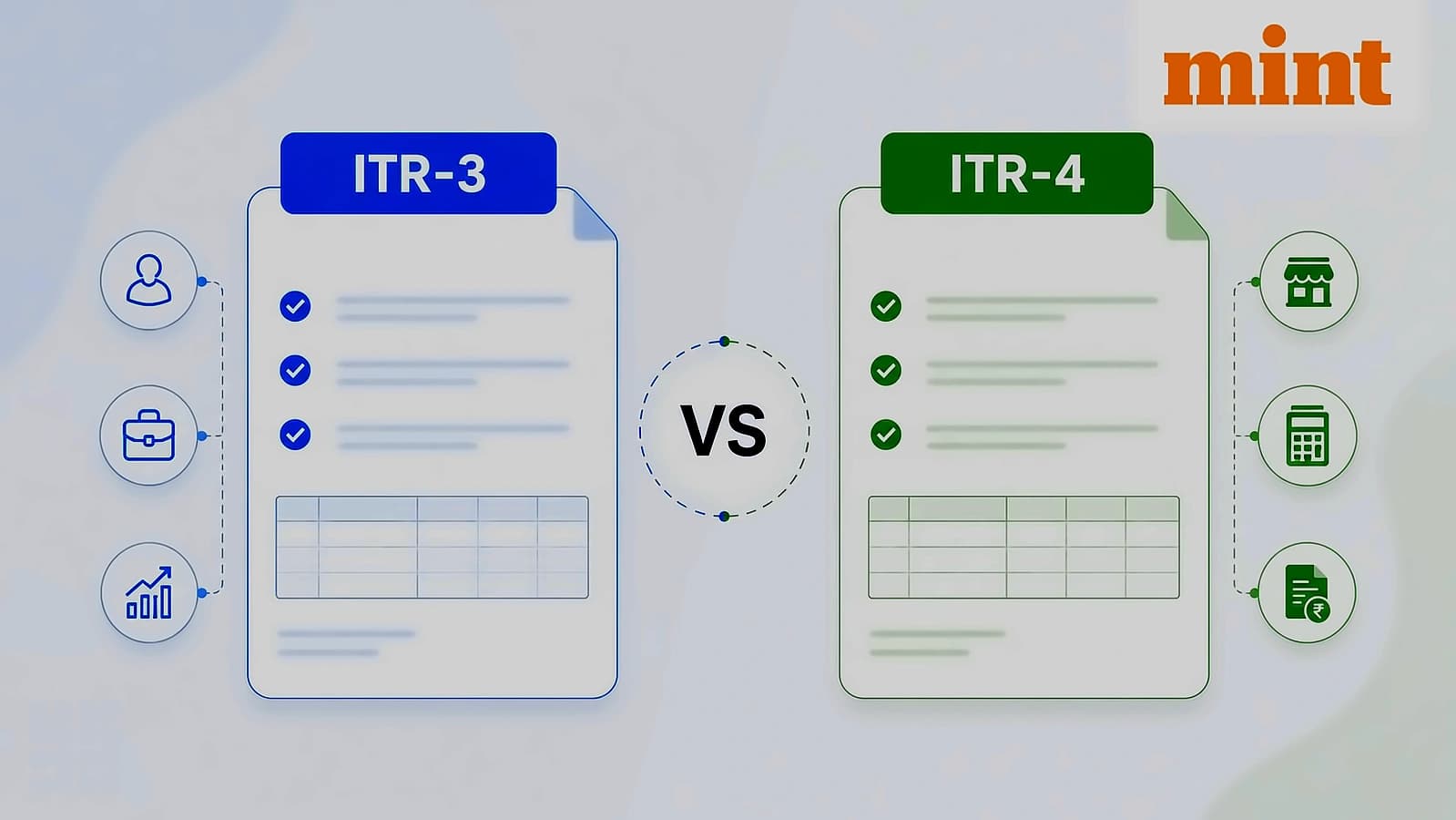
According to Mint, taxpayers may need to switch from ITR-4 to ITR-3 if they do not wish to continue with the presumptive tax system and want to claim actual business expenses, cross the stipulated turnover or gross receipts limits, start a business not covered under presumptive taxation, have total income above ₹50 lakh in financial year 2025-26, have capital gains that cannot be reported in ITR-4, start speculative or commission-based activity, hold unlisted shares or become a company director, become non-residents, have foreign assets or income, or wish to carry forward business losses. A key modification for AY 2026-27 is that taxpayers can now report income from two houses compared with one earlier, with a separate field for rent that could not be realised. The Income Tax Department has also removed the requirement to report foreign retirement benefits, though this does not allow taxpayers to report foreign assets or income in ITR-4.