PPF currently offers an interest rate of 7.1% annually, but eligible investors under the old tax regime can achieve a higher effective return through strategic tax planning. According to reports from Mint, investors in the 30% tax bracket with full Section 80C deduction limits can potentially claim a ₹1.5 lakh deduction for PPF contributions, translating to a tax saving of ₹45,000. This tax benefit significantly impacts the overall return calculation, as it effectively reduces the investor's annual outflow to ₹1.05 lakh (₹1.5 lakh invested minus ₹45,000 tax saved).
For a systematic investment of ₹1.5 lakh annually over 15 years, the total contribution would amount to ₹22.5 lakh. Assuming PPF maintains its 7.1% interest rate throughout this period, the maturity corpus would be approximately ₹40.5-40.7 lakh, which remains tax-free. The effective annualised return of around 11% is calculated by treating the investor's effective annual outflow as ₹1.05 lakh against the tax-free maturity proceeds of ₹40.5-40.7 lakh. As reported by Mint, this calculation demonstrates how tax savings can materially enhance PPF's headline return for eligible investors.
The 11% effective return calculation has significant limitations that restrict its applicability to a narrow investor segment. According to Anshi Shrivastava, head of personal finance training at 1 Finance, quoted by Mint, the benefit only works for investors under the old tax regime with sufficient unused Section 80C capacity and high marginal tax rates. The calculation assumes the entire ₹1.5 lakh deduction provides a 30% tax benefit, but income tax is calculated across slabs, meaning investors with income partly in lower tax brackets may not save the full ₹45,000 assumed in the calculation.
The effectiveness of PPF's tax benefits depends on multiple factors beyond the headline rate. As reported by Mint, investors must consider their tax regime eligibility, actual tax slab position, and unused Section 80C capacity from other eligible investments. Thomas Stephen, director and head at Anand Rathi Share and Stock Brokers, noted that the effective return depends on the quantum of Section 80C utilized and the investor's tax bracket. The calculation assumes PPF continues earning 7.1% throughout 15 years, but in reality, the government periodically reviews small-savings interest rates, making the maturity value and effective return illustrative rather than guaranteed.
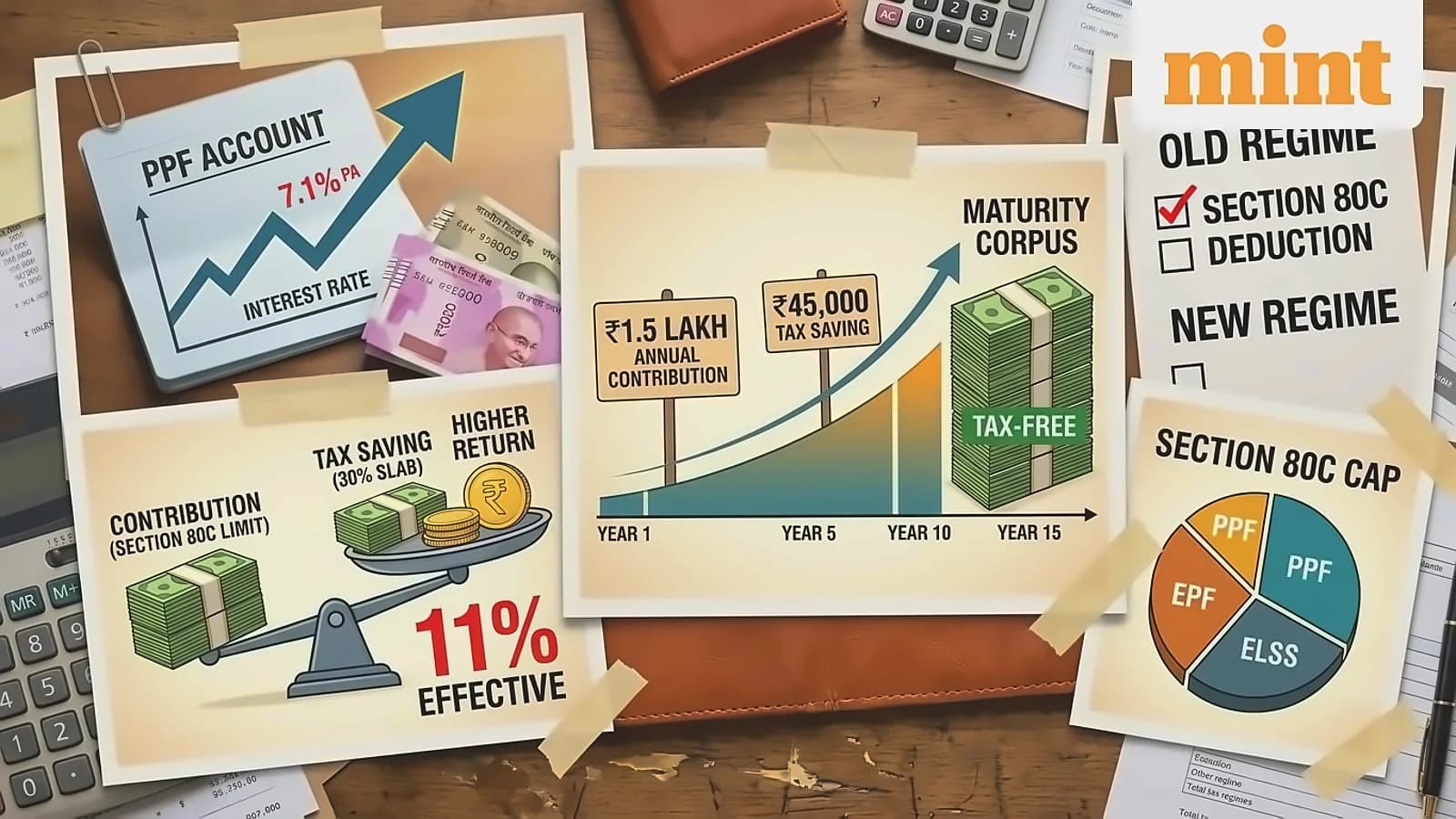
The analysis reveals that PPF's 7.1% headline rate represents a guaranteed return, while the additional 4% effective return comes from tax law benefits rather than PPF's investment performance. According to Mint reports, PPF guarantees 7.1%, tax-free returns with no additional benefits from the investment itself. For investors under the new tax regime, in lower tax brackets, or those who have exhausted their Section 80C limits elsewhere, the additional tax benefit will be smaller or may not exist at all. The key distinction investors should understand is that while PPF's headline rate remains 7.1%, the effective return for individual investors can be higher when applicable tax benefits are included in the calculation.