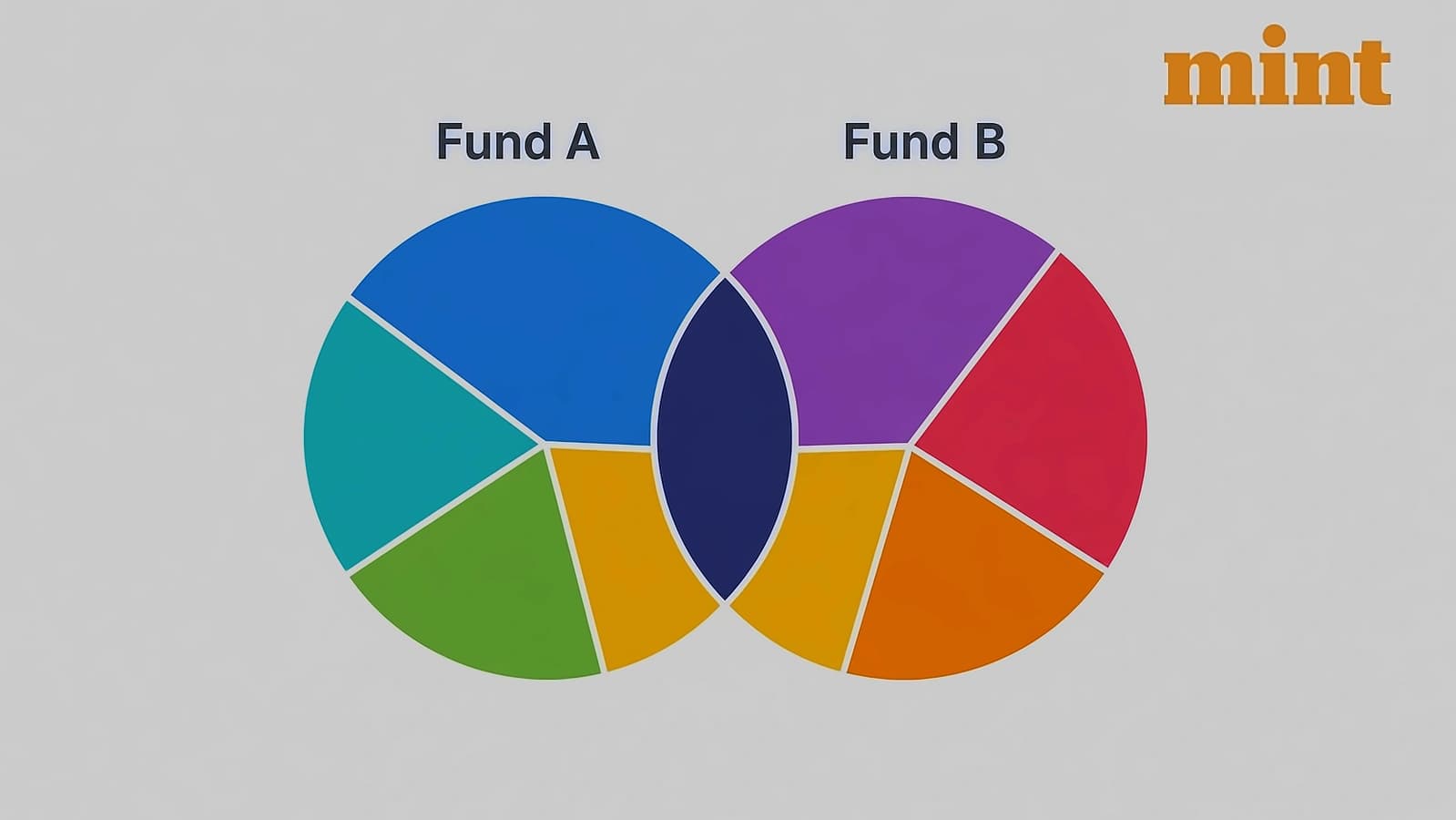
According to reports from NDTV Profit, individual retail investors are increasingly overcrowding and over-diversifying their mutual fund portfolios due to fear of missing out (FOMO) and new fund offers. The data shows that investors are buying too many mutual funds thanks to recency bias, chasing hot trends and returns, and a variety within each category of fund. While diversification is the fundamental tenet of investing, over-diversification results in diworsification, impeding the benefits of diversification and often leading to high portfolio overlap. As per Business Standard, this trend is particularly concerning as mutual funds have become the most recalled investment product among investors, with SEBI's 2025 survey highlighting their growing popularity.
As reported by NDTV Profit, large-cap funds inherently have high portfolio overlaps, often sharing greater than or equal to 50% of their holdings due to their mandate to invest predominantly in the top 100 stocks. The ICICI Prudential Large Cap Fund currently holds 84 stocks and Mirae Asset Large Cap Fund has 82 stocks, resulting in a mutual fund overlap of nearly 60%. There are 41 stocks in common between these funds, including ABB India, Axis Bank, and Asian Paints. This high concentration risk can pose polarization of portfolio returns, making performance dependent on a few stock and sector sets. According to Business Standard, this overlap becomes particularly problematic when investors rush into MF investing with the goal of making big money within short timeframes, often leading to poor timing and lower returns than the fund's actual long-term performance.
According to NDTV Profit analysis, mid-cap funds investing in companies ranked 101st to 250th on market capitalization basis show portfolio overlap in the range of 30-50%. The HDFC Mid Cap Fund holds 79 stocks while the Nippon India Growth Mid Cap Fund has 99 stocks, resulting in a portfolio overlap of slightly over 30%. There are 32 stocks in common between these funds, including Max Financial Services, Federal Bank, and AU Small Finance Bank. Care must be taken to avoid schemes with high portfolio overlap, as it can pose high concentration risk. As noted by Business Standard, sectoral and thematic MFs, which have become the largest category in the equity MF space due to their high-risk, high-reward character, pose additional challenges for rookie investors who may rely on gut feelings rather than proper analysis.
As reported by NDTV Profit, various free online tools and websites including advisorkhoj, primeinvestor, and dezerv allow investors to check mutual fund overlap through intuitive interfaces. Users can select categories and sub-categories, enter scheme names, and receive comprehensive data including overlap percentage, common stock names with weights, and uncommon stocks. These tools enable wise scheme selection to avoid portfolio overlap, with sensible comparisons recommended between funds from respective categories and sub-categories rather than comparing apples with oranges. According to Business Standard, failure to monitor and review portfolios regularly can result in under-performance going undetected, making over-payments, losing out on compounding, and being ill-prepared for changing market conditions.

According to NDTV Profit, investors should avoid holding too many mutual fund schemes and overcrowding portfolios, instead focusing on unique schemes that align with individual needs and risk profiles. The recommended approach includes cutting down to a maximum of 10 schemes among the best options across categories, removing underperformers and those not aligned with risk profile, and holding not more than 1-2 schemes per respective category. Fund house concentration risk should be kept in check by avoiding too many schemes from the same house, while avoiding new fund offers unless they offer unique propositions. As emphasized by Business Standard, investors must set clear goals, diversify investments, stay invested for the long term, review portfolios regularly, and understand costs and risks before investing to avoid common beginner mistakes. Portfolio overlap is a dynamic concept requiring regular review every biannually to ensure optimal asset allocation and improved risk-adjusted returns.