According to Business Standard, most people treat investing like shopping - asking friends about specific stocks or clicking on YouTube videos about 'top 3 mutual funds'. This approach turns out to be the wrong tool for your life, as it fails to match products to individual timelines and goals. Before opening a trading app or linking your bank account, define your goals, timeline and risks - skipping this step means you're not investing but gambling. Each goal requires different approaches - for example, saving for a 'wedding in three years' should not be invested in volatile stocks, while a 'retirement in 25 years' requires completely different strategies.
As reported by Business Standard, time dictates the right investment product - longer time horizons allow more risk because you have time to recover from market dips, while shorter ones require more stability. A 28-year-old saving for retirement at 60 has 32 years, while a 42-year-old saving for the same goal has 18 years. The report suggests using the '100 minus age' rule for allocation: if you're 30, allocate 70% to growth-related equities, 20% to stability (such as gold or bonds), and 10% to liquidity (cash). For example, if your ₹1 lakh investment becomes ₹70,000 tomorrow morning, and you panic-sell, reduce equity allocation and increase stability allocation.

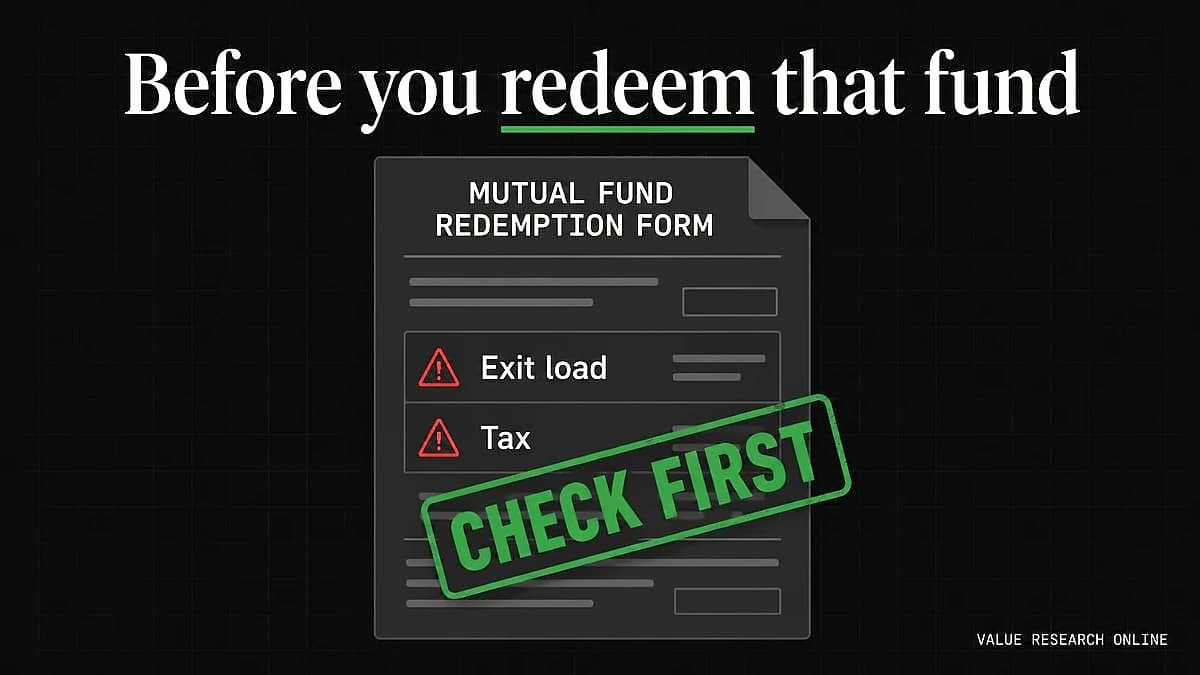
According to reports from Business Standard, mutual fund redemption represents one of the most overlooked aspects of mutual fund investing, where even small errors can significantly impact final outcomes. Withdrawing money too early breaks the compounding process that helps money grow over the long term, particularly affecting equity fund investments. This premature exit can mean exiting during short-term market fluctuations, which may reduce overall returns and weaken the effectiveness of investment strategies.
As reported by Business Standard, taxes can significantly reduce actual returns if not properly planned. Redeeming equity funds before completing 12 months leads to short-term capital gains tax at 15%, whereas staying invested longer qualifies for lower taxation on gains above ₹1 lakh. Many investors exit just before crossing this threshold, unnecessarily increasing their tax outgo. For debt funds made after April 2023, gains are taxed according to income slab regardless of holding period, which can be much higher for those in upper tax brackets.
According to Business Standard, fund houses may charge exit load fees typically ranging from 0.5% to 1% if units are redeemed within specified periods, usually within a year of investment. While this may seem like a small percentage, it can have noticeable impact on overall gains, especially for short-term investments or large redemption amounts. Redemption requests are processed based on cut-off timings, usually 3 pm, with requests submitted after this time getting the next business day's NAV. This timing difference can affect final redemption values in volatile markets.
As reported by Business Standard, mutual fund redemptions typically take 1-3 working days depending on fund type, with equity funds following T+2 to T+3 settlement cycles while debt funds may take T+1 to T+2 business days. Investors often make the mistake of booking profits in well-performing funds while holding underperformers, weakening overall portfolio performance. Systematic Withdrawal Plans (SWPs) may offer better tax efficiency by spreading withdrawals over time compared to lump-sum redemptions. For beginners starting with ₹500 SIPs, mutual funds provide accessible diversification without requiring extensive research or high minimum investments.
According to Business Standard, market volatility often triggers panic selling that locks in losses and undermines long-term investing discipline. Decisions should be driven by asset allocation and goals rather than short-term market movements. The report emphasizes that every investment is usually tied to a purpose like building wealth, buying a home, or planning for retirement, and works best when given enough time. Poor timing and lack of awareness about tax rules can substantially eat into returns, making careful planning essential for retaining more of investment gains. Review your portfolio every three to six months and avoid making changes based on short-term market movements.