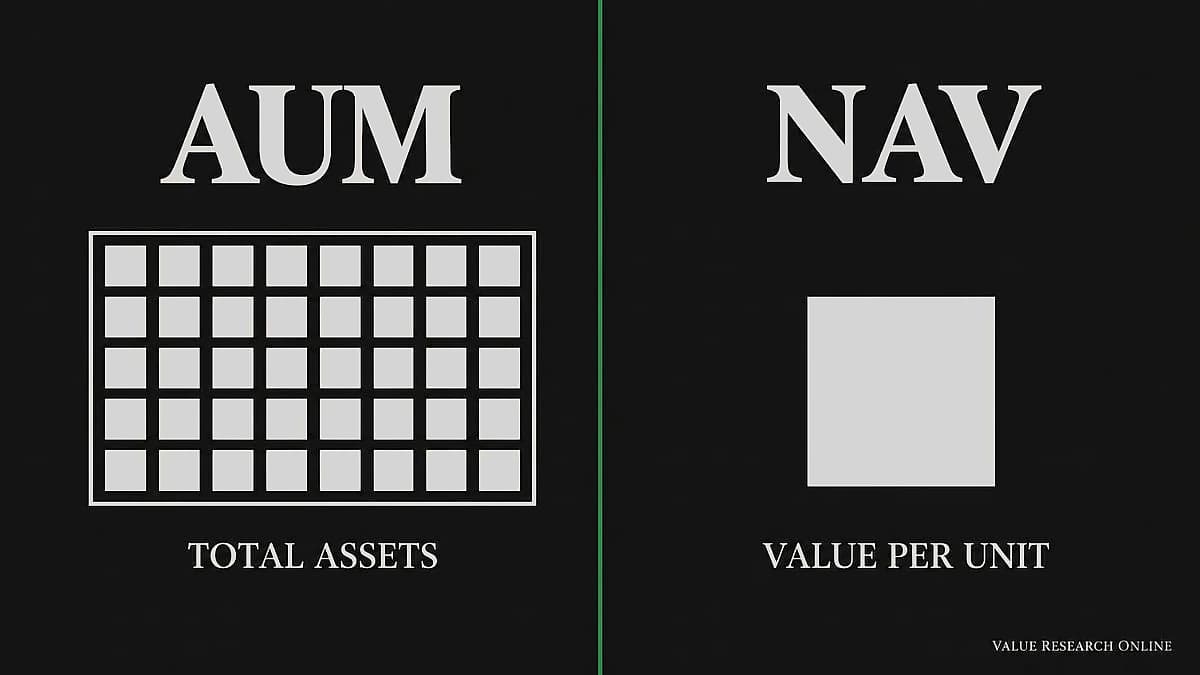
A mutual fund's Net Asset Value (NAV) is simply the per-unit value of its underlying assets after accounting for liabilities and expenses, calculated by dividing the fund's net assets by the total number of units outstanding. According to Mint reports, experts emphasize that a high or low NAV does not indicate whether a fund is expensive or cheap, instead reflecting the value of the fund's underlying portfolio on a per-unit basis. Aditya Agarwal, co-founder of Wealthy.in, noted that a higher NAV often reflects a longer track record and appreciation in the fund's portfolio over time, while a lower NAV may simply indicate the scheme is relatively new. The latest guidance emphasizes that NAV is merely a representation of assets divided by outstanding units, making it fundamentally different from stock valuations where each share represents equal ownership.
Many investors instinctively compare mutual funds based on their NAVs, but experts caution this approach can lead to misleading conclusions. As reported by Mint, unlike stocks, mutual funds can issue any number of units, making NAV merely a representation of assets divided by outstanding units. Consider two investors investing ₹10,000 each - one in a fund with NAV of ₹50 receiving 200 units versus another in a fund with NAV of ₹500 receiving 20 units. If both generate identical returns, both investments will grow at the same rate despite unit differences. Debasish Mohanty, chief strategy officer at The Wealth Company Mutual Fund, warned that comparing NAVs across funds is not particularly useful due to differences in launch dates, portfolio compositions, and unit numbers outstanding. The latest international investment guides reinforce this principle, highlighting that NAV comparisons are meaningless without understanding the underlying fund structure and investment approach.
Rather than focusing on NAV, experts recommend evaluating mutual funds on several key factors. According to Mint reports, these include consistency of performance across market cycles, risk-adjusted returns, portfolio quality, fund manager's track record, investment philosophy and process, expense ratio, performance relative to benchmark and peers, and alignment with investor's financial goals and risk appetite. Agarwal emphasized that investment decisions should be based on a fund's ability to generate returns, manage risks and deliver consistent outcomes over time, noting that wealth creation is driven by the percentage growth in NAV, not by the NAV level at which an investor enters the scheme. The international investment framework reinforces this approach, emphasizing that comprehensive assessment should include historical returns, consistency of performance, portfolio quality, risk-adjusted returns, expense ratio and how effectively the fund has achieved its stated investment objective.

While absolute NAV levels may not be meaningful, changes in NAV over time provide insights into how a fund's portfolio has performed. As reported by Mint, a rising NAV generally indicates increased value of underlying investments, while falling NAV suggests the opposite. However, experts caution against drawing conclusions from NAV levels alone. Agarwal stated that a mutual fund's NAV by itself is not a reliable indicator of current performance or future return potential, recommending investors focus on how much the NAV has grown over different time periods and whether the fund has delivered returns commensurate with risks taken. The international investment guides emphasize that fund charges have a greater impact on long-term returns than almost any other factor within your control, making understanding the total cost of investing essential for smart fund selection.