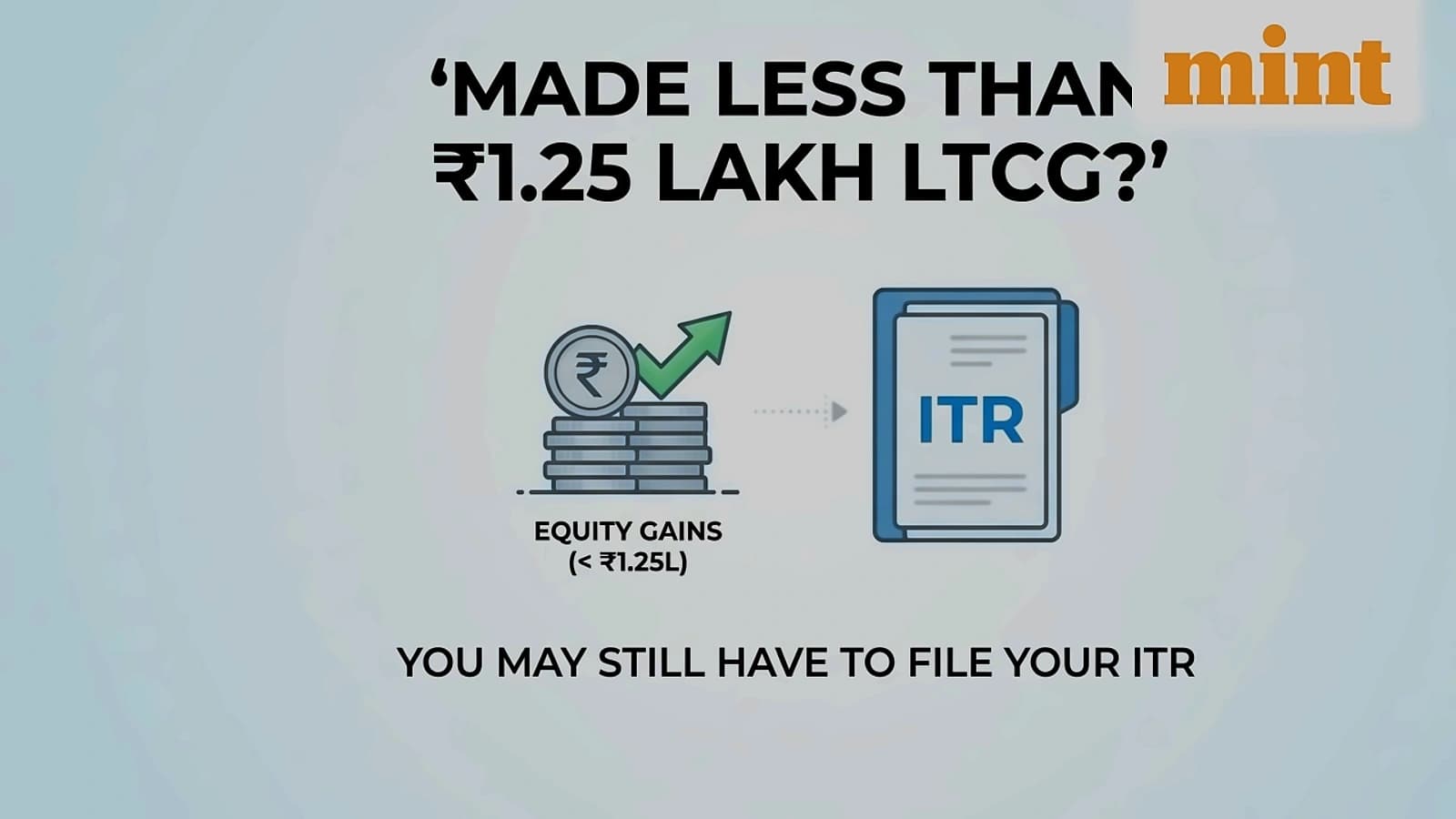
Taxpayers can claim Long Term Capital Gains (LTCG) exemption even when purchasing a residential house jointly, according to tax expert Balwant Jain from Upstox. The exemption is available under Section 54 of the Income Tax Act 1961 for individuals and Hindu Undivided Families (HUFs) who reinvest capital gains from residential property sales. As reported by Upstox, the exemption applies regardless of whether the original property was held in single or joint names, with the law specifically stating that the order in which the house purchase agreement is executed is not relevant for claiming this exemption. Recent expert guidance confirms that two properties can be purchased jointly with taxpayers claiming exemption under Section 54, though this option is available only once in a lifetime.
The reinvestment timeline varies based on the type of property purchased. For ready-to-move-in houses, the prescribed period is two years from the date of sale or within one year before the sale date. For self-construction or under-construction properties, taxpayers have three years to complete construction and acquire the property. According to Upstox, the law does not specify that the new house must be acquired in the taxpayer's single name for claiming this exemption. Under Section 54, the taxpayer must purchase the new house within 1 year before the date of sale, or within 2 years after the date of sale, while construction must be completed within 3 years from the date of sale of the original property.
The exemption applies only if the taxpayer has contributed the requisite amount for claiming the LTCG exemption, as explained by Upstox. The amount not utilized for acquiring the residential house by the due date of filing Income Tax Return must be deposited in a separate bank account under the Capital Gains Account Scheme (CGAS). This unutilized long-term capital gains can be utilized for acquiring the residential house within the prescribed time period. To claim exemption, taxpayers generally need the sale deed of the original property, purchase deed of new property, capital gains calculation statement, CGAS deposit proof (if applicable), and construction agreement (if building property). Proper documentation is essential during assessment, and failure to deposit unutilized funds in CGAS may result in loss of exemption.
The exemption can still be claimed even if the house is acquired in joint names as long as the taxpayer has contributed the requisite amount for claiming this exemption, according to Upstox. Recent expert guidance emphasizes that in joint property ownership, your rights are determined by the registered sale deed, not just the financial contribution. Your legal status as a co-owner entitles you to decision-making rights and a share in the property's income or sale proceeds. Commercial real estate and unoccupied land are ineligible for Section 54 exemption, with the new property must be located in India. The exemption is not available if the new house is outside India, and any capital gains above the maximum exemption limit of ₹10 crore will be taxable. If the new property is sold within 3 years, the exemption claimed earlier becomes taxable, with the cost of acquisition reduced by the amount of exemption claimed.