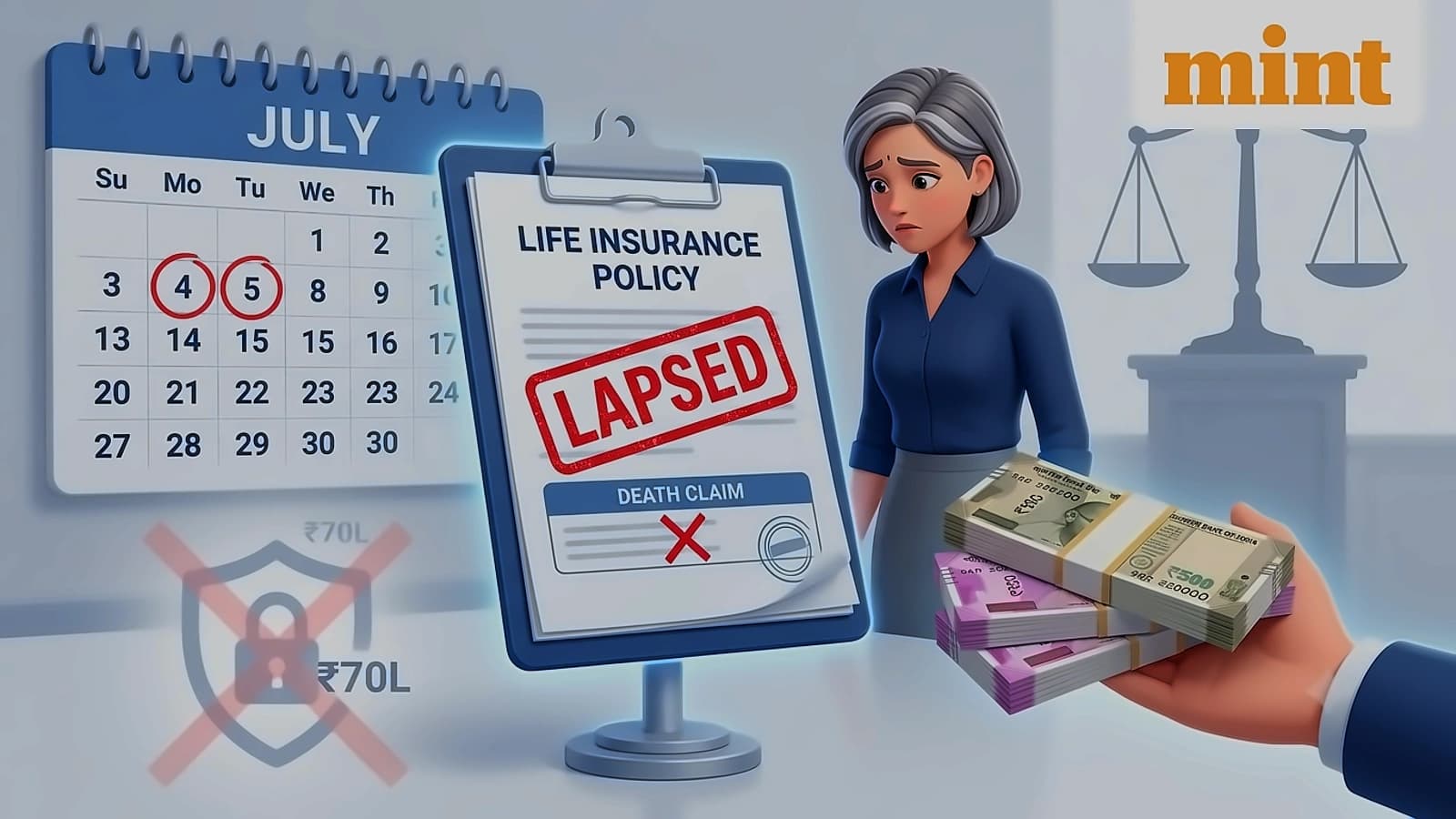
When policyholders miss a premium payment, life insurance policies do not stop immediately. According to Mint reports, insurers typically offer a grace period of 15 days for monthly premium payment modes and 30 days for annual, half-yearly, or quarterly modes. As reported by Varun Agarwal, Head of Term Insurance at Policybazaar, some insurers may allow renewal even after the grace period ends, depending on their internal guidelines and the customer's policy history. The policy status changes depending on the policy type and number of premiums already paid, with the policy either lapsing or becoming paid-up.

If premiums remain unpaid even after the grace period, the policy status depends on the policy type and previous payments made. According to Rahul Mathur, CEO of Roinet Insurance Broker as reported by Mint, when a life insurance policy becomes 'paid-up' after missing payments, it means coverage continues at a reduced sum assured in proportion to the premiums already paid. A lapsed policy can be revived within 2 to 5 years from the first premium unpaid date, with policyholders generally required to pay pending premiums to reinstate coverage. Many insurance companies do not levy direct penalties apart from overdue premium amounts and applicable interest, though some cases may require updated health declarations or medical checks.
For policyholders temporarily unable to pay premiums due to unemployment, financial stress, or health-related expenses, several options are available. As reported by Mint, some insurance companies offer plans with a premium holiday feature, allowing customers to skip premiums for a limited period without immediately losing benefits. This feature helps policyholders maintain life insurance coverage and associated benefits while recovering from financial difficulties.
Life insurance premiums qualify for tax deduction benefits under Section 80C of the Income Tax Act, with taxpayers able to claim a deduction up to ₹1.5 lakh against life insurance premiums paid. According to Mint reports, this deduction is available only under the old tax regime and not under the new tax regime. Section 10(10D) provides exemption on amounts received under life insurance policies, including any bonus, maturity proceeds, surrender value and death benefits, subject to certain conditions. The premium paid for life insurance policies from any insurance agency recognized by the IRDAI is eligible for Section 80C deduction, not just LIC policies. Recent developments show that long-term capital gains (LTCG) tax at 12.5% is exempted on annual premiums up to ₹2.5 lakh for policies bought after February 1, 2021.