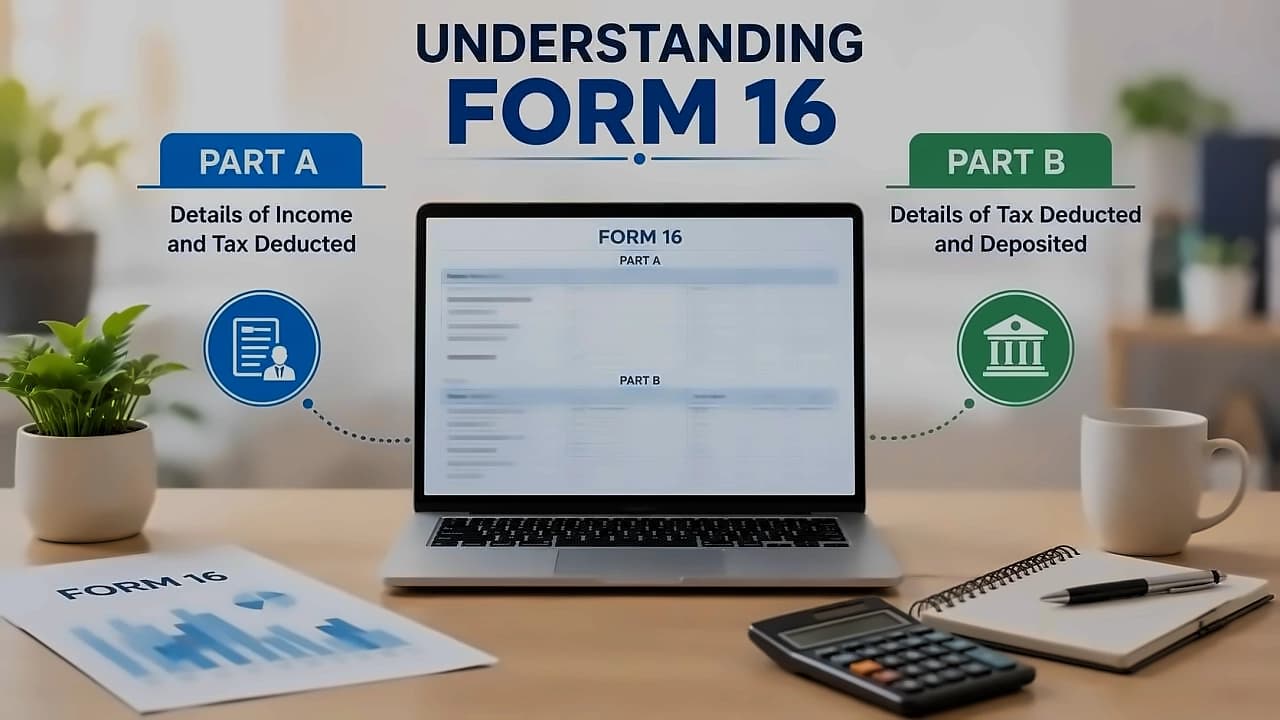
Form 16 is a crucial document for salaried taxpayers during income tax return filing, containing comprehensive salary-related information. According to The Times of India, the form consists of two main parts - Part A and Part B. Part A contains core details such as the employee's PAN, the employer's TAN, and a quarterly summary of total amount paid and tax deducted and deposited. Part B provides the detailed salary break-up, including exemptions, deductions and the final tax computation.
Beyond Form 16, salaried taxpayers must compile several other important documents for ITR filing. According to The Times of India, these include Form 26AS, Annual Information Statement (AIS), bank account interest earnings, and any investment-related documents. These documents serve as supporting evidence for tax returns and provide comprehensive information for the tax filing process. For alternative filing without Form 16, additional documents such as salary slips, bank statements, and investment proofs become essential for calculating total income and claiming deductions.
Under the Income-tax Act, 2025, employers and deductors must now comply with Form 130 and Form 131 requirements for TDS certificate issuance. The statutory deadline for issuing Form 130 is June 15, 2026 for Tax Year 2025-26, with the same deadline applying to Tax Year 2026-27. Employers deducting tax from salary under Section 392 must issue Form 130, while specified banks must issue it for pension and senior citizen interest income. Form 130 replaces the previously applicable Form 16 and serves as the annual TDS certificate for salary income, providing comprehensive salary information and enabling taxpayers to reconcile their tax position.
For complete ITR filing, taxpayers must ensure they have all necessary documents ready. As reported by The Times of India, the bedrock document is Form 16, issued by employers outlining total salary, allowances, exemptions, deductions, and Tax Deducted at Source (TDS). Additional essential documents include Form 26AS - the consolidated tax statement showing all taxes deposited against PAN, AIS & TIS - the Annual Information Statement and Taxpayer Information Summary tracking financial footprint including savings interest and stock transactions, and Form 26AS - the consolidated tax statement showing all taxes deposited against PAN. For alternative filing without Form 16, taxpayers must provide salary slips, bank statements, and investment proofs while calculating total income and claiming eligible deductions under Sections 80C, 80D, 80E and 80TTA.

According to Business Standard, creating a year-round tax record system is essential for eliminating filing season stress. The report emphasizes that documents need continuous review and updating at least every quarter to ensure they are readily available during tax filing. Key components of this system include income proofs such as salary slips and Form 16, investment records including mutual fund statements and insurance papers, financial transaction records through payment receipts and bank statements, proof of taxes paid via Form 26AS, and identity proofs like PAN and Aadhaar. Digital record-keeping is crucial with scanned copies and tax portal login credentials, while safety measures include password protection and maintaining physical copies for backup. Taxpayers should retain documents for eight years for domestic income and 16 years for foreign assets, with older documents needed for potential tax benefit claims in future years.