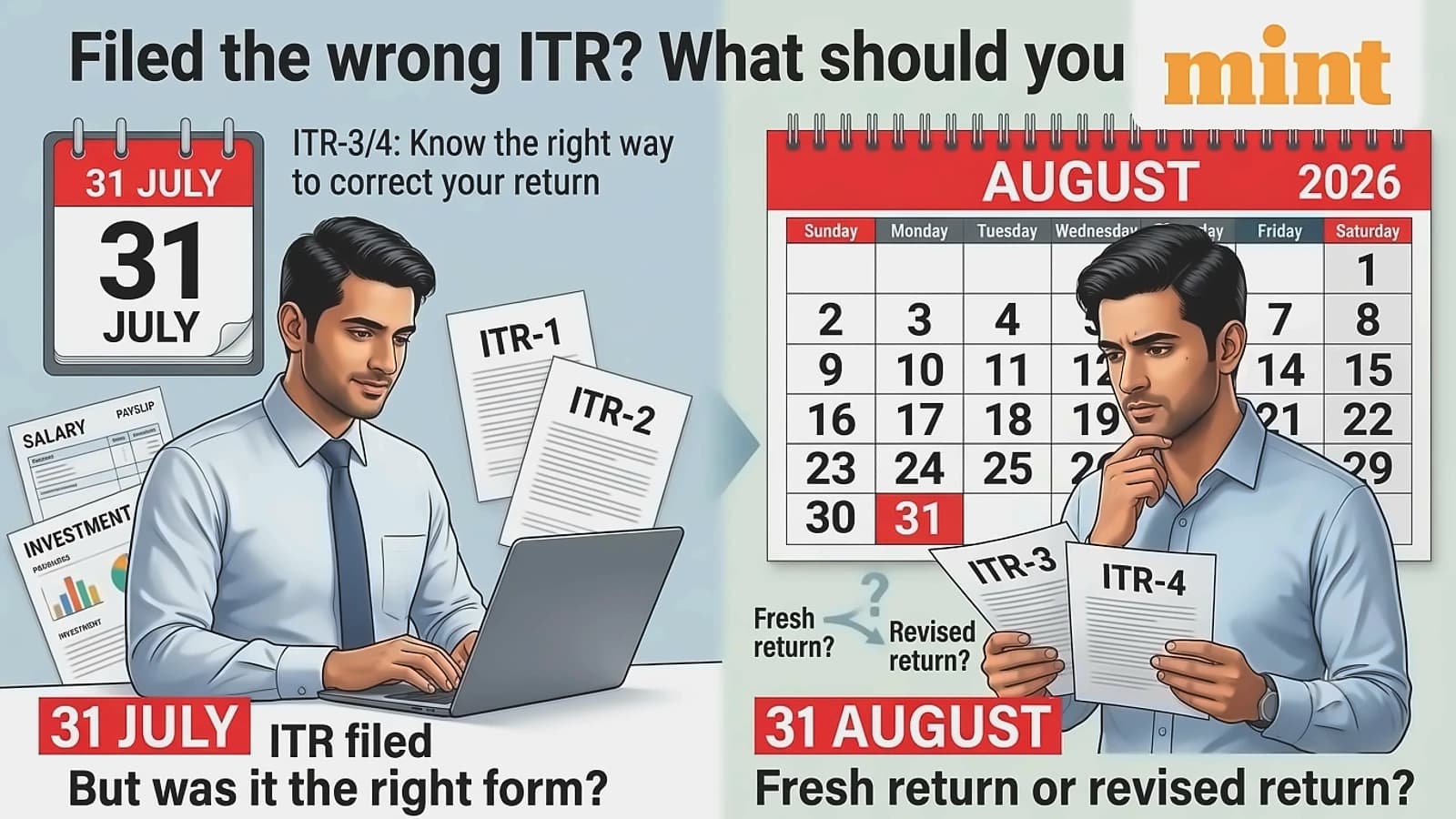
Taxpayers who filed their Income Tax Returns (ITR) in May or June should revisit their returns before the 31 July deadline. According to reports from Mint and Business Standard, many taxpayers prefer early filing to avoid last-minute rushes, but returns filed months ago require careful review as revised TDS statements and additional information from banks and financial institutions may have been reflected in department systems. A quick review can help taxpayers identify mistakes, claim missing tax credits, and avoid refund delays or future notices. As the July 31 ITR filing deadline nears, thousands of taxpayers are racing to file their returns, but in the rush to beat the clock, small errors from incorrect bank details to income mismatches can prove costly, delaying refunds or triggering notices from the Income Tax Department.
The first priority for early filers is to check e-verification status through the Income Tax e-filing portal. As reported by Mint and Business Standard, Nishant Shanker, Tax & Investments Expert at Navraj Global Advisors, emphasized that an ITR that has been filed but not yet verified is considered invalid. The return status should show 'Successfully e-Verified' to ensure validity. Taxpayers can verify this through the portal's 'View Filed Returns' section under 'Services'. Chartered accountant Abhishek Soni, CEO & co-founder of Tax2win, warns that not e-verifying your ITR after submission is a common mistake that can lead to non-submission or rejection of the form. Filing your ITR is not enough - you must also verify it, either online through Aadhaar OTP, net banking or other available methods, or by sending the signed ITR-V to the Income Tax Department if required. The verification has to be done within 30 days of filing an ITR.
Taxpayers must verify bank details linked for refunds to prevent delays, as incorrect or inactive accounts can cause processing issues. According to Mint and Business Standard, taxpayers should ensure their selected account is pre-validated through the portal's 'My Profile' section under 'My Bank Account'. Additionally, taxpayers should maintain proper records of Form 16, TDS certificates, investment proofs, bank statements, and capital gains workings as supporting documents may be required if the return is selected for verification. Chartered accountant Abhishek Soni highlights that mismatched personal details is another common error that can result in ITR filing delays or rejection. Make sure the bank account linked for your tax refund is correct, active and pre-validated on the Income Tax portal. If the account number or IFSC code is wrong, your refund could get delayed.
Taxpayers should recheck AIS, TIS and Form 26AS for new updates as additional information may be reported after filing. As explained by Shanker to Mint and detailed in Business Standard, fresh tax credits may become available in Form 26AS even after ITR filing, and taxpayers should verify whether all eligible TDS has been reflected. The AIS and TIS sections and Form 26AS can be accessed through the income tax portal to ensure income and taxes reported in the return continue to match department records. Even if you checked these before filing your ITR, look at them once more. Banks, employers and other organisations may upload new information later, such as interest income, salary details or tax deducted (TDS). If the details in these documents do not match your ITR, you may need to file a revised return. In some cases, employers or other deductors revise their TDS returns after taxpayers have already filed their ITR, and if additional tax deducted at source (TDS) now appears in Form 26AS, you may become eligible for a higher refund or lower tax liability.
If taxpayers identify omissions, incorrect income disclosure, missed deductions, or other mistakes after e-verification, the appropriate course is to file a revised return. According to Mint and Business Standard, a revised return replaces the original return and can be filed up to 31 December of the relevant assessment year or before completion of assessment, whichever is earlier. Taxpayers should periodically check the e-filing portal and registered contact details for any intimation, defect notice, or request for clarification to prevent unnecessary disputes and interest costs. If you realise that you forgot to report some income, claimed the wrong deduction or made any other mistake after filing and e-verifying your ITR, you can file a revised return, which replaces the original return with the corrected details. The due date to file a belated return is December 31, 2026. Finding an error after filing does not necessarily mean you are in trouble, and rectifying an error at the earliest can help prevent future notices and ensure that the correct amount of tax is paid or refunded.