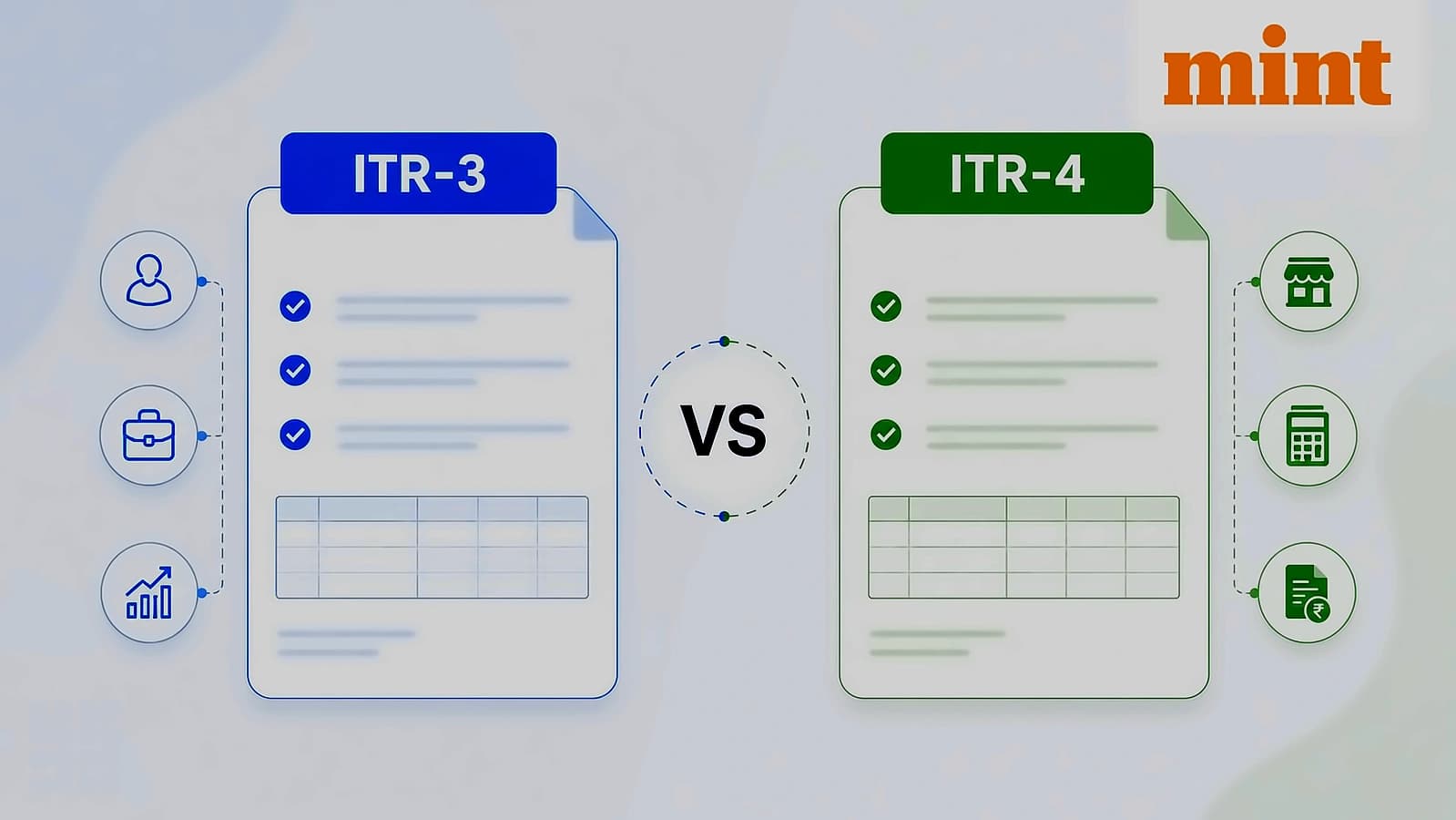
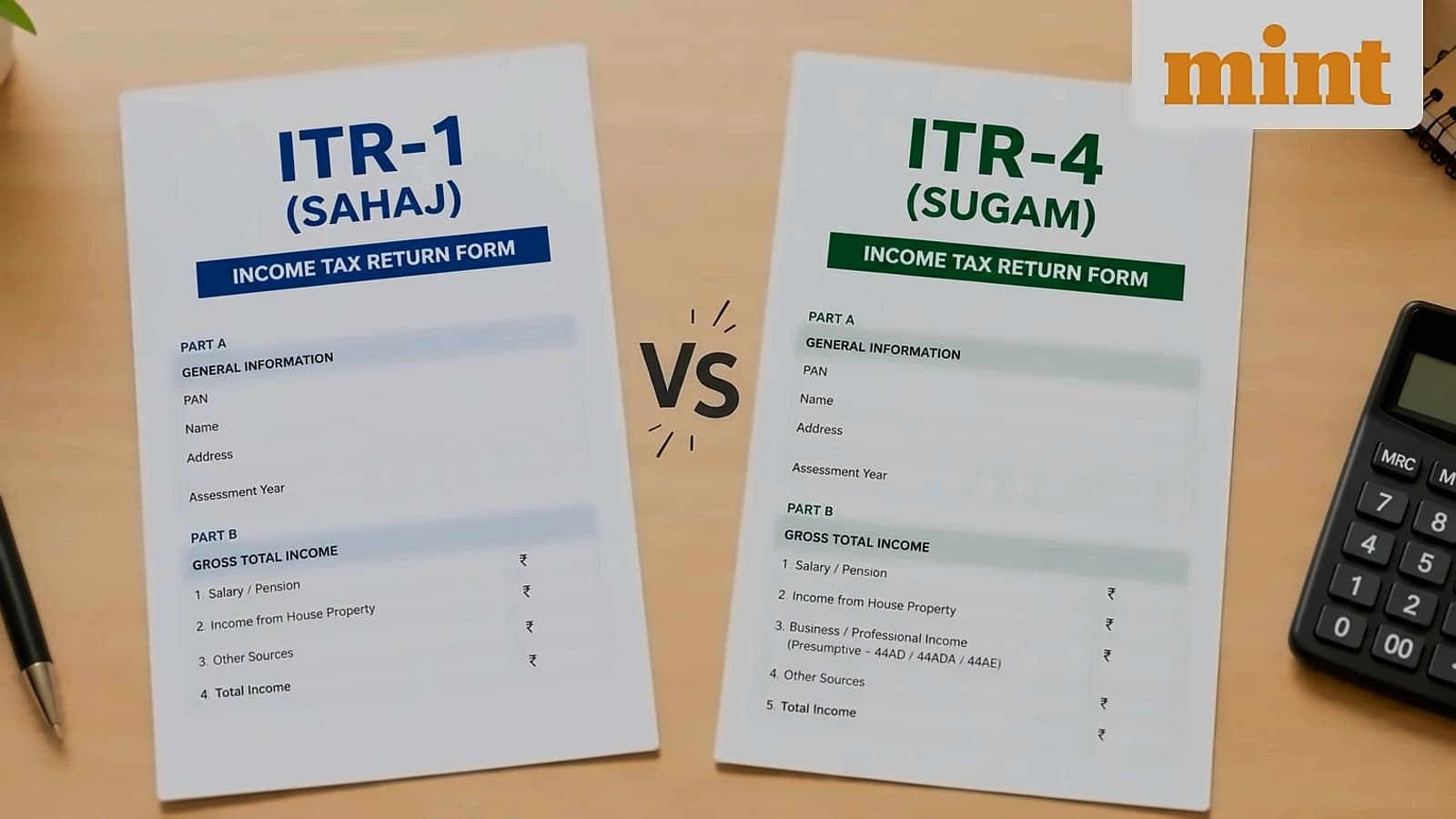
ITR-1 is generally filed by salaried individuals or pensioners, while ITR-4 is meant for individuals earning income from business or profession. According to reports from Mint, both forms apply to taxpayers with income of up to ₹50 lakh in a financial year and share several similar income sources. The main distinction lies in the business income component - ITR-1 does not allow any business or professional income, while ITR-4 includes income from business or profession taxed under the presumptive taxation scheme.
ITR-1, also known as Sahaj, is an income tax return form meant for resident individuals if their total income is up to ₹50 lakh in a financial year. As reported by Mint, eligible income sources include salary or pension, income from up to two house properties, family pension, agricultural income up to ₹5,000, long-term capital gains under Section 112A up to ₹1.25 lakh, and other sources such as interest from savings accounts and bank deposits. The form can also be used if the income of a spouse or minor child is clubbed with the taxpayer's income, provided the income falls within these categories.
ITR-4, also known as Sugam, is an income tax return form meant for resident individuals, Hindu Undivided Families (HUFs), and firms (other than LLPs) that opt for the presumptive taxation scheme under Sections 44AD, 44ADA, or 44AE of the Income Tax Act. According to Mint, the form can be filed if the taxpayer's total income does not exceed ₹50 lakh in a financial year and includes income from business or profession computed under the presumptive taxation scheme, along with salary or pension income, income from up to two house properties, agricultural income up to ₹5,000, and long-term capital gains under Section 112A up to ₹1.25 lakh.
For taxpayers filing ITR-4 with business income, specific rules apply when choosing between tax regimes. As per Mint, individuals with business income can opt for the old tax regime by filing Form 10 IEA before the ITR due date under Section 139(1) of the Income Tax Act, 1961. However, individuals having business income are not eligible to choose between the new and old tax regimes every year. Once they opt for the old tax regime, they only have a one-time option of switching back to the new tax regime in their lifetime. All deductions are available when changing from the default new tax regime to old tax regime, provided Form 10-IEA is filed within the due date and acknowledgement number is furnished in the return.
The Income-Tax Department has notified all I-T return forms for the financial year 2025-26 (Assessment Year 2026-27) and enabled Excel Utility for ITR-1, ITR-2, and ITR-4 forms on its e-filing portal. According to Mint, the deadline for individual taxpayers filing ITR is July 31, 2026, while for those using ITR forms 3 and 4, the deadline is August 31, 2026. Taxpayers who miss the July deadline can still file a delayed return by December 31, 2026. The department has extended the return filing deadline to March 31 of the Assessment Year, offering taxpayers additional time to correct omissions or errors in their original returns.