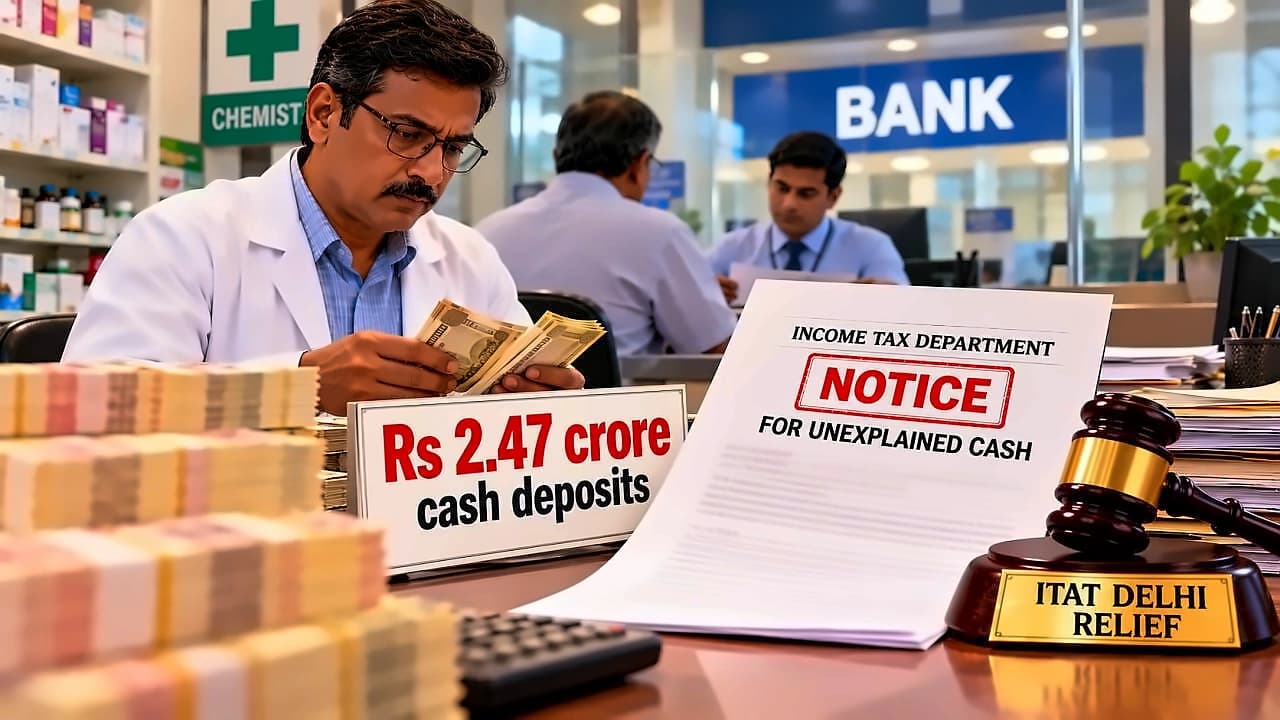
The Income Tax Appellate Tribunal (ITAT) Delhi ruled in favour of a Delhi-based pharma retailer on July 7, 2026, validating his cash deposits made during demonetization despite missing expense records. According to reports from Livemint, the case concerns Rakesh Kumar, a resident of Rohini who deposited ₹2.47 crore cash into his three savings accounts with Oriental Bank of Commerce during the demonetization window of FY 2016-17. The tribunal accepted that Kumar's submitted audited balance sheets, VAT returns, and sample sale invoices adequately established the genuine business origin of the funds, addressing the tax authority's concerns about documentation gaps.
The case involves Rakesh Kumar, a Delhi resident engaged in pharmaceutical retailing who deposited ₹2.47 crore cash into his three savings accounts with Oriental Bank of Commerce during the demonetization period. As reported by Livemint, Kumar claimed that ₹1.64 crore represented cash sales of medicines deposited in the bank, supported by audited balance sheets, VAT returns, and sample sale invoices. The remaining deposits of ₹83.69 lakh comprised cash withdrawals of ₹9.23 lakh redeposited into accounts, Kumar's personal savings of ₹2.46 lakh, and ₹72 lakh of family money from his wife, brother, brother's wife, son and daughter, all backed by their ITRs, declarations and bank account details.
Despite the documentation provided, the Assessing Officer (AO) treated the multiple deposits as unexplained cash credit under Section 68 read with Section 115BBE, which levies tax at a punitive rate on unexplained amounts. According to Livemint, the AO highlighted that no matching expense debits appeared in the bank accounts, and the CIT(A) held that no corroborative reconciliation was furnished to correlate the deposits with sales, stock and cash balance. The Commissioner of Income Tax (Appeals) subsequently confirmed the addition on February 12, 2026, treating the deposits as unexplained cash credit under Section 144. As per Upstox, this assessment was completed under Section 144 of the Income Tax Act, 1961, in December 2019.
Upon appeal, the ITAT Delhi ruled in favour of Kumar on July 7, 2026, emphasizing that complete financials, VAT returns and sample bills are not self-serving documents. As reported by Livemint, the tribunal noted that neither the assessing officer nor the CIT(A) had resorted to Section 145 to reject the books of account, and once that is the case, lower authorities must accept the books as presented. The tribunal observed that for a pharma retailer selling largely in cash, the deposits were "directly correlated with the cash sales made during the demonetization period," and deleted the addition of ₹1.64 crore while allowing the appeal for the remaining deposits. According to Upstox, the tribunal found that the lower authorities had neither found defects in these records nor rejected the books of account under Section 145, which is why it accepted the clarification provided.
This ruling serves as a reminder that documented deposits, sales records and identifiable family sources can defeat charges under Section 115BBE, even a decade after demonetization. According to Livemint, the case demonstrates that unexplained deposits can invite Section 115BBE's punitive tax provisions, but proper documentation and corroborative evidence can successfully challenge such assessments. The tribunal's decision highlights the importance of maintaining comprehensive financial records and proper disclosure of cash transactions, particularly for businesses where cash transactions form a significant portion of operations. As per Upstox, this is an important judgment that provides clarity for taxpayers on how to disclose cash deposits in their tax filings to avoid tax-related problems, emphasizing the importance of maintaining a clear documentary trail for substantial cash transactions and keeping digital and physical records of important documents.