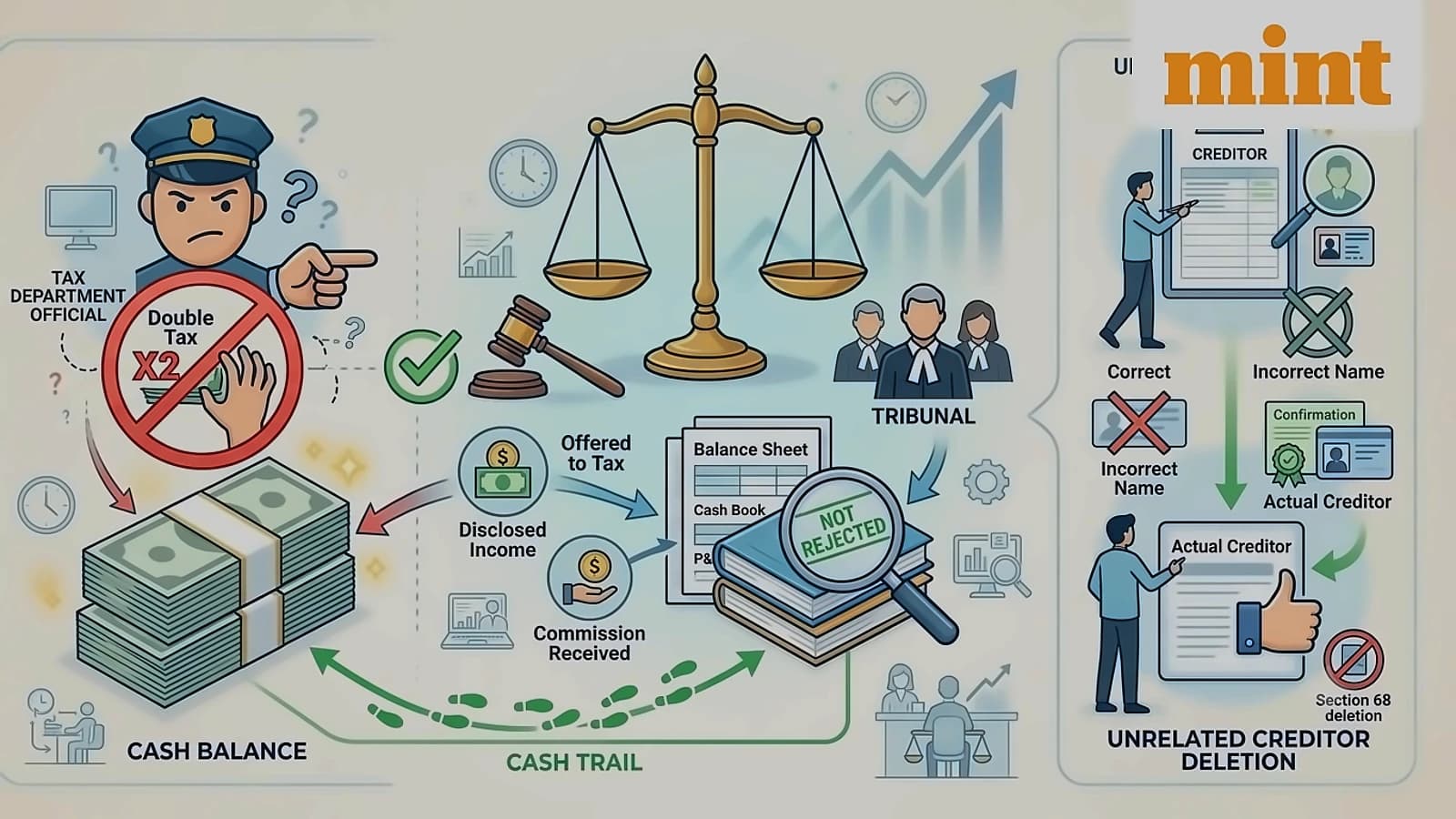



The Delhi ITAT has deleted a ₹34.8 lakh Section 68 addition after finding that the cash balance was linked to commission income already recorded and offered to tax. According to reports from Mint, the ruling in Ankish Madhan vs ITO, Ward 29(1), Delhi was passed on 9 September 2026 for assessment year 2016-17. The tribunal comprising Accountant Member M. Balaganesh and Judicial Member Sudhir Kumar disagreed with tax authorities who treated the closing cash balance as unexplained money despite the underlying income being properly disclosed. The ruling emphasizes that maintaining proper books establishing the source of cash balances is crucial for taxpayers receiving cash income.
Madhan had reported ₹34.8 lakh as cash in hand as of 31 March 2016. During the year, he had earned ₹44 lakh in commission income, including around ₹35 lakh received in cash. As reported by Mint, the commission income had been recorded in the books and offered to tax. The taxpayer also produced his cash book before the assessing officer, which did not show any negative cash balance during the year, and furnished details of parties from whom the commission was received.
The tribunal noted that the ₹44 lakh commission income had already been credited to the profit and loss account and offered to tax. According to the ITAT order reported by Mint, since the cash balance could be traced to income already recorded in the books, the tribunal found no justification for treating the ₹34.8 lakh closing balance as unexplained separately. The assessing officer had not rejected the books of account, and the taxpayer maintained a consistent cash trail throughout the year. The ruling does not mean that cash balances are automatically accepted by the tax department - taxpayers still need to establish the source of the cash and maintain supporting records.
The ruling emphasizes that maintaining proper books establishing the source of cash balances is crucial for taxpayers receiving cash income. As reported by Mint, the significance lies in that where cash receipts have already been recorded as income and offered to tax, and books provide a consistent trail to the closing cash balance, the same amount cannot be treated as unexplained money again merely because it remains in cash. For taxpayers who receive cash as part of their business or professional income, maintaining contemporaneous cash books and supporting documents becomes important if questioned during assessment. A taxpayer's large cash balance can attract scrutiny from the income-tax department, but a closing cash balance cannot automatically be treated as unexplained money when the underlying income has already been disclosed and the books support the cash trail.
The same appeal involved a separate ₹30 lakh addition under Section 68 where the taxpayer had initially shown the creditor under an incorrect name but subsequently produced documents including confirmation, PAN details, income-tax records and bank statements. According to Mint, the tribunal found that the evidence established the identity and creditworthiness of the actual creditor and that the transaction was supported through banking channels. The tribunal ultimately allowed the taxpayer's appeal, demonstrating the importance of proper documentation in resolving tax disputes.