On August 21, 19-year-old Kunal Chandgude climbed Khavda Hill on the outskirts of Chhatrapati Sambhajinagar after an argument with his father over the EMI on an iPhone he could not afford to keep paying off. According to reports from NDTV Profit, hours later, he fell from the edge. His father Murlidhar, who had rushed forward to pull him back, fell with him. His mother Sangita, watching, jumped moments after. All three died at the spot. This tragedy mirrors a similar incident in May when a 42-year-old woman died after a fight with her husband over an iPhone purchase in Hyderabad. These incidents highlight the growing tension between aspirational purchases and financial reality in India's consumer market.
According to Counterpoint Research's financing tracker, nearly 42% of all smartphones sold in India this year will be bought on EMI. In the premium segment, iPhones dominate with two in every three purchases. Apple carries the longest average repayment period at 17.2 months in the second quarter of 2026, against a 10-month average across the mainline retail channel. As reported by NDTV Profit, a ₹75,000 iPhone is priced for an earning bracket most of the country will never enter, given that the average regular salaried employee earned about ₹20,700 a month in 2023-24. Apple's India business has never had a better run, with the company shipping close to 14 million iPhones in 2025, taking a record 9% share of smartphone shipments, up from 7% the year before.
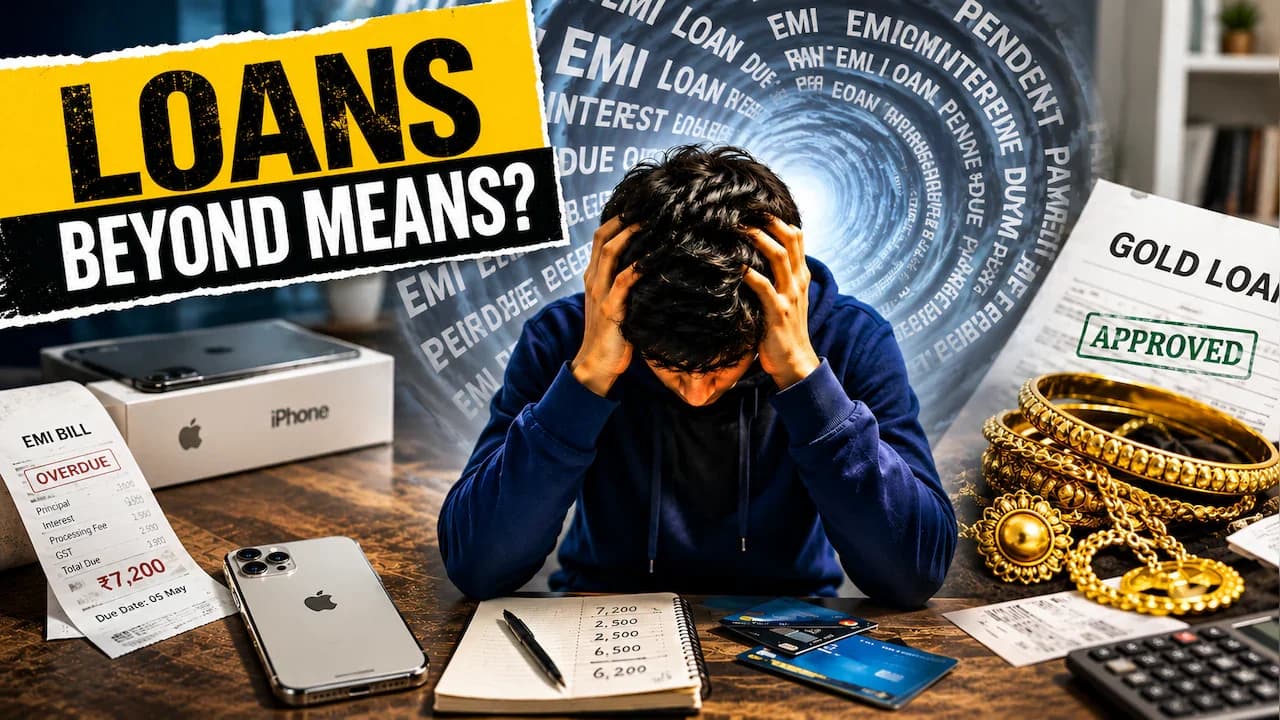
Household debt in India stood at 41.3% of GDP at the end of March 2025, according to the RBI's Financial Stability Report, already above the five-year average of 38.3%. Six months later, the June 2026 edition put the figure at 45.5% of GDP as of September 2025, representing a jump of nearly four percentage points across two consecutive half-yearly assessments. As reported by NDTV Profit, non-housing retail loans now make up 58.4% of total household debt, up from around 50% as recently as 2019-20. The composition matters more than the headline number, with housing loans accounting for just 26.3% compared to the growing consumption-focused debt.
According to TransUnion CIBIL data, Gen Z accounted for 41% of all new-to-credit borrowers in India in 2025-26. Four in ten of them entered the formal credit system through credit cards, personal loans, or consumer durable loans, often a phone. Fintech lenders hold 57% of the market for small-ticket personal loans under ₹50,000, with 70.5% of their loan books being unsecured, and roughly half going to borrowers under 35. Delinquencies on these small-ticket loans stood at 6.4% as of March 2026, well above the 1.7% gross NPA ratio for unsecured retail loans overall, indicating that the youngest, newest borrowers are already under more strain than the market as a whole.
India's credit card base has swelled to 5.2 crore holders as of March 2026, up 3.6 times since 2016. Outstanding balances have grown even faster, up 8.3 times over the same period to ₹3.1 lakh crore. The average debt carried by an individual borrower has climbed to ₹4.78 lakh, from ₹3.41 lakh in March 2018. Despite this growth, bank balance sheets remain healthy with gross non-performing assets at a multi-decade low of 1.8%. The RBI's data shows that gold loans have grown fastest of all, with outstanding bank lending against gold jewellery rising from ₹3.16 lakh crore in September 2025 to ₹4.89 lakh crore by April 2026, a 55% jump in seven months.