India's household savings rate has halved to 5.3% of GDP, according to recent reports. This significant decline in savings behavior raises questions about the effectiveness of traditional budgeting frameworks that have been widely promoted in the country. The savings rate represents a critical indicator of household financial health and economic stability, occurring against a backdrop of global public debt reaching a record $102 trillion, or 91% of global GDP. As per the IMF's latest data, more than 3.4 billion people, or 41% of the world's population, live in countries that spend more on interest payments than on education or health care, highlighting the global scope of the debt crisis.
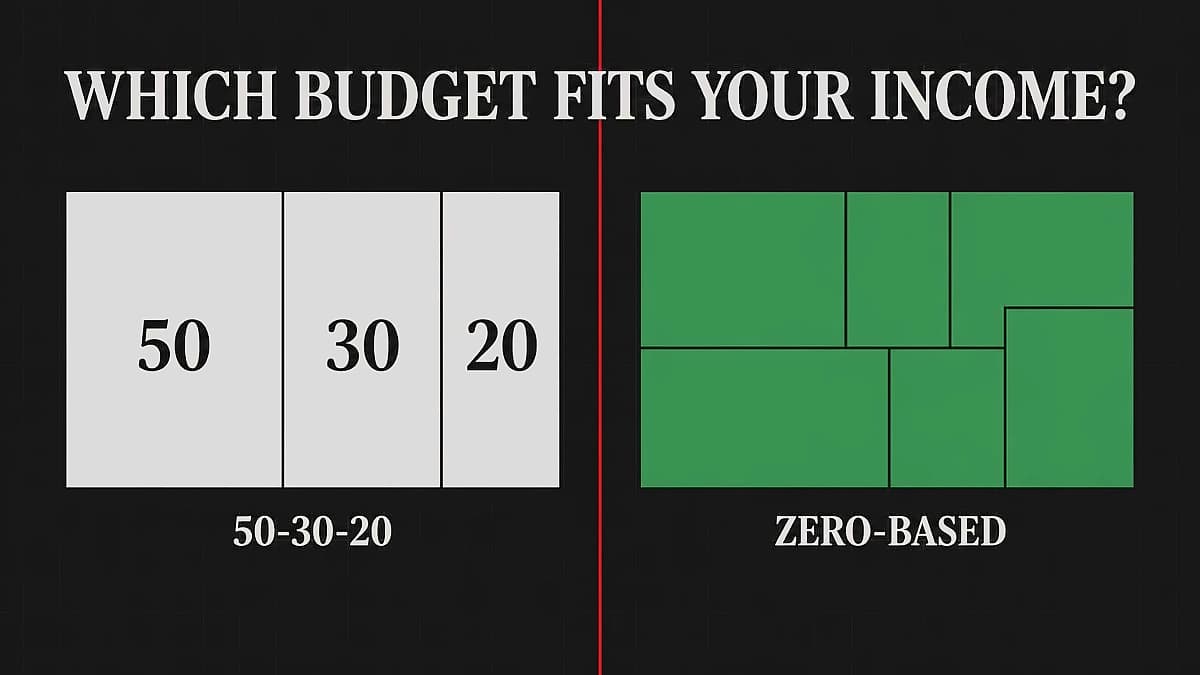
The 50-30-20 rule, which allocates 50% of income to needs, 30% to wants, and 20% to savings, has faced scrutiny as a framework built for a different economy. As reported, if the 50-30-20 rule felt like failure, the problem wasn't discipline — it was the fundamental mismatch between the budgeting framework and current economic realities. This traditional approach may no longer be suitable for addressing modern financial challenges in India, particularly as global debt levels continue to rise and make it increasingly difficult for households to maintain savings targets.
The global debt crisis is creating significant challenges for household financial planning worldwide. Global imbalances have widened sharply to 3.6% of global GDP in 2025, up from a low of 2.4% in 2019, according to the IMF's External Sector Report. This structural shift means that domestic saving and investment patterns are increasingly driven by structural factors, which account for 55 to 60% of global imbalances. The crisis is further compounded by public resistance to higher taxation appearing to spread globally, reflecting declining trust in governments and making it more difficult to raise revenues needed to contain debt. These factors are putting upward pressure on bond yields, posing major risks to equity markets and economic prospects globally.
The decline in household savings rate highlights a fundamental mismatch between budgeting frameworks and current economic conditions. According to reports, the problem wasn't discipline — it was a framework built for a different economy. This suggests that traditional financial planning approaches may need to be reconsidered in light of changing economic circumstances and household financial pressures. The global context reveals that AI has contributed to an increasingly K-shaped pattern of economic growth, intensifying inequality and widening the gap between developed and developing countries, making traditional budgeting approaches even more challenging to implement effectively.
The current savings rate decline, combined with global debt levels reaching record highs, suggests that traditional budgeting approaches may require significant adaptation to address modern financial realities. As India's economic landscape continues to evolve, the effectiveness of established financial planning frameworks will be increasingly tested against changing household financial pressures and economic conditions. The data indicates that India's economic fundamentals remain strong, but the savings rate decline highlights the need for more effective financial planning strategies that align with current economic realities. The global context shows that AI could create financial-stability risks with Fitch warning of an AI market correction given elevated technology-stock valuations alongside substantial debt accumulation, making household financial planning even more complex in the near term.