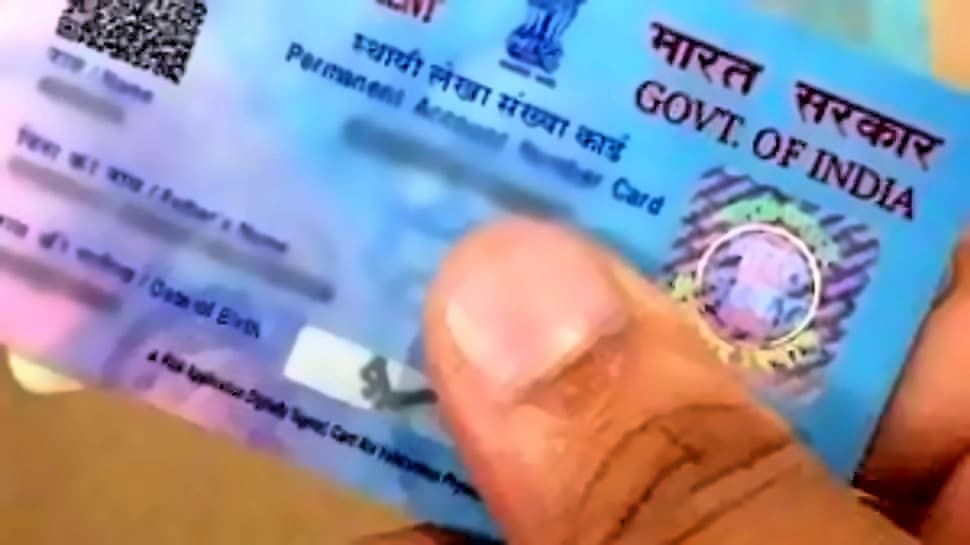
A Hindu Undivided Family (HUF) is a legally recognised and effective tax-saving structure under Indian income tax laws that helps families in income distribution and wealth management. According to reports from Mint, HUF is treated as a separate taxable entity from its family members, allowing family income to be legally divided and reported under the HUF to avail additional tax advantages. An HUF can earn income, hold assets, and claim deductions under provisions such as Section 80C, Section 80D, and exemptions on capital gains. The structure provides separate basic exemption limits of ₹2.5 lakh under the old tax regime and ₹4 lakh under the new tax regime. As per the latest guidance, a HUF PAN is mandatory for the entity to operate legally and financially within India, with the application fee set at ₹107 for new PAN cards including dispatch within India. The HUF files its own income tax returns (ITR) and claims deductions and exemptions under its PAN, offering tax planning benefits but only if the HUF has its own PAN card.
As reported by Mint, Buddhist, Sikh, and Jain families are also eligible to form an HUF, with the structure requiring at least two members to be established. A family must have lineal ascendants and descendants to constitute an HUF, and the entity can also come into existence after marriage. The members include a common ancestor and all lineal descendants, along with their wives and unmarried daughters. The person managing the HUF is known as the Karta, while other eligible family members are known as coparceners. According to the latest guidelines, the primary condition for HUF PAN application is the existence of a valid HUF with ancestral property or income being managed collectively by the family under the Karta. The HUF should have a source of income or be liable to pay tax, even if it's currently nil, and cannot apply for a HUF PAN if the HUF is not properly constituted or has ceased to exist due to partition. The Ministry of Finance's 2026 directives have underscored the separate legal identity of Hindu Undivided Families, making a distinct PAN card more critical than ever for tax compliance.
According to Mint, the Karta serves as the head of the HUF, generally the eldest male or female member, responsible for managing family affairs and bearing unlimited liability. Coparceners include all male and female lineal descendants of a common ancestor, including daughters by birth, who have equal rights over HUF property and can seek partition of the HUF. Wives of coparceners become members after marriage but are not treated as coparceners, entitled to maintenance but cannot demand partition of HUF property. Only coparceners have the right to seek partition of the HUF, while the Karta remains fully liable for all HUF obligations, including tax liabilities. As per the latest guidance, the Karta must be an adult and is typically the eldest male member, though a female can also be a Karta in certain circumstances. The Karta is the designated applicant for the HUF PAN card and their details will be prominently featured in the application. The Karta's identity documents are required because they are the authorised signatory and representative of the HUF, with their personal identification essential to link the HUF application to a responsible individual.
As detailed by Mint, creating a Hindu Undivided Family involves preparing an HUF deed, obtaining a PAN card, opening a bank account, and transferring assets to the HUF. The first requirement is drafting an HUF deed mentioning the Karta's name, coparceners' details, formation date, HUF corpus details, and sources of funds. The Karta must submit Form 49A for PAN application, with the PAN number typically generated within 48 hours of application submission. A bank account can then be opened using the HUF deed, PAN card, and KYC documents, followed by transferring common assets to the HUF account. According to the latest application process, the Karta's identity proof is mandatory, including Aadhaar card, passport, driving licence, or voter ID card, with the name exactly matching the Karta's name entered in Form 49A. The HUF deed or affidavit establishes the legal existence of the HUF as a separate entity, with a comprehensive list of all HUF members and coparceners often required as part of the deed or affidavit. Proof of HUF existence is paramount, as it establishes the legal standing of your family unit, with the most common and accepted document being an affidavit on stamp paper duly attested by a Notary Public.

According to the latest NSDL guidelines, applying for a HUF PAN requires specific documentation and a distinct process compared to individual applications. The application process typically involves submitting Form 49A, either online via the NSDL portal or offline at a PAN Facilitation Centre, along with specific supporting documents. For online applications, select 'New PAN – Indian Citizen (Form 49A)' from the application type dropdown and choose 'HUF (Hindu Undivided Family)' as the category. Fill in the required details including the HUF's name, email ID, and mobile number, then upload scanned copies of supporting documents including the Karta's identity proof, address proof, and the HUF deed or affidavit. The application fee for a new PAN card is ₹107 as per NSDL (2026), payable through debit/credit card, net banking, or UPI. Upon successful payment, you'll receive an acknowledgement number, which is vital for tracking the status of your PAN application. For offline applications, locate your nearest PAN Facilitation Centre and submit your filled form and attached documents in person, with the staff verifying your documents and issuing a physical acknowledgement slip. The verification process involves manual document verification, which takes time unlike instant individual e-PANs, with physical PAN cards typically dispatched within 15 working days after successful verification.