

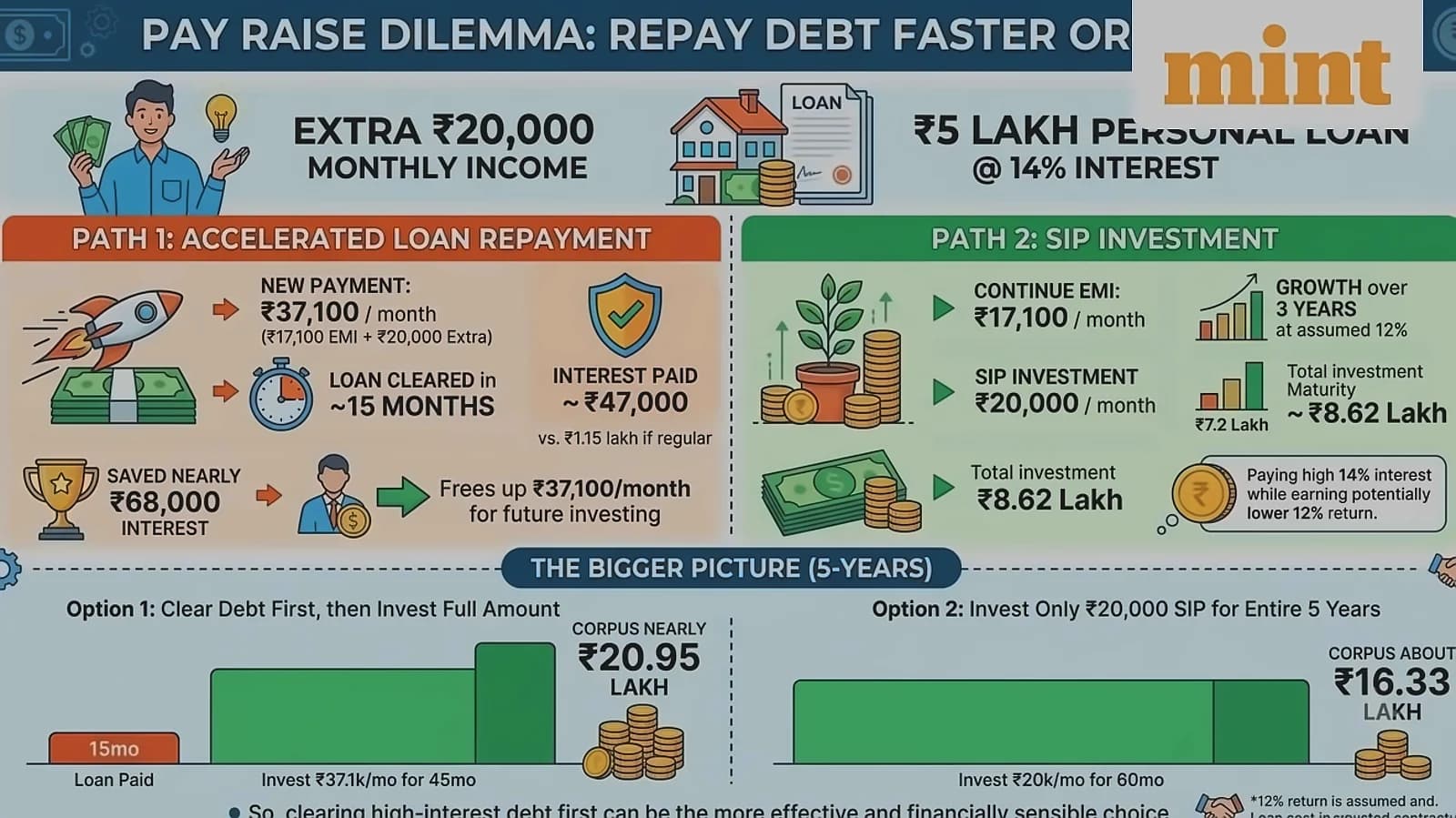

According to reports from Mint, when borrowers face the dilemma of increasing home loan EMIs or investing incremental amounts in SIPs, the financial implications are substantial. With home loan EMIs spread over 20-25 years, even small payments in initial years can significantly reduce overall interest outgoings. A home loan EMI consists of two components - outstanding principal and interest, with the interest component being much higher in initial years due to the reducing balance method.
A ₹50 lakh home loan at 8.5% interest demonstrates the significant impact of paying one extra EMI annually on loan repayment. With regular EMI of ₹43,391, the loan would require 20 years to repay, totaling ₹54.14 lakh in interest payments. However, making one extra EMI annually reduces the outstanding loan principal and helps save interest over the remaining tenure. This strategy can help borrowers save approximately ₹1.87 lakh in interest and close their loan around five months earlier without needing a huge lump sum.
A ₹20 lakh home loan at 8.5% interest demonstrates the significant impact of EMI increases on loan repayment. With regular EMI of ₹17,356, the loan would require 20 years to repay, totaling ₹41.66 lakh in interest payments. However, increasing the EMI by ₹5,000 to ₹22,356 reduces the repayment tenure to approximately 11 years 11 months, saving nearly ₹9.85 lakh in interest. This strategy shortens the repayment period by about 8 years and 2 months, making borrowers debt-free much earlier while reducing long-term financial burden.
As reported by Mint, in the first scenario, borrower Aman takes a ₹1 crore home loan at 9% interest with monthly EMI of ₹83,920. After 5 years, he increases the EMI to ₹1,18,154 and reduces the tenure to 10 years. The total amount paid over 15 years becomes ₹1.92 crore, saving ₹59.62 lakh in interest. After investing this saved amount in mutual funds through SIP for 10 years at 12% average returns, he earns ₹1.22 crore in returns, resulting in a combined total benefit of ₹1.81 crore.