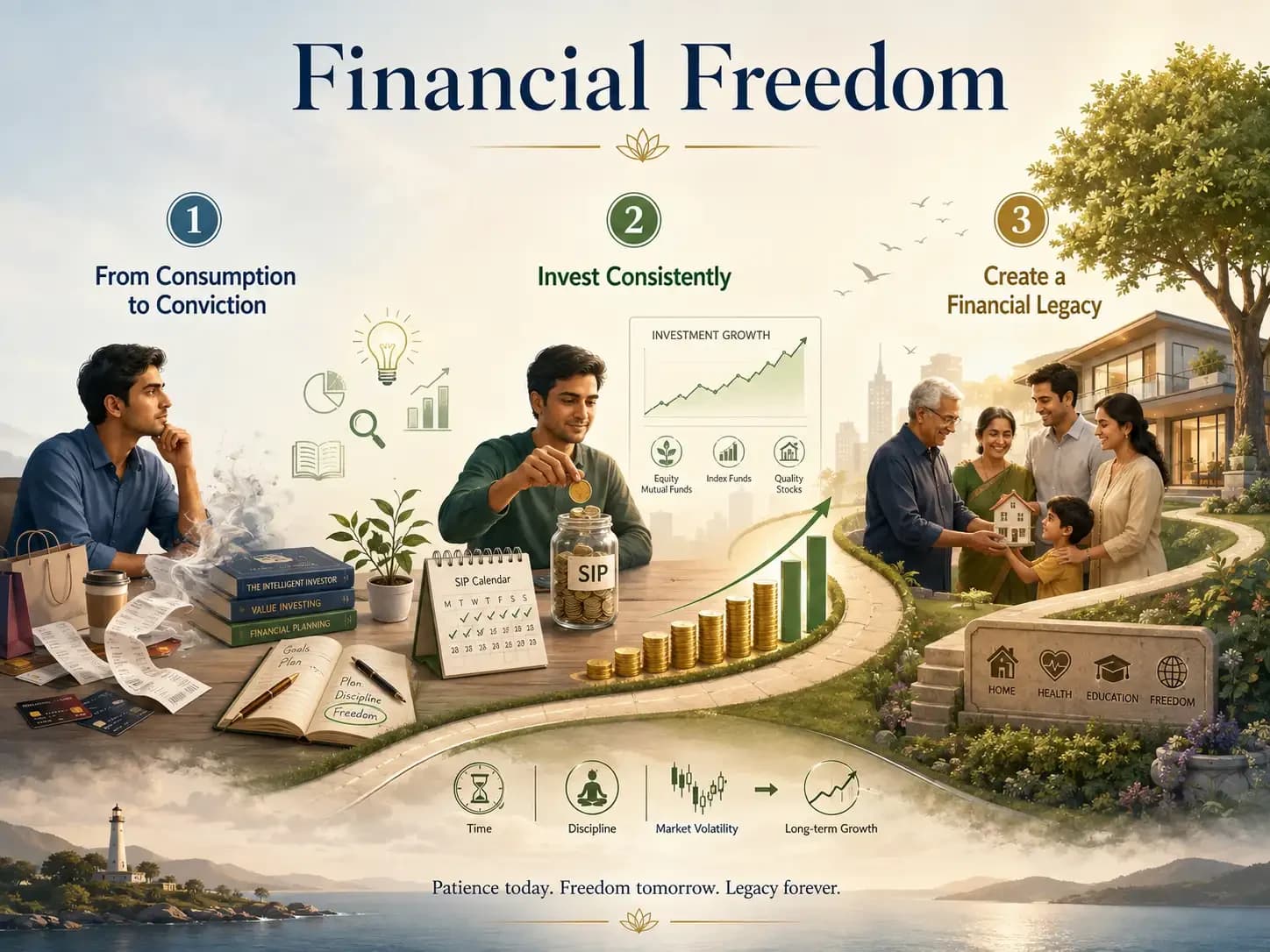
According to reports from Business Standard, achieving financial freedom represents only half the journey, with the more challenging question being what to do once work becomes optional. The author's experience with wealth management clients revealed that while many focus on investment returns, what clients truly care about is what those returns enable them to do with their lives. This realization led to a fundamental shift in approach from product-focused to client-centric financial planning.
As reported by Business Standard, the author's approach evolved from traditional investment portfolio construction to understanding clients' deeper motivations. Successful cases included helping entrepreneurs overcome job security fears by demonstrating their families would remain financially comfortable without immediate salary, and assisting clients in accepting lower-paying roles with greater flexibility to spend more time with family. This methodology focuses on helping clients stay invested during market volatility and understand the emotional aspects of financial decision-making beyond simple return calculations.
According to the report, meaningful financial planning involves asking clients what they would stop doing if money constraints were eliminated and what they would regret not having done with just five years to live. These introspective questions help clients visualize their ideal life scenarios and identify what financial freedom would enable them to achieve. The author's personal experience of finding purpose through financial security demonstrates how this approach can transform from theoretical planning into practical life transformation.
As reported by Business Standard, the author's experience led to the ambitious goal of providing a financial plan for every Indian by 2047, drawing involvement with the Association of Registered Investment Advisers (ARIA) to make financial planning mainstream. This initiative represents a shift from individual wealth management to systemic financial education and planning accessibility for broader populations.
According to the report, the journey from financial planning to purpose discovery reveals that many financially successful clients have answered the question of whether they will have enough money to stop working, but few have considered what they will do when work becomes optional. The author emphasizes that purpose need not be grand or capitalized, and can include teaching, mentoring, spending time with family, learning new skills, or living differently. This perspective suggests that financial freedom's true value lies in the choices and opportunities it creates rather than the money itself.