The digital revolution has fundamentally democratised financial knowledge, transforming how consumers access and understand money-related information. According to The Economic Times, consumers now have unprecedented access to financial information through search engines, social media creators, podcasts, AI assistants and online communities. Whether seeking to understand mutual funds, compare home loans, calculate EMIs, improve credit scores or start investing, answers appear almost instantly through these digital platforms. This democratisation has made conversations around investing, insurance, taxation and retirement planning part of everyday discourse, moving beyond niche subjects reserved for experts. The abundance of information is so vast that search engines produce thousands of results in seconds, while social media platforms are filled with creators explaining everything from budgeting techniques to stock market strategies.
Despite this abundance of information, consumers face unprecedented uncertainty in their financial decision-making. As reported by The Economic Times, the problem is not a lack of information but the sheer volume of it. Financial advice arrives continuously from multiple sources without context, consistency or opportunities for step-by-step understanding. The ability to distinguish education from opinion has emerged as an equally important financial skill, as financial decisions are rarely isolated and require understanding relationships between budgeting, saving, investing and insurance decisions. This next step - called financial literacy - has become more critical than ever, as the availability of knowledge has increased the complexity of financial decision-making.
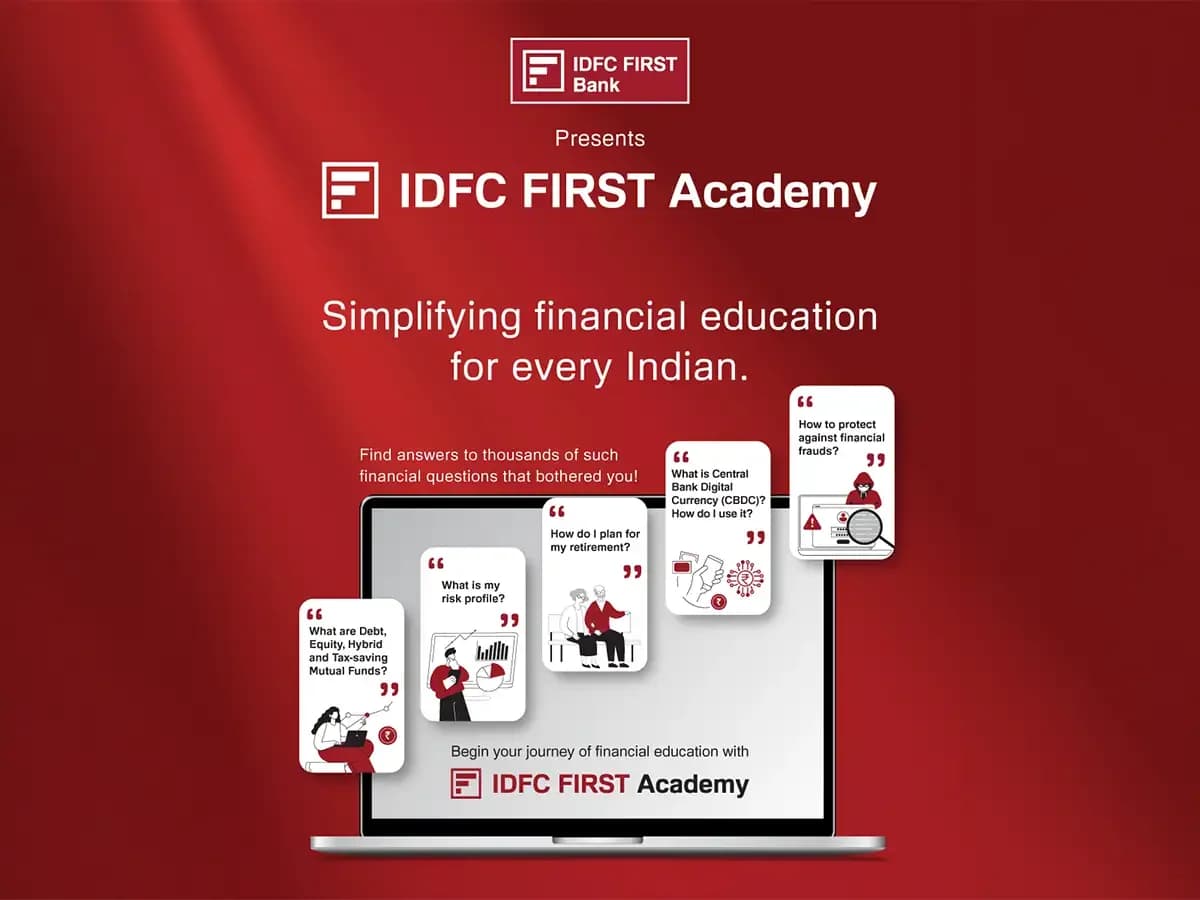
Recognising these challenges, institutions are beginning to rethink how financial education is delivered through structured learning platforms. IDFC FIRST Academy by IDFC FIRST Bank exemplifies this evolution as a free digital learning platform offering structured courses across more than 300 topics spanning budgeting, saving, investing, borrowing and financial planning. According to The Economic Times, the platform is available in multiple languages and organised across beginner, intermediate and advanced levels, combining interactive lessons, bite-sized videos, quizzes and certifications to help learners build knowledge progressively rather than through fragmented information. Its significance extends beyond the platform itself, reflecting a broader recognition that in an environment overflowing with advice, what consumers increasingly need is a reliable learning journey.
Financial literacy has evolved beyond simple awareness to require confidence in financial decision-making. The Organisation for Economic Co-operation and Development (OECD) consistently highlights that digitalisation expands access while simultaneously increasing complexity, as consumers face more products, choices and information than previous generations. As reported by The Economic Times, financial literacy now measures confidence to compare products rather than follow recommendations blindly, confidence to ask questions before making commitments, and confidence to distinguish between marketing, opinion and education. This confidence cannot be built through information overload alone but requires structured learning approaches that help people organise, interpret and apply what they learn. Understanding money rarely happens through isolated facts - learning why inflation matters without understanding asset allocation offers only partial insight, while knowing what a mutual fund is without appreciating risk or investment horizons can lead to incomplete decisions.
Financial education is entering a new phase where accessibility serves as the starting point rather than the primary challenge. According to The Economic Times, the larger challenge is helping people organise, interpret and apply what they learn through continuous, practical and structured approaches. The future of financial literacy will not be measured by how much information people can access but by how confidently they can make financial decisions when it matters most. This requires institutions that make learning coherent rather than those that produce the most content, as consumers increasingly navigate a world shaped by search engines, social media feeds and AI-generated answers. The institutions that will make the greatest contribution may not be those that produce the most content, but those that make learning coherent and help people build confidence gradually, understand concepts in relation to one another and apply knowledge to their own financial circumstances.