The current market environment presents significant challenges for traditional investment approaches, with fixed deposit real returns approaching zero levels creating pressure on investors seeking positive returns. According to recent analysis from William Blair Investment Management, equity markets have remained resilient at the index level but are experiencing substantial churn beneath the surface. The market leadership has shifted from AI-related technology and infrastructure beneficiaries that dominated in April and May, to industries that typically perform well during healthy economic expansion, including leisure products, software, and healthcare sectors. This transition reflects a broader rotation toward sectors that benefit from strong global growth, even as the market appears relatively flat at the index level. Recent data shows weekly S&P 500 Index returns showing broad sectoral contributions rather than concentrated technology performance, with technology stocks now detracting materially from overall market performance despite the broader index remaining relatively stable.
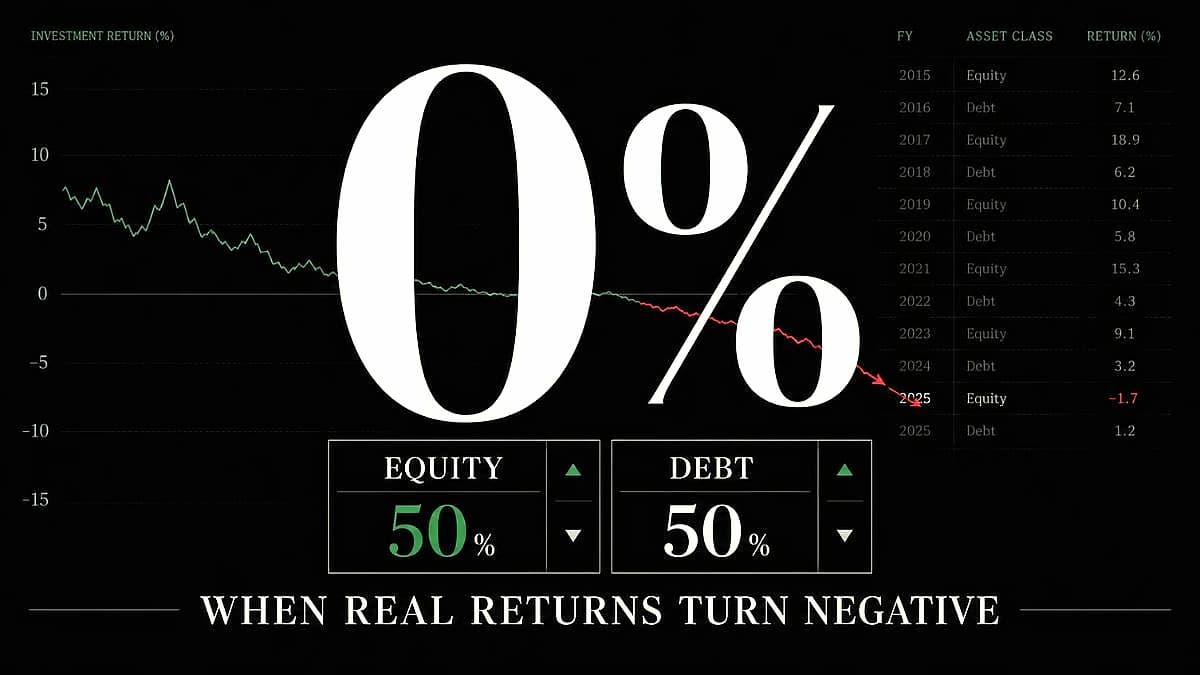
The equity-debt ratio strategy provides a systematic approach to managing investment risk while maintaining growth potential during market transitions. As reported by the source, this framework involves balancing equity investments with debt instruments to optimize returns across different market cycles. The strategy allows investors to maintain exposure to both growth-oriented assets and income-generating securities, creating a diversified portfolio approach that can help navigate periods of market volatility and shifting leadership patterns. This approach becomes particularly relevant when traditional fixed deposit returns fail to meet investment objectives, as current market conditions demonstrate with global growth remaining strong but leadership shifting from technology to broader sectors.
The equity-debt ratio strategy incorporates a goal-horizon framework that aligns investment decisions with specific financial objectives during market transitions. According to the source, this approach helps investors determine appropriate asset allocation based on their investment timeline and risk tolerance. The framework enables investors to adjust their equity-debt ratio based on changing market conditions and personal financial goals, providing flexibility during periods when traditional fixed deposit returns are insufficient. This adaptability becomes crucial when market leadership shifts from one sector to another, as recent data shows weekly S&P 500 Index returns showing broad sectoral contributions rather than concentrated technology performance, with AI-related technology and infrastructure beneficiaries losing momentum even as other sectors help offset declines.
The strategy includes tax-efficient rebalancing methods to minimize the impact of portfolio adjustments on overall tax liability during market transitions. As reported by the source, these techniques help investors optimize their equity-debt ratio while managing tax implications. The approach allows for systematic portfolio adjustments that consider both investment performance and tax efficiency, particularly important when market leadership shifts create the need for strategic rebalancing. This becomes particularly relevant when technology stocks that previously drove majority returns in April and May now detract from overall market performance, requiring active management of the equity-debt ratio in an environment where greater dispersion and higher capital costs could make security selection increasingly important in the second half of the year.