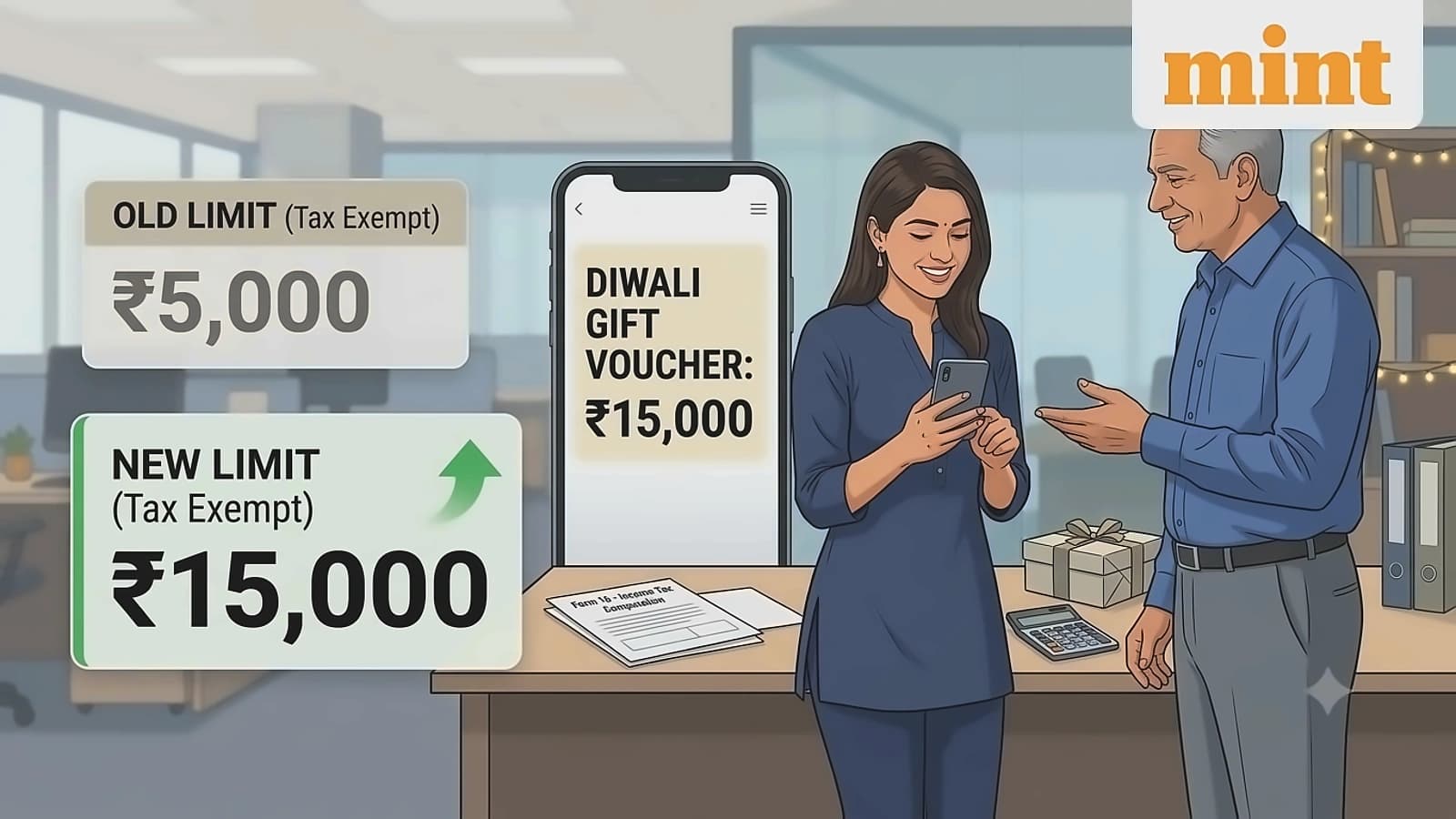
According to reports from Mint, cash bonuses received from employers are treated as salary income and taxed at the employee's applicable tax slab rate. For example, if an employee gets a Diwali cash bonus of ₹20,000, the amount is added to their salary income for the relevant financial year and taxed accordingly. The additional payout could increase the employee's overall tax liability, depending on their total taxable income and applicable tax slab. Under the new Income-tax Act, 2025 and Income-tax Rules, 2026 that took effect on April 1, 2026, the tax-free limit for employer gifts and vouchers has increased from ₹5,000 to ₹15,000, providing greater tax relief for employees. As per Business Standard, the new tax regime introduces Section 15 of the Income-tax Rules, 2026, which provides that gifts, vouchers or tokens are tax-free if the total in the tax year does not exceed the new ₹15,000 limit.
As reported by Mint, gifts in kind up to ₹5,000 are considered tax-free under perquisite rules. For instance, if an employee receives an air fryer worth ₹5,000 from their employer, it would be tax-exempt. However, if the same person receives a television or smartphone worth ₹15,000, the gift would be taxable as its value exceeds the ₹5,000 exemption limit. According to Siddharth Maurya, Founder and Managing Director at Vibhvangal Anukulara, the ₹5,000 limit is applicable for qualifying gifts in kind and is on an aggregate annual basis, not a separate exemption for each gift or festival. Under the new tax regime, gifts from relatives remain exempt, while gifts from non-relatives totaling above ₹50,000 in a year are taxable as income from other sources. As per Business Standard, gifts received from specified relatives are generally exempt from income tax, while certain gifts from non-relatives exceeding ₹50,000 in aggregate may be taxable, subject to statutory exceptions.
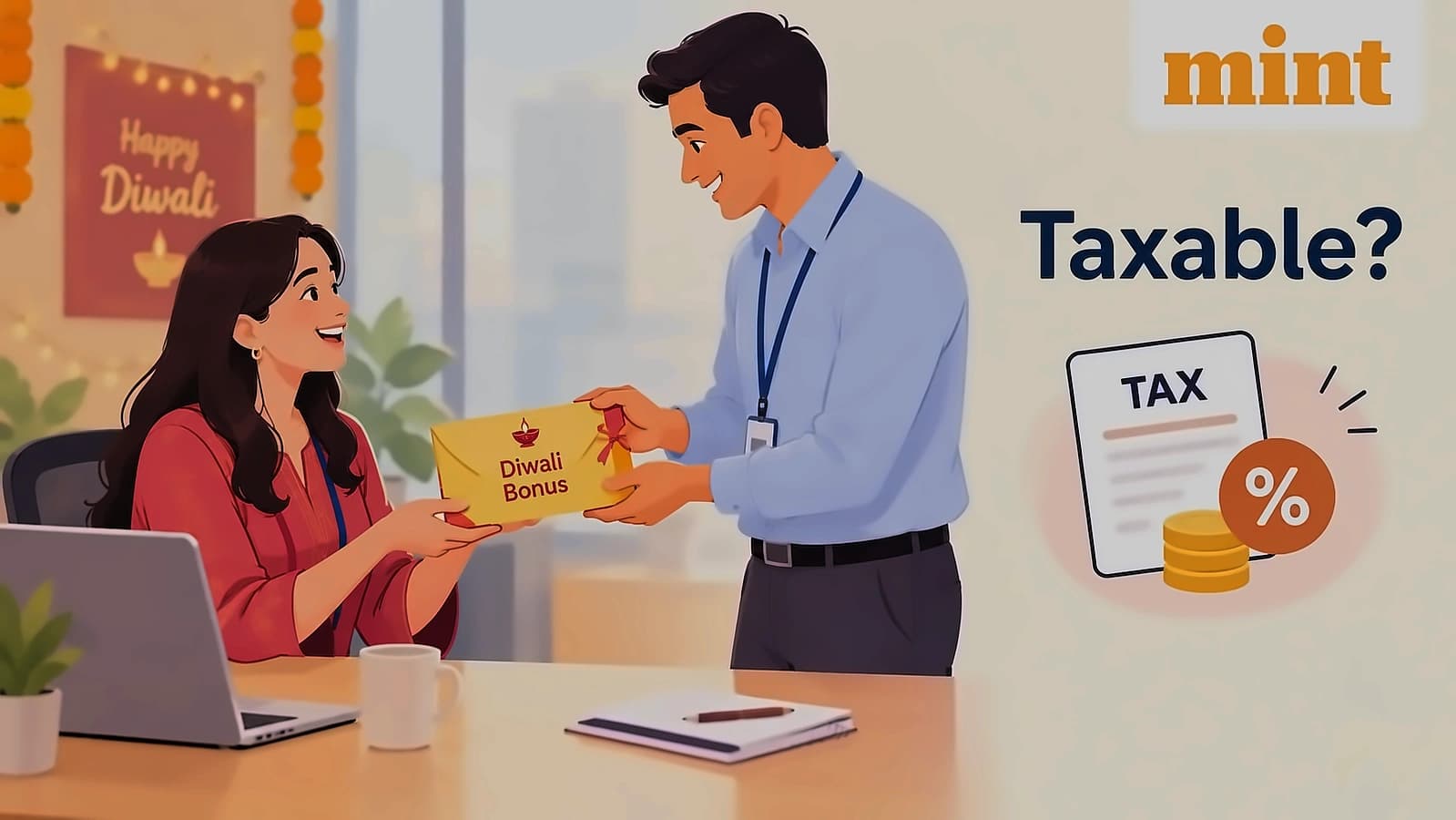
According to Mint, cash Diwali bonuses should be reported as salary in income tax returns (ITR) and not as a separate tax-exempt festive payment. Employees must check their Form 16, pay slips and the tax information available on the tax department's portal to see if the bonus is shown as salary. If you receive a cash bonus on November 1, 2026, you must report it in your return for AY 2027-28, which covers income earned during FY 2026-27. The new tax regime introduces Section 15 of the Income-tax Rules, 2026, which provides that gifts, vouchers or tokens are tax-free if the total in the tax year does not exceed the new ₹15,000 limit. As per Business Standard, selling a gifted asset may also trigger capital gains tax, with the previous owner's acquisition cost and holding period generally relevant.
According to Business Standard, India's festive shopping boom is creating another market, one that begins after gifts have changed hands. Karan Chechi, founder and CEO of TechSci Research, estimates festive e-commerce sales at ₹1.55 trillion to ₹1.60 trillion this season, compared with ₹1.24 trillion last year. The recommerce market, which includes resale of pre-owned goods beyond gifting, is estimated at $5.02 billion in 2025 and projected to reach $9.07 billion by 2030. Brands are already responding with smartphone trade-ins from Apple, Samsung and Xiaomi, device buybacks through Cashify, furniture resale programmes from IKEA, and gold exchanges from jewellers like Tanishq and CaratLane. As per Business Standard, luxury goods are a prime example, with handbags, wallets and accessories from brands like Gucci and Louis Vuitton frequently entering the resale market after being received as gifts. According to Punit Anand, founder of The LuxuryPop, such gifts are often in brand-new condition but offered below their original retail price, making them attractive to buyers.
As reported by Business Standard, sustainability expert Rashi Grover advocates for the most sustainable gifts being those you make or upcycle yourself, plants, and gifts that will be used for years. She emphasizes durable materials, minimal packaging and gifts that support local artisans and small businesses. According to Grover, brands should introduce take-back, resale, refurbishment and donation programmes. She cites Eveready's used-battery collection initiative with Zepto as an example of circular gifting. The financial lesson is straightforward: a gift may carry sentimental value, resale value or investment potential, but these are not necessarily the same thing. As per Business Standard, the transaction may end at delivery and the occasion may end that evening, but a great gift can live much longer through emotional connection and personalisation rather than just monetary value.