The Delhi government is in the final stages of preparing its flagship financial aid programme for women beneficiaries, with ₹2,500 monthly benefits for an estimated 20-22 lakh women from economically weaker sections. Originally introduced as the Mahila Samriddhi Yojana, the scheme has been rebranded to Delhi Lakshmi Yojana under the current BJP government led by Chief Minister Rekha Gupta. The scheme will be implemented by the state's Women and Child Development department, with the government targeting an official rollout on August 28, 2026, aligning with the festival of Raksha Bandhan. The decision to rename the program stems from administrative intent to provide a distinct local identity to the capital's largest financial assistance initiative. According to the Delhi Chief Minister's Office (CMO), the scheme marks another significant step towards strengthening the dignity, security and economic self-reliance of women across the capital.
To qualify for Delhi Lakshmi Yojana benefits, women must register using a Delhi-based Aadhaar number and belong to the below poverty line (BPL) category. According to the latest guidelines, eligible beneficiaries must be women aged between 21 and 60 years, be permanent residents of the National Capital Territory of Delhi for at least 10 years, and have an annual family income between ₹2.5 lakh and ₹3 lakh. The scheme allows only one woman per family to receive benefits, with the eldest woman of the family entitled to assistance. Neither the eligible woman nor her family should have any criminal record, as confirmed by the Delhi Chief Minister's Office (CMO). Notably, women already receiving government pensions or other regular financial assistance, families with criminal records, and families owning four-wheelers are excluded from the scheme. Existing valid ration card holders who meet age requirements will likely receive priority registration, given that their socioeconomic background and residential data have already undergone rigorous physical verification. The government is yet to announce the complete list of required documents for enrollment.

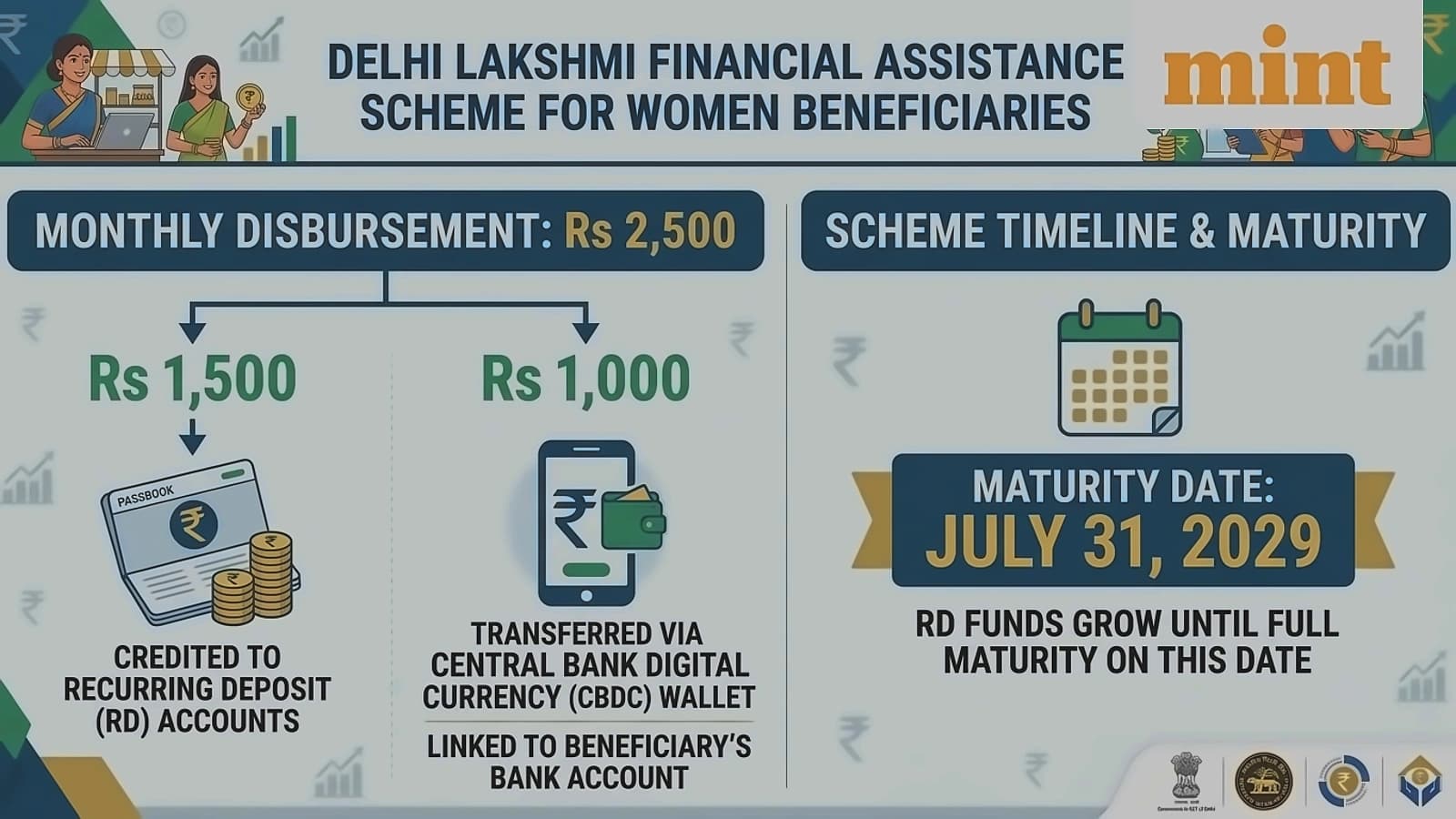
The Delhi government has allocated ₹5,100 crore for the scheme in the annual state budget for FY2026-27, as reported by Mint. The assistance will be transferred directly to beneficiaries' bank accounts via Direct Benefit Transfer (DBT). Chief Minister Gupta announced the scheme during her budget presentation, with the government developing a registration portal and separate software by the IT department to verify applications and identify eligible women. Preparations for the rollout are moving into their final phase, with authorities expecting all foundational processes to wrap up by mid-August. While DBT remains the primary method under consideration, officials are also exploring alternative payout distribution models including allocating a partial amount into a fixed deposit under the beneficiary's name or utilizing the Reserve Bank of India's Central Bank Digital Currency (CBDC).
According to Mint reports, Chief Minister Gupta confirmed that her government is developing a registration portal for the scheme. The application process will require Aadhaar card, ration card, and proof of address documents. The registration infrastructure is already in place via a newly developed online portal, which will go live as soon as the definitive eligibility guidelines are completely integrated. To ensure a smooth disbursement process, government representatives have held multiple rounds of consultations with financial institutions. The scheme has been delayed from its previous June launch due to lack of authentic data to cross-check eligible beneficiaries, as reported by Mint. The government aims to ensure only genuine beneficiaries receive the benefits through proper verification processes.
As of August 1, 2026, the Delhi government has made it mandatory for women to obtain their 'Pink Saheli Smart Card' to avail the scheme benefits. Women without this smart card will not be able to access the financial assistance programme. The existing paper-based pink tickets, which have been issued so far, will cease to be valid by July 31, 2026. The 'Pink Saheli Smart Card' is part of the broader Centre's 'One Nation, One Card' initiative through the Pink NCMC card, under which only women from Delhi will be eligible to travel for free on Delhi Transport Corporation (DTC) buses. This smart card requirement represents an additional layer of verification and accessibility for the scheme beneficiaries.