Investors holding debt funds face a critical tax deadline as September 15 approaches. According to reports from the source, this date represents a significant cutoff point for debt fund investors seeking to manage their tax obligations effectively. The deadline creates a crucial window for investors to make strategic decisions about their debt fund holdings and potential tax implications, particularly as it coincides with other important tax deadlines including California's third estimated tax payment and Q3 federal estimated tax requirements. September 15, 2026 is 25 days away and brings Q3 federal estimated tax under 1040-ES, while California's third individual estimated installment is 0% under the 2026 30/40/0/30 schedule. Unlike federal quarterly taxes, California does not demand a payment on the September date, making this a unique opportunity for debt fund investors.
As reported by the source, Section 234C provides important protection for debt fund investors approaching the September 15 deadline. This section of the Income Tax Act offers safeguards against penalties that could otherwise apply to early redemptions. The protection mechanism ensures that investors who redeem debt funds before the deadline are not subject to additional tax penalties beyond standard capital gains treatment.
According to the source, early redemption of debt funds before the September 15 deadline may not always result in tax savings. The report indicates that early redemption may cost more than it saves for some investors, highlighting the complexity of tax planning decisions. This suggests that investors should carefully evaluate the potential tax implications of their redemption decisions, including the impact on their overall investment strategy and the timing of other tax obligations, particularly as they navigate the unique California estimated tax schedule that requires payments on April 15, June 15, and January 15, 2027, but not September 15.
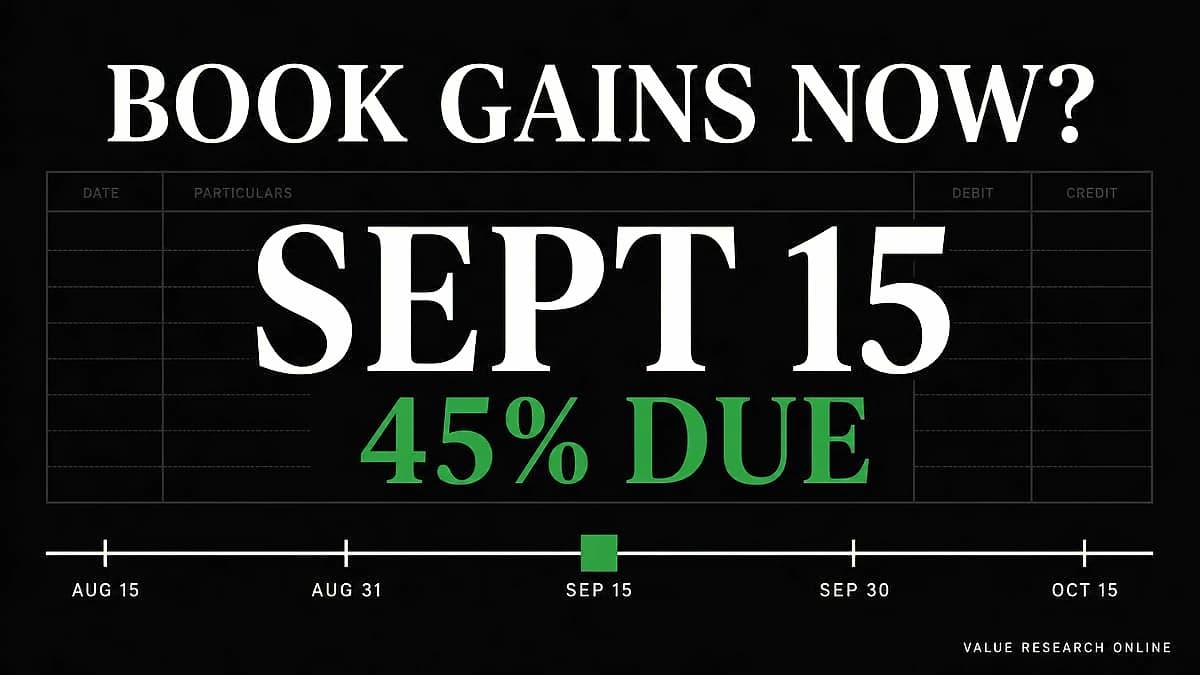
As reported by the source, investors holding debt funds face a critical decision point as September 15 approaches. The guidance emphasizes that the tax implications of debt fund redemptions are not straightforward and require careful consideration. The report suggests that investors should weigh the potential tax savings against the costs of early redemption, including any capital gains tax implications and the impact on their overall investment strategy, particularly as they navigate other simultaneous tax deadlines and obligations. Taxpayers who file their 2026 return by January 31, 2027, and pay the full balance can skip the January 15 estimated payment without incurring a fourth-installment penalty, providing a strategic opportunity for debt fund investors to manage their tax obligations effectively.