The Central Board of Direct Taxes (CBDT) has issued comprehensive Frequently Asked Questions (FAQs) to clarify how pending tax proceedings and applications will be handled as India transitions to the new Income-tax Act, 2025. According to the latest clarifications released via an office memorandum on July 6, 2026, the FAQs address requests from taxpayers and businesses seeking clarity on the transition provisions under Section 536 of the new Act. The guidelines cover critical areas including pending tax assessments, Lower Deduction Certificates (LDCs), No Deduction Certificates (NDCs), tax recovery, search cases, and prosecutions, providing detailed guidance for the ongoing transition period. As per Mint, the guidance explains how pending tax proceedings will continue under the old law until they are concluded, ensuring greater certainty and continuity for taxpayers during the transition.
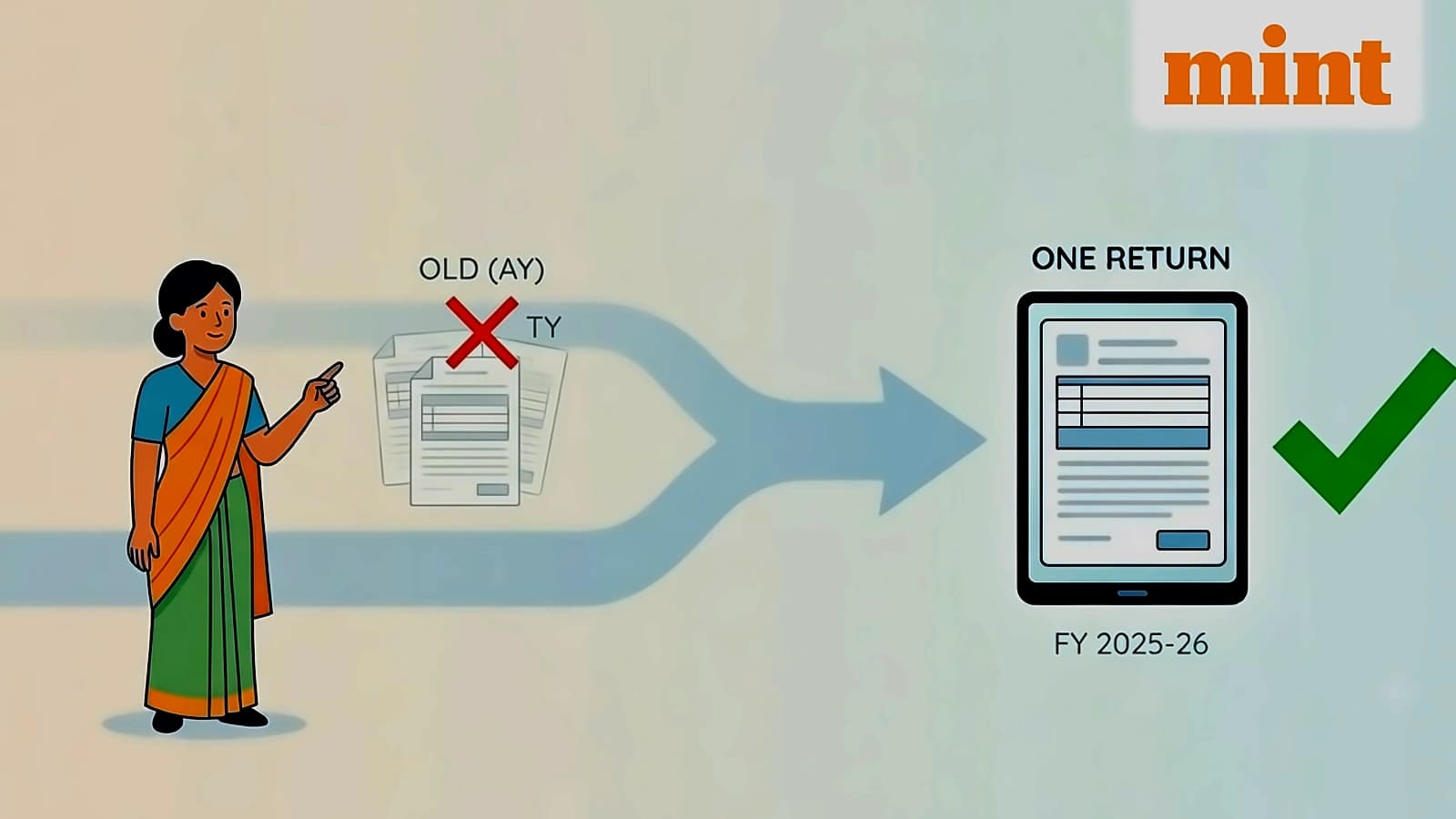
The Central Board of Direct Taxes (CBDT) has addressed a major concern among taxpayers regarding ITR filing during the transition period. According to reports from Business Standard, taxpayers will not need to file two income tax returns this year despite the new Income Tax Act 2025 coming into force on April 1. Income earned during FY 2025-26 will continue to be reported through the return for Assessment Year 2026-27 under the Income Tax Act 1961, even though the return is filed after the new Act has come into force. The first return under the Income Tax Act 2025 will relate to income earned in FY 2026-27 (Tax Year 2026-27) and will become due only in 2027.
A significant change in the presumptive taxation regime now requires eligible assessees to maintain detailed records and undergo audits under certain circumstances. As per the latest amendments, an eligible assessee who claims that his profits and gains from eligible business are lower than the profits and gains specified in sub-Section (1) and whose total income exceeds the maximum amount not chargeable to income-tax, shall be required to keep and maintain such books of account and other documents as required under sub-Section (2) of Section 44AA and get them audited and furnish a report of such audit as required under Section 44AB. This change has significant implications for small and medium businesses, particularly those operating on low margins. The amendment also includes provisions for discontinuation of benefits - where an eligible assessee declares profit for any previous year in accordance with the provisions of this section and he declares profit for any of the five assessment years relevant to the previous year succeeding such previous year not in accordance with the provisions of sub-section (1), he shall not be eligible to claim the benefit of the provisions of this section for five assessment years subsequent to the assessment year relevant to the previous year in which the profit has not been declared in accordance with the provisions of sub-section (1).
The CBDT has clarified that the repeal of the Income Tax Act 1961 does not mean ongoing tax matters automatically shift to the new law. According to the latest FAQs, the provisions of the repealed Income-tax Act shall continue to apply to any proceeding pending on the date of commencement of this Act and to any proceedings initiated on or after the 1st April, 2026... in respect of any tax year beginning before the 1st April, 2026 and such proceedings shall be carried out as per the procedure specified in the repealed Income-tax Act. As per Mint, this means that the Income Tax Act, 2025, will not apply to events or tax years preceding 1 April 2026, ensuring that pending proceedings continue under the old law until they are concluded. Several proceedings relating to AY 2026-27 and earlier years will continue under the old Act, including original income tax returns, revised returns, belated returns, updated returns (ITR-U), scrutiny assessments, and defective return notices. For instance, if a taxpayer files an ITR for AY 2026-27 and later discovers an error, the revised return will still be governed by the provisions of the Income Tax Act 1961.
The CBDT has published comprehensive Frequently Asked Questions (FAQs) explaining how pending proceedings are handled under the new law. According to the latest clarifications, notices, summons, assessments, reassessments, rectifications, penalties, appeals and other proceedings relating to tax years before April 1, 2026 will continue under the Income Tax Act 1961, even if initiated after the new law came into force. However, proceedings concerning tax year 2026-27 onwards will be initiated and completed under the Income Tax Act 2025. The transition is governed by Section 536 of the Income Tax Act 2025, which contains the repeal and savings provisions. For searches, those initiated before April 1, 2026 will continue under the old law, while searches initiated on or after April 1, 2026 will be governed by the new law. The CBDT has clarified that searches initiated before April 1, 2026, together with post-search investigations, inquiries and assessments arising from them, will continue under the Income-tax Act, 1961, ensuring that an entire search-related proceeding remains under a single legislative framework.
The CBDT has provided detailed guidance on how administrative proceedings will be handled during the transition. According to the latest clarifications, administrative proceedings such as transfer of jurisdiction and Permanent Account Number (PAN) migration where these processes were initiated before April 1, 2026, may be completed under the provisions of the Income-tax Act, 1961. This allows pending administrative actions to reach completion without requiring a shift in legal basis midway through the process. However, jurisdiction transfer and PAN migration proceedings initiated on or after April 1, 2026, will be carried out under the Income-tax Act, 2025. The CBDT has also clarified how pending applications for Lower Deduction Certificate (LDC) and No Deduction Certificate (NDC) will be handled after the new law came into force. On LDC and NDC applications filed on or before March 31, 2026 but pending as on April 1, 2026, seeking approval for Tax Year 2026-27 onwards, may be administratively treated as having been filed under the corresponding provisions of the Income-tax Act, 2025 and processed accordingly. Applications for lower or no deduction certificates filed on or after April 1, 2026 will be dealt with entirely under the provisions of the Income-tax Act, 2025. For all applications and pleas pending under Section 197 of the Income Tax Act, 1961, which permits taxpayers to seek a lower or nil deduction of tax at source (TDS), applications filed on or before 31 March 2026 that remain pending on 1 April 2026 and for which approval is mandatory for Tax Year 2026-27 onwards, may be administratively considered under the corresponding provisions of the Income-tax Act, 2025.
The CBDT has reassured taxpayers that existing registrations, approvals and certificates will not become invalid merely because a new law has replaced the old one. According to Business Standard, among those protected are registrations under Section 12AB, approvals under Section 80G, lower or nil TDS certificates issued before April 1, 2026, and pending applications for lower or nil TDS certificates. For applications filed before April 1, 2026 but remaining pending and relating to Tax Year 2026-27 onwards, the tax department will generally treat them as applications under the corresponding provisions of the Income-tax Act 2025 without requiring taxpayers to submit a fresh application. As per the latest clarifications, registrations and approvals already granted under the Income Tax Act 1961 remain valid under the new law. Applications that were pending as on April 1, 2026 and relate to tax year 2026-27 onwards may be treated as applications under the corresponding provisions of the Income-tax Act 2025, while applications filed from April 1, 2026 onwards will be processed entirely under the new law. The CBDT has also clarified that taxpayers do not lose benefits earned under the old law simply because the new Act has taken effect, with pending income tax refunds continuing to be processed and business losses and capital losses determined under the old Act continuing to be carried forward under the new law.
The CBDT has advised taxpayers to pay close attention while making tax payments during the transition period. According to Business Standard, self-assessment tax paid for FY 2025-26 should be paid against AY 2026-27, since it is governed by the Income Tax Act 1961. Advance tax paid on income earned during FY 2026-27 will be governed by the Income Tax Act 2025 and should be paid for Tax Year 2026-27. The Board has outlined a practical checklist for taxpayers, advising them to maintain separate records for FY 2025-26 and FY 2026-27, ensure the correct Assessment Year or Tax Year is selected while making tax payments, and file returns well before the due date to avoid last-minute issues while both Acts operate simultaneously on the e-filing portal.