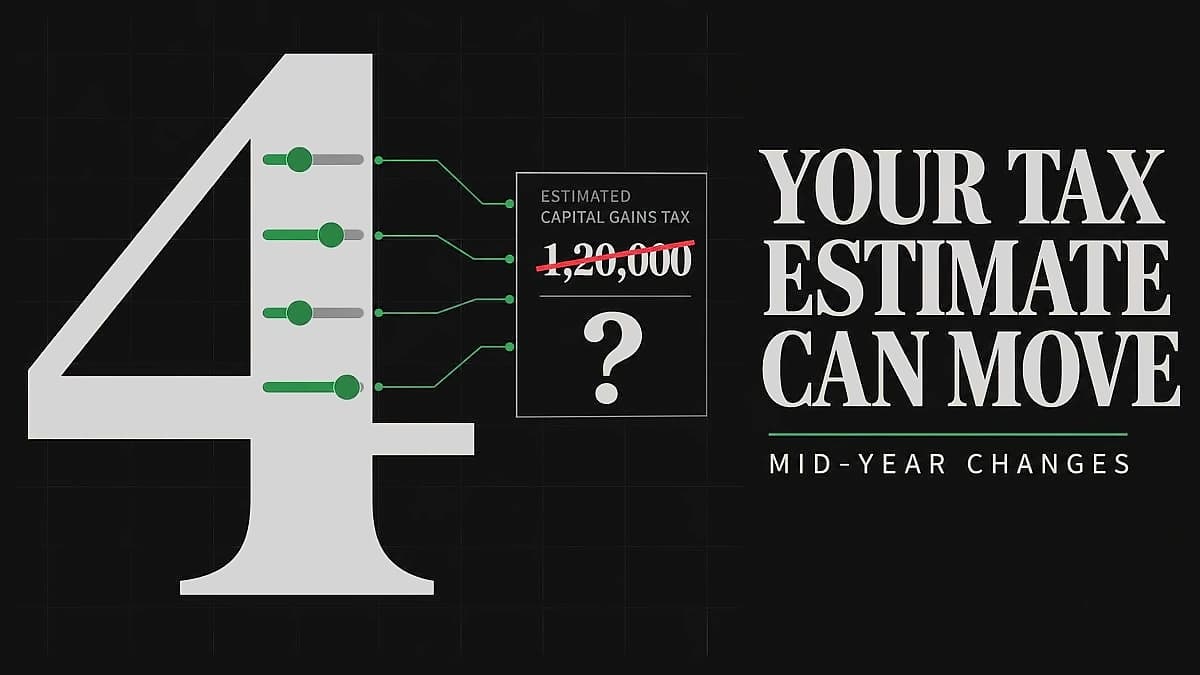
A comprehensive review of capital gains tax calculations reveals that four key factors can shift tax estimates by 20-30% during the mid-year period. According to recent reports, these adjustments become particularly crucial as investors approach the end of the financial year. The framework encompasses holding-period crossings, Rs 1.25 lakh exemption balance, harvested losses, and fund classification considerations that require careful monitoring throughout the year.
The most significant factor affecting mid-year tax calculations is holding-period crossings, which occur when investments are held for different periods. As reported by financial experts, these crossings can create complex tax scenarios where portions of gains are taxed at different rates based on the actual holding period. This factor alone can contribute substantially to the 20-30% estimate shift that investors may experience during the mid-year review period.
The Rs 1.25 lakh exemption balance represents another critical factor in mid-year tax calculations. According to financial reports, this exemption threshold can be significantly impacted by loss harvesting activities throughout the year. Loss harvesting involves selling investments at a loss to offset gains from other investments, which directly affects the available exemption amount. The balance of this exemption, combined with harvested losses, can create substantial variations in tax estimates during the mid-year review period.
Fund classification plays a crucial role in determining capital gains tax liability, particularly for mutual fund investments. As reported by financial experts, the actual portfolio allocation and tax classification can change the holding-period threshold and tax rate, even within the same SEBI category. Equity-oriented funds require at least 65% investment in listed Indian shares with STCG at 20% and LTCG at 12.5% above ₹1.25 lakh after 12 months. Specified mutual funds have over 65% debt/money-market exposure with gains taxed at slab rates regardless of holding period. Other funds include gold, silver, international funds with LTCG after 24 months for unlisted units and 12 months for listed units.
The mid-year tax review framework emphasizes the importance of proactive tax planning throughout the financial year. According to financial reports, investors should monitor these four key factors regularly to avoid unexpected tax surprises at year-end. The 20-30% estimate shift potential highlights the need for systematic tracking of holding periods, exemption balances, loss harvesting activities, and fund classifications to ensure accurate tax planning and compliance throughout the year. Recent developments show that capital gains tax receipts increased by 89% in 2024/25 compared to 2023/24, with much of this increase attributed to in-year rate increases, making careful planning even more crucial for investors.