Financial experts are proposing a 60/20/20 budget allocation as an alternative to the traditional 50/30/20 rule for Indian metro cities. According to reports from financial advisors, this modified approach addresses the higher cost of living in urban areas while maintaining the core principle of spending discipline. The 60/20/20 rule allocates 60% of income to needs, 20% to wants, and 20% to savings, compared to the original 50/30/20 structure. However, recent analysis suggests that while the basic concept remains relevant in 2026, the exact percentages may not work for everyone, requiring flexibility based on individual financial circumstances.
The 60/20/20 rule specifically targets Indian metro cities where living expenses are significantly higher than in smaller towns or rural areas. As reported by financial experts, this modified approach recognizes that rent, transportation, and other urban necessities consume a larger portion of income in metro cities. The rule aims to provide a more realistic spending framework for urban residents while maintaining the fundamental principle of financial discipline. Recent analysis confirms that housing, transportation, education, healthcare, food, technology, and lifestyle expenses can take up a considerable part of monthly income in metro areas, making the modified approach particularly relevant for urban budgeting.
Financial advisors are providing specific examples of how the 60/20/20 rule applies to different income levels in metro cities. According to reports, a ₹50,000 monthly salary would allocate ₹30,000 to needs, ₹10,000 to wants, and ₹10,000 to savings under the 60/20/20 structure. The same income would allocate ₹25,000 to needs, ₹12,500 to wants, and ₹12,500 to savings under the traditional 50/30/20 rule. These comparisons demonstrate how the modified rule provides more flexibility for urban living expenses. For example, with a ₹60,000 monthly income, ₹30,000 can go towards needs, ₹18,000 towards wants, and ₹12,000 towards savings, while those with higher expenses may need to adjust percentages based on their specific financial situation.
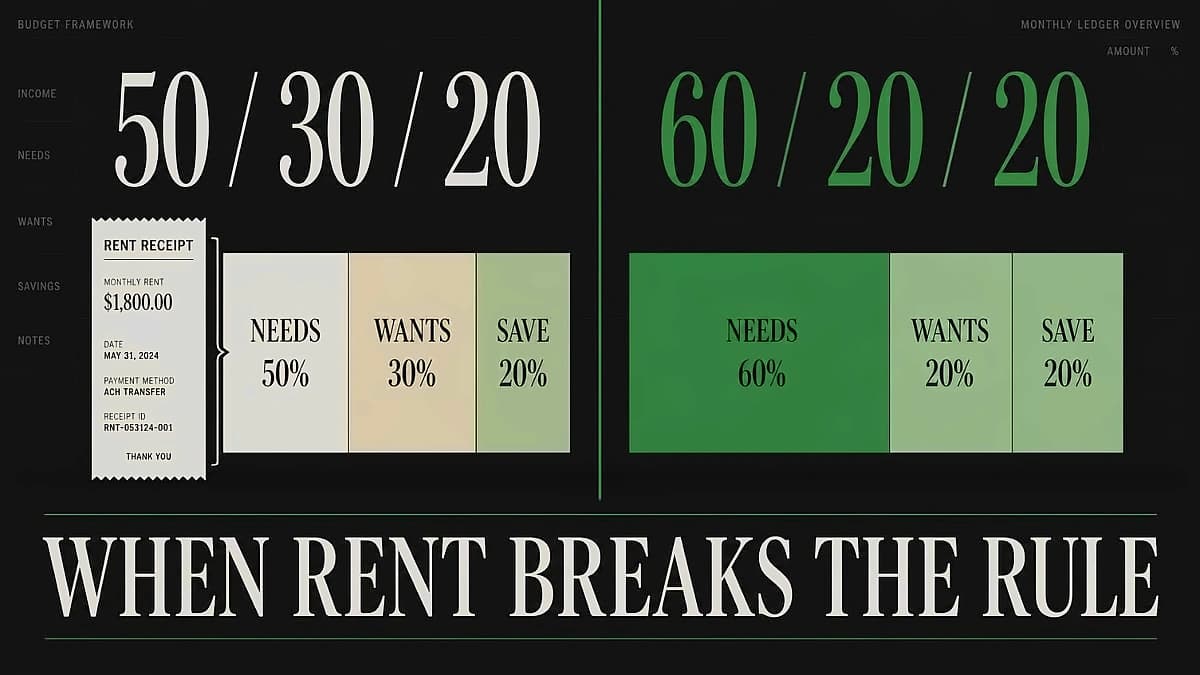
Financial experts emphasize that while the 50/30/20 rule remains relevant in 2026, the exact percentages may not suit everyone's financial circumstances. The rule can be customized based on income, existing loans, family responsibilities, and financial goals. Those with higher expenses may need to modify the allocation to a 60-20-20 or 60-25-15 structure depending on their financial situation. Similarly, individuals with relatively low cost of living may be able to save more than 20%, potentially allocating 25% or even 30% towards savings and investments. The key principle remains maintaining control over expenses while continuing to save whenever possible, with the best budget being the one that can be maintained consistently while making progress towards financial goals.