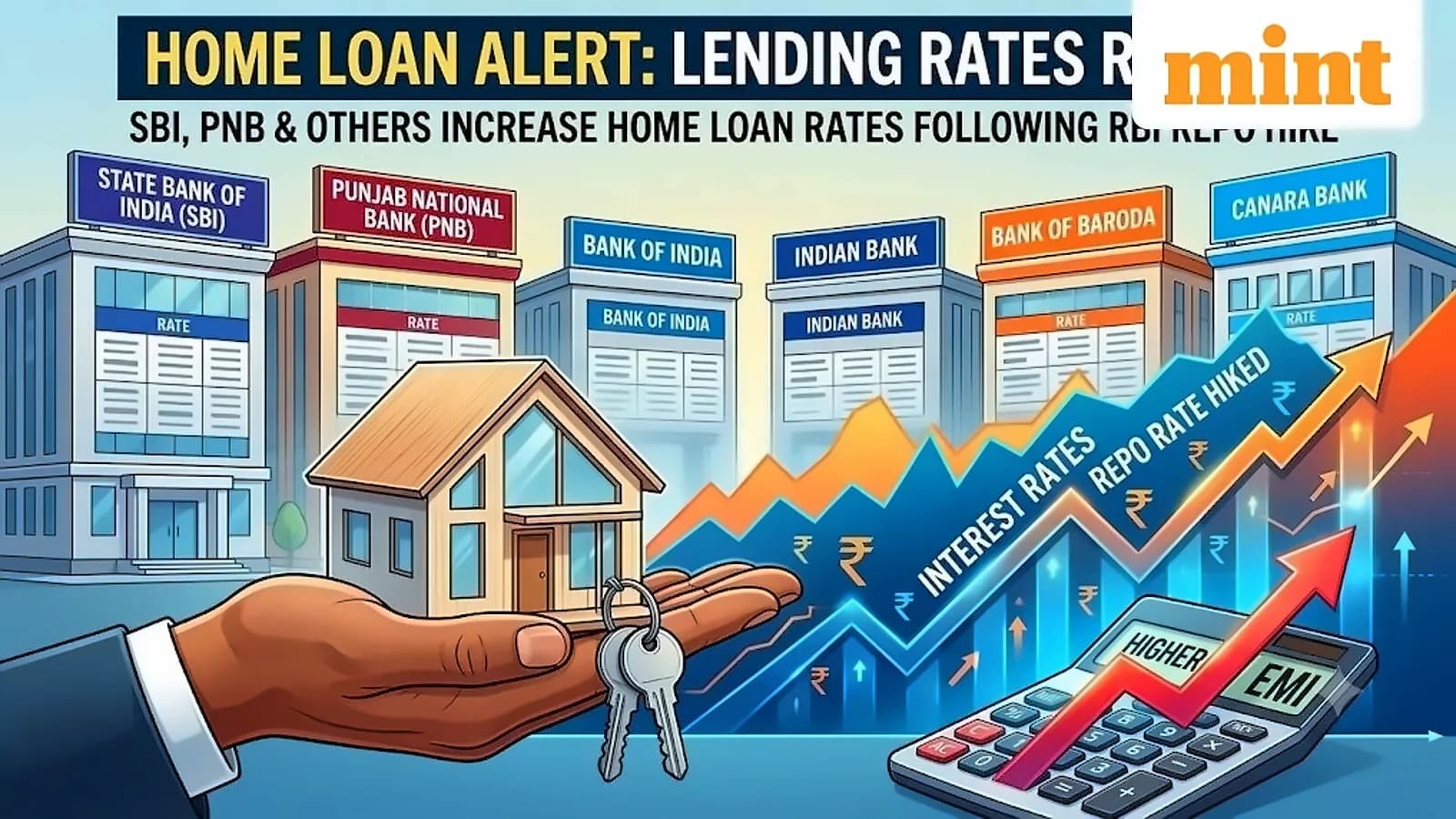
Despite the RBI's 25 basis points repo rate increase to 5.50% on October 7, banks are rolling out attractive festive loan offers to tap into the auspicious homebuying season. According to Mint, most banks have absorbed only 5-10 basis points of the rate hike as part of their festive campaigns through spread compression and enhanced borrower concessions, meaning their effective lending rates for new customers have risen by only 20 basis points. Bank of Baroda has lowered its home-loan interest rates by 5 basis points effective October 10, offering rates starting from 7.40% per annum with complete processing fee waivers until October 31. The bank also provides additional discounts of 5 basis points for women and 10 basis points for eligible borrowers including those under 40, BoB account holders, and high-net-worth individuals.
As reported by Mint, banks impose conversion charges when customers seek lower interest rates through rate alterations or scheme changes. Kapil Makhija, COO at MinEMI, stated that banks typically charge 0.25% to 0.50% of the outstanding principal, plus GST, although some levy flat fees. For a home loan with an outstanding balance of ₹60 lakh, a 0.5% conversion fee would amount to ₹30,000. According to the report, HDFC charges 0.25% of the outstanding principal, capped at ₹5,000 plus applicable taxes, while Kotak Mahindra Bank charges 0.5% of the outstanding loan amount, capped at ₹10,000 plus taxes. However, festive offers now include complete processing fee waivers that cover the bank's internal costs, typically ranging from 0.25% to 2% of the total loan amount plus 18% GST.

According to Mint reports, floating-rate borrowers can generally negotiate lower rates with their existing bank, as it is their right to ask and banks usually accommodate. However, fixed-rate loans generally cannot be repriced this way. The report explains that banks keep the EMI unchanged and quietly extend the tenure when rates rise, with the largest interest savings occurring when borrowers let the lower rate shorten their tenure instead of keeping the EMI constant. SBI and IDBI Bank are advertising concessional rates, but these are reserved for borrowers with excellent credit scores of 800 and above. Banks follow risk-based pricing, so the final rate can depend on your credit profile and other factors, including your employer or your relationship with the bank.
As detailed in the Mint report, the financial impact varies significantly based on the repayment approach. For a ₹50 lakh home loan with a 20-year repayment period, the total interest cost under different scenarios can be compared as follows: Before the rate hike at 8% interest, the EMI is approximately ₹41,822 with total interest payable of around ₹50.37 lakh. If the tenure remains unchanged at 8.25% interest, the EMI rises to approximately ₹42,603 with total interest payable increasing to around ₹52.25 lakh. If the EMI remains unchanged, continuing to pay ₹41,822 per month could extend the tenure to approximately 21 years, with total interest payable rising to around ₹55.33 lakh.
According to Mint reports, Nikhil Mawale from PropertyDrone Realty noted that lower interest rates can offer relief to households stretched by housing expenses, though conversion fees and changes to repayment schedules can reduce benefits. Hardik Shah from Shyam Group–Dholera SIR emphasized that gains will depend on the time left on the tenure and bank repayment terms. Pankaj Mathpal, founder of Optima Money, advised that while borrowers should take advantage of festive offers, they should not take a loan simply because concessions are available. He recommended assessing long-term repayment capacity rather than relying on advertised loan amounts or EMI eligibility. Before signing up for festive loan offers, borrowers should check their credit score, obtain quotes from at least two to three lenders, compare the APR in the key facts statement, understand foreclosure and prepayment charges, and decline unnecessary add-on products.